
Vacuum Casting Services: Bridging the Gap Between Prototype and Production
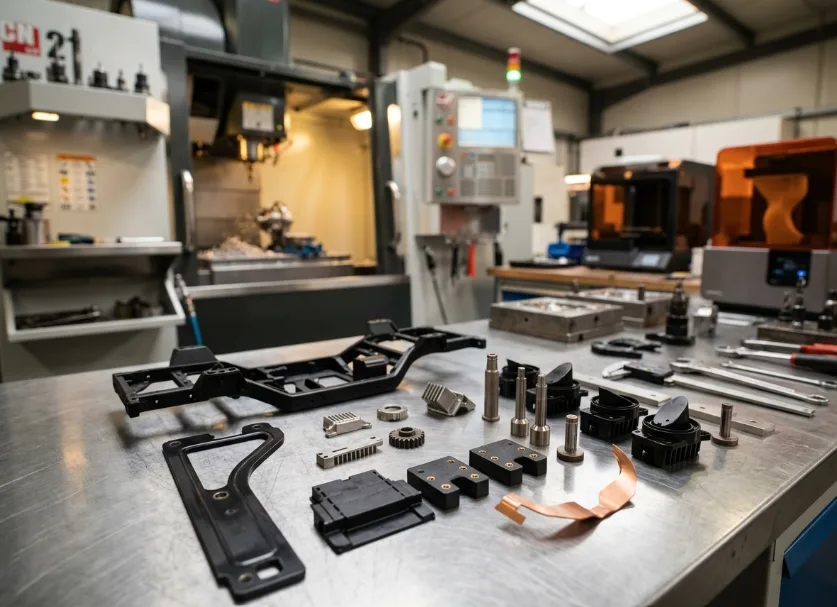
In modern product development, turning a digital CAD model into a physical, functional prototype is an important step toward bringing a product to market. Engineers and product designers need components that not only resemble the final product but also demonstrate the characteristics required for practical evaluation. Although 3D printing has transformed rapid prototyping, it may not always deliver the material properties, surface finish, or production-like appearance required for certain applications. This is where vacuum casting services offer a valuable solution, providing a cost-effective and versatile way to produce detailed prototypes and low-volume components.
For businesses seeking reliable manufacturing support, LKprototype offers a range of services designed to support different stages of product development. Its manufacturing capabilities include CNC machining, 3D printing, injection molding, and vacuum casting, helping businesses move from initial design concepts toward physical products. This integrated approach is particularly useful for industries such as automotive manufacturing, medical devices, consumer electronics, and industrial equipment, where precision, material selection, and product consistency are essential.
The Technical Advantage of Vacuum Casting
Vacuum casting, particularly polyurethane casting, is a manufacturing process that uses silicone molds to reproduce components with detailed features and consistent surface quality. The process typically begins with a master pattern created through stereolithography (SLA), CNC machining, or another suitable manufacturing method. This master pattern is then used to create a silicone mold that serves as the basis for subsequent casting operations.
During production, liquid polyurethane resin is introduced into the mold under vacuum conditions. Removing trapped air helps minimize bubbles and allows the material to fill intricate sections of the mold. Once the resin has cured, the finished component is removed and prepared for inspection or additional finishing.
One of the main advantages of this technique is its ability to produce multiple parts without the significant tooling investment associated with traditional injection molding. Silicone molds can generally be produced much faster and at a lower initial cost than conventional metal production molds, making vacuum casting particularly suitable for rapid design iterations and limited production quantities.
However, silicone molds have a finite service life and can gradually lose detail or dimensional consistency after repeated casting cycles. The actual number of usable castings depends on factors such as mold complexity, resin characteristics, part geometry, and handling conditions. Understanding these limitations helps manufacturers plan production quantities and determine when a replacement mold may be necessary.
Another advantage is the flexibility of polyurethane resins. Different formulations can simulate selected characteristics of engineering plastics, ranging from flexible rubber-like materials to rigid, impact-resistant alternatives. This makes vacuum casting useful for appearance models, assembly checks, and certain functional testing applications. Nevertheless, cast materials should be selected according to the intended testing requirements rather than assumed to have identical properties to production-grade plastics.
If a design issue is identified during testing, engineers can modify the master pattern and produce an updated mold without the expense and complexity of changing large-scale production tooling. This flexibility supports faster development cycles and allows teams to evaluate design changes before committing to higher-volume manufacturing.
Precision and Surface Quality
For many product developers, the visual and tactile quality of a prototype is just as important as its mechanical characteristics. Vacuum casting can reproduce fine surface details from the original master pattern, including textured finishes, polished surfaces, and complex geometric features.
This makes the process particularly useful when businesses need prototypes that closely resemble their intended production components. Product designers can evaluate surface appearance, dimensions, assembly compatibility, and overall design quality before moving forward with larger manufacturing investments.
The quality of the finished component depends heavily on the accuracy and surface condition of the master pattern, the quality of the silicone mold, and the selected casting material. Proper mold preparation and controlled casting conditions also help minimize surface defects and improve consistency between parts.
LKprototype combines vacuum casting with other manufacturing capabilities, including CNC machining and 3D printing, to support different prototype requirements. Depending on the selected process, material, and component geometry, these technologies can help achieve the dimensional accuracy and surface characteristics needed for product evaluation.
The ability to produce transparent and translucent components using suitable casting materials also expands the potential applications of vacuum casting. Such components can be useful when developing product covers, display elements, and lighting prototypes. However, the final optical clarity and performance depend on the resin formulation, mold quality, and finishing process.
By identifying potential fitment issues, surface imperfections, and assembly interference during the prototype stage, businesses can make necessary adjustments before committing to more extensive production.
Applications Across Industries
The flexibility of vacuum casting makes it useful across several manufacturing sectors. Its ability to produce detailed components in relatively small quantities makes it particularly valuable during product development and design validation.
In the automotive industry, the process can support the development of interior trim components, dashboard elements, product housings, and other prototype parts. These components allow design teams to evaluate appearance, fit, and selected functional characteristics before production decisions are finalized.
The medical device sector can also benefit from vacuum-cast prototypes when developing equipment housings, diagnostic device components, and product enclosures. These prototypes help manufacturers assess dimensions, ergonomics, and assembly requirements. However, components intended for direct medical use require separate material qualification and appropriate biocompatibility testing.
Industrial equipment manufacturers can use vacuum casting to develop custom housings, fixtures, and complex components before investing in more expensive production methods. Similarly, consumer electronics companies can evaluate the appearance, size, and ergonomics of device enclosures through physical samples.
Manufacturing partners with experience across different production technologies can also provide design for manufacturing (DFM) feedback. This may include reviewing wall thicknesses, parting lines, draft requirements, material suitability, and other design considerations that influence the casting process. Addressing these factors early can improve manufacturing efficiency and reduce avoidable revisions.
Choosing the Right Partner for Low-Volume Production
When selecting a provider of vacuum casting services, businesses should look beyond the initial cost per component. A suitable manufacturing partner should understand the complete product development process and be able to support projects from initial prototypes through limited production runs.
LKprototype offers multiple manufacturing capabilities, allowing businesses to explore different production methods according to their technical requirements. Having access to CNC machining, 3D printing, vacuum casting, and other manufacturing processes through one provider can simplify project coordination and reduce the need to manage multiple suppliers.
Before selecting a manufacturing partner, companies should consider several important factors:
- Technical capabilities: Confirm that the supplier has experience with the required part geometry, mold design, and casting process.
- Material options: Review available polyurethane resins and their suitability for the intended application.
- Quality inspection: Understand how dimensional accuracy, surface quality, and consistency are checked.
- Communication: Ensure that technical requirements, design changes, and production updates can be discussed clearly.
- Production flexibility: Confirm that the supplier can accommodate the required quantities and future design revisions.
- Lead times and costs: Discuss mold preparation, casting, finishing, inspection, and delivery timelines before placing an order.
It is also important to confirm expected dimensional tolerances and finishing requirements before production begins. Clear technical communication helps reduce misunderstandings and ensures that the finished components meet the project’s intended specifications.
For businesses developing new products, access to engineering feedback and suitable manufacturing processes can make a meaningful difference in the overall development experience. A capable supplier should be able to discuss potential design challenges and recommend practical manufacturing approaches based on the project’s requirements.
In an era where speed to market is an important competitive advantage, choosing the right prototyping technology can help businesses make better development decisions. Vacuum casting offers a valuable combination of production flexibility, detailed surface reproduction, and material versatility. Whether the objective is to validate a new design, produce pre-production samples, or prepare components for product demonstrations, it remains a practical option for bridging the gap between early prototypes and larger-scale manufacturing.
By evaluating material requirements, mold limitations, and production objectives early, businesses can make more informed decisions and move toward manufacturing with greater confidence.