
Understanding Skin Cell Turnover and Its Role in Acne and Skin Recovery
Introduction
When discussing healthy skin, most attention is given to cleansers, moisturisers, and treatment products. However, one of the most important processes happening beneath the surface is something many people rarely think about: skin cell turnover.
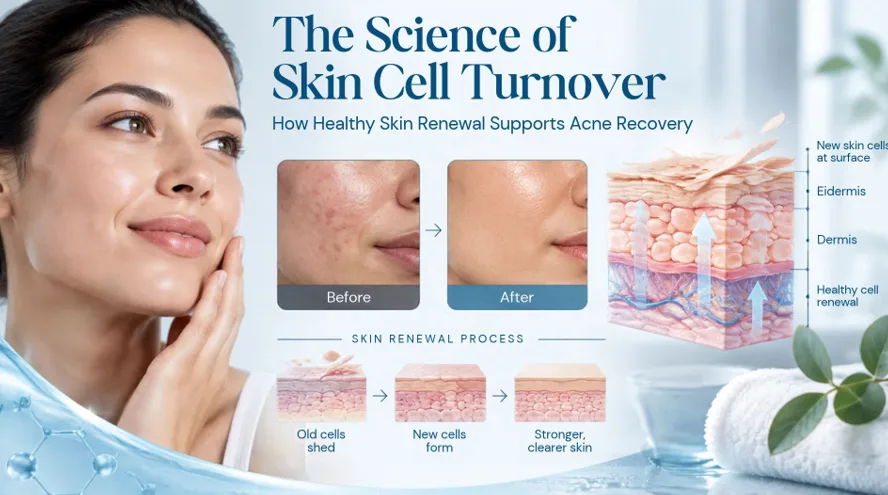
Skin cell turnover is the natural process through which old skin cells are replaced by newer ones. A healthy turnover cycle helps maintain smoother texture, more even skin tone, and clearer-looking skin.
For individuals dealing with acne, post-acne marks, or uneven skin texture, understanding this process can provide valuable insight into how many common skincare treatments work.
What Is Skin Cell Turnover?
Skin constantly renews itself.
New skin cells are produced in deeper layers of the skin and gradually move upward. Eventually, older cells reach the surface and are shed naturally.
This process helps:
- Maintain healthy skin texture
- Support skin barrier function
- Remove dead skin cells
- Promote a brighter complexion
- Reduce the appearance of congestion
As people age, natural skin renewal may slow, which can contribute to roughness, dullness and uneven skin appearance.
Why Skin Cell Turnover Matters for Acne
One of the major contributors to acne is the accumulation of dead skin cells inside pores.
When dead cells combine with excess oil, pores may become clogged, leading to:
- Whiteheads
- Blackheads
- Inflammatory acne
- Congested skin
The American Academy of Dermatology includes topical retinoids among recommended acne therapies because they help address factors involved in acne formation.
Supporting healthy skin renewal is therefore an important component of many acne management strategies.
The Connection Between Skin Renewal and Skin Texture
Skin cell turnover doesn’t only affect acne.
Healthy renewal can also influence:
- Skin smoothness
- Appearance of pores
- Skin brightness
- Overall texture
- Recovery from previous breakouts
When dead skin cells accumulate on the skin surface, the complexion may appear uneven or dull.
By encouraging regular renewal, many skincare routines aim to improve the appearance of the skin over time.
How Different Factors Affect Skin Turnover
Several factors can influence the rate at which skin renews itself.
Age
As skin matures, natural renewal often becomes slower.
Sun Exposure
Repeated sun exposure may contribute to visible skin changes and affect skin quality over time.
Hormonal Changes
Hormonal fluctuations can influence oil production and skin behaviour.
Skincare Habits
Consistency with cleansing, moisturising, sun protection and appropriate treatment products plays an important role in maintaining healthy skin.
Supporting Healthy Skin Renewal
Many dermatology-focused skincare routines aim to support normal skin renewal through healthy daily habits.
These include:
Daily Sun Protection
Protecting skin from ultraviolet exposure helps support long-term skin health.
Gentle Cleansing
Harsh cleansing can disrupt the skin barrier and increase irritation.
Regular Moisturising
Maintaining hydration helps support skin barrier function.
Evidence-Based Skincare Ingredients
Certain skincare ingredients are commonly incorporated into acne and skin renewal routines because they promote healthy skin cell turnover.
Individuals researching these options often encounter products such as Tretinoin 0.025 Cream, which is frequently discussed in skincare routines focused on acne and skin renewal.
Skin Cell Turnover and Acne Marks
Acne often leaves behind visible reminders of previous breakouts.
These may include:
- Dark marks
- Post-inflammatory hyperpigmentation
- Uneven skin tone
- Mild textural irregularities
According to DermNet, topical retinoids may help reduce the severity of existing acne scarring and subsequent acne scarring, while also helping improve post-inflammatory hyperpigmentation.
Because skin renewal plays an important role in these processes, many individuals seek information about whether treatments that support skin turnover may help improve post-acne skin concerns over time.
People researching this topic may find additional information in resources discussing Can Tretin 0.025 Help Acne Scars, which explores treatment expectations and common questions surrounding acne scar improvement.
Patience Is Essential
One of the most common misconceptions in skincare is expecting immediate results.
Healthy skin renewal is a gradual process.
The Mayo Clinic notes that with prescription acne medications, visible improvement may take several weeks and often requires ongoing consistency.
Whether the goal is improving acne, reducing post-acne marks, or supporting healthier skin appearance overall, consistency tends to produce better outcomes than frequently changing products.
Skin Renewal and Long-Term Skin Health
Scientific interest in skin turnover extends well beyond acne treatment.
Research has explored how certain ingredients influence:
- Epidermal cell function
- Skin texture
- Pigmentation
- Photoaged skin
- Collagen production
A systematic review published in the International Journal of Women’s Dermatology discussed evidence supporting topical tretinoin for photoaging and its role in regulating epidermal cells and encouraging collagen formation.
These findings help explain why skin renewal continues to be a central focus within dermatology and skincare.
Final Thoughts
Understanding skin cell turnover provides valuable insight into how the skin maintains itself and recovers from everyday challenges.
While skincare trends frequently change, the principles of healthy skin renewal remain important. Supporting the skin barrier, protecting against sun exposure, maintaining hydration and following a consistent skincare routine all play a role in helping skin function at its best.
For individuals dealing with acne, acne marks, or uneven skin texture, learning about skin renewal is often an important first step toward making informed skincare decisions.
This article is intended for educational and informational purposes only and should not be considered medical advice. Individual skin concerns, diagnoses and treatment needs vary. Readers should consult a qualified dermatologist or healthcare professional before starting, changing, or discontinuing any medical or skincare treatment.
Author Bio
The content in this article was prepared using publicly available dermatology resources, peer-reviewed research, and educational materials from organisations including the American Academy of Dermatology, Mayo Clinic and DermNet. It is designed to provide general educational information and does not replace professional medical guidance.