
Retatrutide: Weight Loss Results, Benefits, Side Effects, and FDA Approval
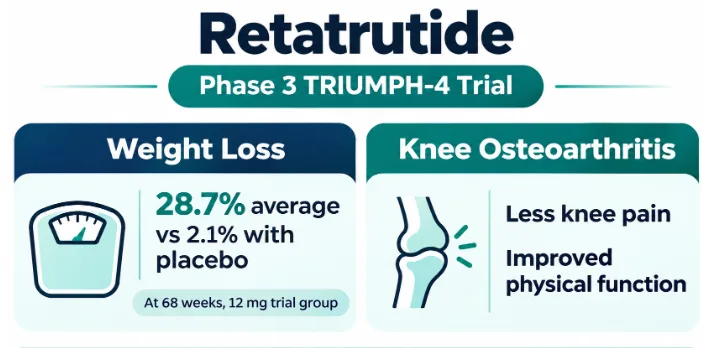
Retatrutide is an investigational drug that is receiving attention for its efficacy in aiding weight loss. It is produced by Eli Lilly and Company and it functions differently from many other weight loss drugs due to its use of three hormone receptors rather than one or two.
Studies have shown substantial weight loss in patients using this drug, hence retatrutide is an important discovery in obesity research. However, there are issues surrounding its safety, accessibility, and approval. This guide provides details on retatrutide, including how it works, the results of its clinical trials, possible side effects, and FDA approval.
What Is Retatrutide?
Retatrutide, which is the research code of the medicine LY3437943, is an experimental weekly injection drug made by Eli Lilly. This medicine is being researched for the treatment of obesity, related health problems, and type 2 diabetes.
What makes it unique is the triple agonist mechanism. This drug affects the activation of the following three hormones:
GIP: Glucose-dependent insulinotropic polypeptide.
GLP-1: Glucagon-like peptide-1.
Glucagon: Hormone that regulates blood glucose metabolism.
How Does Retatrutide Work?
Retatrutide research is known to activate the GIP, GLP-1, and glucagon receptors, which are significant for metabolic health.
1. Activation of GIP receptor
GIP is involved in regulating insulin secretion in the postprandial state and may be involved in the body’s response to food and glucose.
2. Activation of GLP-1 receptor
GLP-1 is responsible for appetite regulation, satiety sensation, delayed stomach emptying, and insulin secretion at high glucose levels.
3. Activation of glucagon receptor
Glucagon regulates glucose metabolism and energy. Research is being conducted on the potential effect of its activation on energy expenditure and lipid metabolism.
Such a complex combination of three pathways distinguishes retatrutide from drugs targeting GLP-1 alone and GIP/ GLP-1.
Retatrutide Weight Loss Results: What Do Clinical Trials Show?
Clinical trials have yielded positive findings, though weight loss may be different from one individual to another and based on the duration of therapy.
Phase 2 Clinical Trial
Phase 2 clinical trial of 2023 investigated the efficacy of retatrutide among adults with obesity or overweight. Participants who received the highest dose of medication showed an average body-weight reduction of 24.2% after 48 weeks compared to 2.1% in the control group.
Phase 3 TRIUMPH-1 Trial
TRIUMPH-1 clinical trial tested retatrutide among adults with obesity or overweight. The results indicated that the highest dose group showed average weight loss up to 25% after 80 weeks of treatment-regimen analysis.
Other Phase 3 Results
Additional trials have also produced positive findings:
| Clinical trial | Average weight reduction |
| TRIUMPH-2 (type 2 diabetes) | Up to 20.8% |
| TRIUMPH-3 (severe obesity and cardiovascular disease) | Up to 22.6% |
| TRANSCEND-T2D-2 (type 2 diabetes) | Up to 20.9% |
These findings demonstrate retatrutide’s potential, but results from different trials should not be compared directly because their participants and study designs differ.
Potential Benefits of Retatrutide
There have been studies on various other advantages of retatrutide.
Weight management:
There have been clinical studies which show significant reduction in body weight.
Blood sugar management:
Various studies have shown improvement in the HbA1c levels, which indicate blood glucose levels.
Metabolism:
Various researchers have studied its impact on obesity-related metabolic disorders.
Other health disorders:
Clinical studies are being conducted to understand the impact on knee osteoarthritis pain and obstructive sleep apnea.
However, these advantages of retatrutide have not been established for general use in medicine.
Retatrutide Side Effects and Safety
As with any other investigational drug, retatrutide may induce adverse effects. In clinical trials, certain commonly experienced reactions were observed, especially those related to the gastrointestinal tract.
These reactions included:
- Nausea
- Diarrhea
- Vomiting
- Constipation
- Loss of appetite
- Gastrointestinal disturbances
Some patients also developed dysesthesia, which is defined as the feeling of abnormal sensations such as tingling and burning. The occurrence and intensity of these adverse reactions may differ. Further assessment of the safety of the medication is currently underway.
Important notice: Purchase and consumption of products available on the Internet as retatrutide should be avoided. Unauthorized products may be made up of inaccurate ingredients, contamination, or wrong concentrations of the substance. Consult your doctor regarding appropriate treatment methods.
Is Retatrutide FDA Approved?
No. At this point in time, November 23, 2026, retatrutide does not have FDA approval. It is considered an investigational drug. Eli Lilly said it plans to file for a BLA (Biologic License Application) with the FDA in early 2027.
Just because a BLA has been submitted, doesn’t guarantee that the drug will receive approval. The FDA must review all the information related to the drug that was submitted, along with additional safety and clinical information about the drug. In addition, the FDA has voiced its concern about using products that are either unapproved or that are experimental and are meant for the treatment of obesity.
When Will Retatrutide Be Available?
Retatrutide currently lacks an official launch date. The availability of the drug will be contingent upon its research and regulatory processes.
Approval of the medication may mean that prescription regulations, costs, and availability may differ per nation. Potential users of retatrutide should follow official statements by Eli Lilly rather than unreliable sources online.
Frequently Asked Questions About Retatrutide
1. What is retatrutide used for?
It is being studied for obesity, weight management, type 2 diabetes, and related metabolic conditions.
2. Is retatrutide FDA approved?
No. It remains investigational and has not received FDA approval as of November 2026.
3. How does retatrutide work?
It activates three hormone receptors: GIP, GLP-1, and glucagon.
4. How much weight can people lose with retatrutide?
Some clinical trials have reported average weight reductions exceeding 20%, depending on the study and treatment duration.
5. What are the common side effects?
Reported side effects include nausea, diarrhea, vomiting, constipation, and reduced appetite.
6. Is retatrutide available for purchase?
No approved retail version is currently available. Avoid unapproved products sold online.
7. Who developed retatrutide?
Eli Lilly and Company developed retatrutide and continues to evaluate it through clinical trials.
8. Is retatrutide better than semaglutide?
There is not enough direct comparative evidence to establish that retatrutide is better for every patient.
9. Is retatrutide a GLP-1 medication?
It activates the GLP-1 receptor but is classified as a triple hormone receptor agonist.
10. When could retatrutide become available?
Eli Lilly plans to submit its US regulatory application in the first quarter of 2027. Actual availability depends on FDA review.
Conclusion
Retatrutide is one of the more recent compounds that have been tested and approved for use to fight obesity. It functions as a GIP, GLP-1, and glucagon receptor agonist. Retatrutide has been shown to result in clinically significant weight loss.
At present, retatrutide’s safety profile and its status in the marketplace is still under development. Retatrutide will be the first medication of its type to reach the market once it receives approval from the FDA, but until that occurs, retatrutide should be considered an experimental medication. In light of the recent approvals of GLP-1 agonists on the market, patients, along with their doctors, should follow the progression of the regulatory process as well as any future studies and updates.