
Implant Size Isn’t Chosen the Way Most Patients Expect
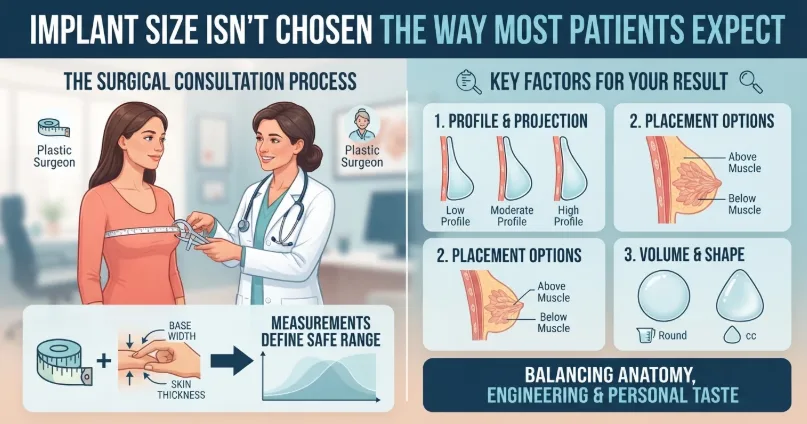
Quick Answer: Breast implant size is not picked from a cup size or a photo. Surgeons begin with measurements of your chest and breast tissue, such as base width, tissue thickness and skin stretch. These set a safe range of volumes, and your goals then decide where in that range you land. Implant profile, placement and your frame matter as much as the number of cc.
Most people walk into a consultation for breast augmentation surgery in Red Deer with a number in mind. Sometimes it is a cup size, sometimes a volume a friend chose, and sometimes a photo saved on their phone. Many are surprised to find that the conversation starts somewhere else entirely: with a tape measure, a few gentle pinches of skin and questions about how they live day to day. Implant sizing is a mix of anatomy, engineering and personal taste, and the order in which those factors are weighed explains why the process feels so different from what patients expect.
Why Cup Size Is a Poor Starting Point
Bra Sizes Are Not Standardized
A “C cup” from one brand can fit very differently from a C cup from another. Band size changes how a cup letter relates to actual volume, so the same implant can look like a full cup increase on one woman and barely half a cup on another. Because of this, surgeons rarely promise a specific letter. They talk in terms of volume, measured in cubic centimetres (cc), and in terms of shape and proportion.
Photos Show an Outcome, Not a Body
Reference photos are useful for showing the look you like: natural slope, upper fullness, or a more noticeable result. What a photo cannot show is the chest width, rib shape, height or starting tissue of the person in it. The same 350 cc implant can look modest on a tall, broad-chested patient and dramatic on a petite one. Surgeons use photos to understand your taste, then translate that taste onto your own frame.
The Measurements That Actually Set Your Range
Breast Base Width
The width of the existing breast across the chest wall is often the most important single number. An implant that is wider than your natural base can sit too far toward the armpit or crowd the cleavage area, while one that is far narrower can look disconnected from your shape. Base width narrows the field of suitable implants before volume is even discussed.
Tissue Thickness and Skin Stretch
Surgeons gently pinch the tissue above and beside the breast to estimate how much natural coverage you have. Thin coverage can make the edges or rippling of an implant easier to see or feel, which affects both size and placement. Skin elasticity is measured by how far the skin around the nipple stretches. Tight skin limits how much volume can be added comfortably in one procedure; looser skin may need more volume, or a lift, to fill out properly.
Nipple-to-Fold Distance and Symmetry
The distance from the nipple to the crease under the breast, measured with gentle stretch, helps the surgeon predict where the implant will sit and whether the fold needs to be lowered. Almost everyone has some natural asymmetry between sides. In some cases, slightly different volumes are used on each side to balance the result.
How Profile, Shape and Placement Change the Result
Volume Is Only One Dimension
Implants of the same volume come in different profiles, often described as low, moderate, high and extra-high. A higher profile implant is narrower and projects further forward, while a lower profile is wider and flatter. This is why two patients with “the same size” can end up looking quite different. Choosing a profile lets the surgeon match volume to base width without forcing a compromise.
Above or Below the Muscle
Placing an implant beneath the chest muscle adds a layer of coverage, which can soften the edges in slimmer patients. Placement above the muscle can suit those with more natural tissue. Placement changes how a given size looks and feels, so it is decided together with volume rather than after it. A careful consultation covers these choices side by side, since one decision shapes the other.
Implant Fill and Shape
Silicone gel and saline implants behave differently. Saline can show rippling more readily in thin tissue, and cohesive silicone gel tends to feel closer to natural breast tissue. Round and anatomical (teardrop) shapes also suit different chest types and goals. Each of these factors shifts which volumes look natural on a particular body.
Where Your Preferences Come In
Lifestyle and Activity
Runners, swimmers, people who lift weights and those with physically demanding jobs often prefer a more moderate size, since larger implants add weight and can affect comfort during activity. Your clothing style, the way you like to dress for work and how you sleep are all fair topics in a consultation. They help narrow the safe range down to a size that fits your daily life.
Trying Sizes Before Surgery
Many clinics offer sizers that sit inside a fitted bra so you can see how different volumes look under clothing. Some practices also use 3D imaging to simulate results on a scan of your own body. These tools are guides rather than guarantees. Sizers worn over the breast do not account for skin stretch or placement, so the final surgical choice may differ slightly from the sizer you liked best.
Thinking Long Term
Larger implants place more strain on skin and tissue over time, which can increase the chance of stretching, sagging or needing further surgery. Weight changes, pregnancy and ageing also alter how implants sit. Choosing a size that respects your measurements tends to give results that age more gracefully, and it reduces the chance of revision surgery later on.
What a Good Sizing Consultation Looks Like
Questions Worth Asking
A thorough consultation should leave you understanding why a range was suggested, not only which number was picked. Useful questions include:
- What is my base width, and what volume range does it support?
- Which profile do you suggest, and why?
- Would placement above or below the muscle suit my tissue better?
- How might this size look in 10 years, or after pregnancy or weight change?
- What options exist if I want a change later?
Signs the Process Is Patient-Focused
A careful surgeon measures before discussing numbers, explains trade-offs openly and is willing to steer you away from a size that may cause problems. Pressure toward the largest possible implant, or reluctance to explain the reasoning, are signs to slow down and seek another opinion.
Implant size ends up as a balance between what your body can support and the look you want. Patients who understand that measurements set the limits, and preferences choose within them, usually feel more confident in their decision and more satisfied with the result.