
Umrah Travel in Saudi Arabia: Why More Pilgrims Are Pre-Booking Private Airport Transfers
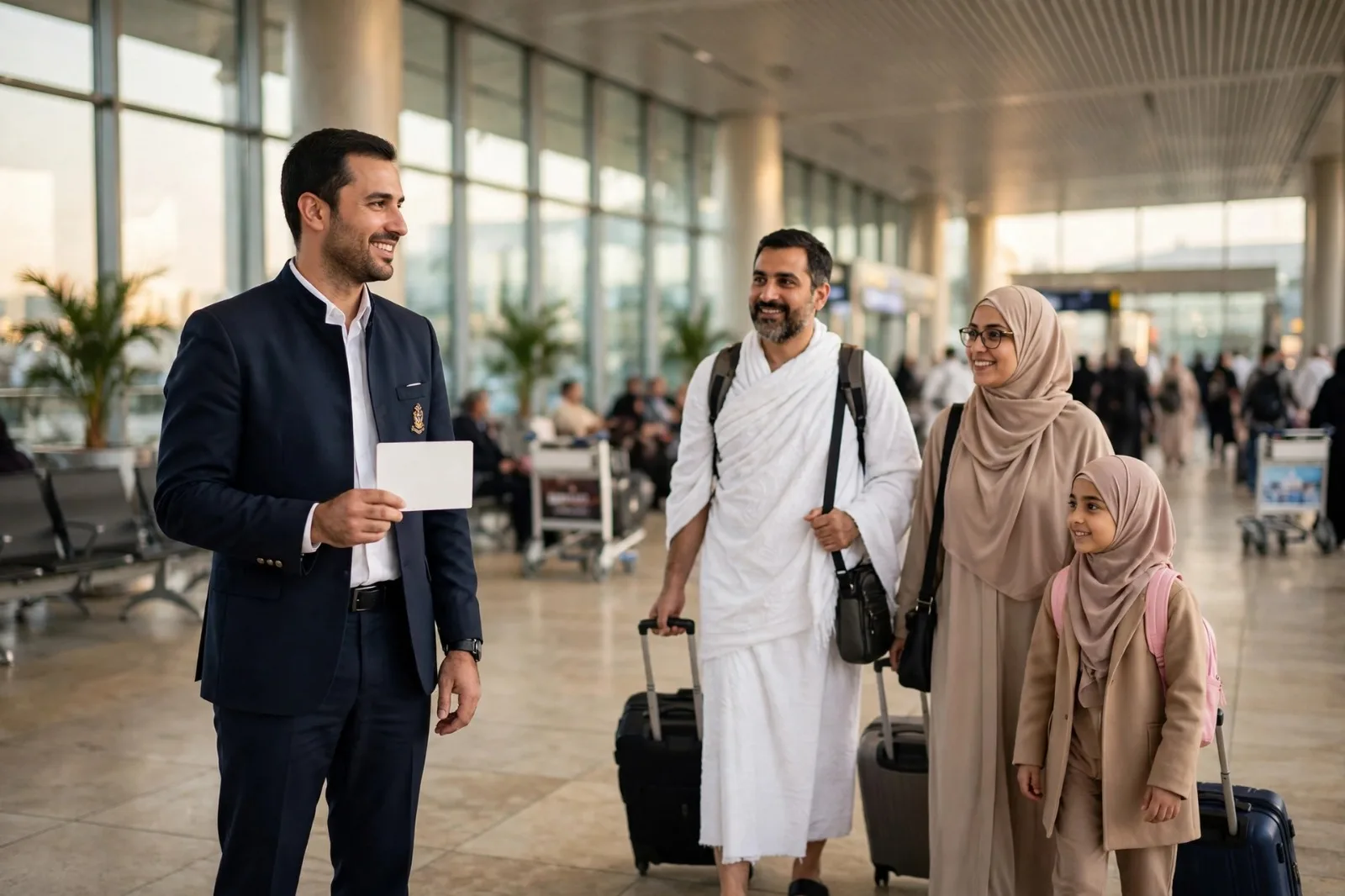
Umrah travel is changing. A journey that was once arranged through travel agents, group packages, and a fair amount of improvisation on arrival is increasingly being planned the way modern travellers plan everything else — online, in advance, and down to the last detail. Nowhere is that shift clearer than in the way pilgrims now arrange their transport.
Not long ago, the typical arrival in Jeddah ended the same way for almost everyone: a long queue, a crowd of drivers, and a negotiation conducted through tiredness and jet lag. Today, a growing share of pilgrims walk out of the terminal to find their driver already waiting, name board in hand, vehicle booked, fare agreed days earlier. Pre-booked private airport transfers have quietly become the default choice for Umrah travellers — and the reasons say a lot about where pilgrim travel is heading.
A Journey Taken by Millions, More Every Year
Umrah is unlike any other form of travel. Under Saudi Arabia’s Vision 2030, the Kingdom has set a goal of welcoming 30 million Umrah pilgrims a year, and the infrastructure around the pilgrimage — airports, the Haramain High-Speed Railway, expanded terminals, and digital visa platforms — has been built out to match that ambition. Pilgrim numbers have climbed steadily, and with them has come a new kind of traveller: families booking independently, elderly pilgrims travelling with their children, and visitors from countries where arranging everything online before departure is simply normal.
That traveller does not leave transport to chance. Just as they compare hotels near the Haram and book them months ahead, they now arrange their Umrah taxi services before they fly — and the market has organised itself around that expectation. Established providers such as Online Umrah Hajj Taxi now run their entire service around advance booking: fixed route fares published in advance, reservations confirmed on WhatsApp, and drivers assigned before the pilgrim has even boarded the flight.
Why the Airport Negotiation Is Disappearing
The appeal is not hard to understand. A pilgrim landing at King Abdulaziz International Airport has usually been travelling for many hours. They may be in ihram, travelling with elderly parents, managing young children and a trolley of luggage, and focused — rightly — on reaching Makkah and beginning their Umrah. The last thing that moment needs is a price discussion.
A pre-booked transfer removes every uncertain element at once. The fare is fixed before travel, so there is nothing to argue about. The driver tracks the flight, so a delay does not become a missed pickup. The vehicle is chosen for the group, not grabbed from whatever is passing. And the destination is already known — the driver has the hotel name and location before the pilgrim lands. Services built for pilgrims, including Umrah Taxi Now, have built their whole model around this kind of certainty, and pilgrims have responded by making it their standard way to travel.
More Than an Airport Ride
What begins as an airport pickup usually becomes the transport plan for the whole pilgrimage. The same provider who collects a family from Jeddah Airport is typically booked again for the intercity journey to Madinah, for Ziyarat tours of the blessed sites in both cities, and for the final return to the airport. One relationship replaces a dozen separate arrangements.
The arrival journey itself shows why. The Jeddah Airport to Makkah taxi route — roughly 85 to 95 kilometres, around an hour to an hour and a half on the road — is the first journey of the pilgrimage, and pilgrims judge everything that follows by how it goes. A calm, pre-arranged arrival sets the tone for the entire Umrah; a chaotic one is remembered just as clearly. Providers know this, which is why the airport transfer has become the most carefully organised part of the whole service.
Technology Did the Quiet Work
None of this required a revolution — just a phone. WhatsApp booking, live location sharing, digital payment, and instant confirmation have removed the friction that used to make advance booking harder than flagging down a car. A pilgrim in London, Karachi, Kuala Lumpur, or Toronto can now arrange a Makkah to Madinah taxi, a Ziyarat tour, and an airport pickup in a single conversation, from their sofa, weeks before departure.
For the drivers and companies on the Saudi side, the change has been just as significant. Advance bookings mean planned schedules instead of airport queues, known passengers instead of chance fares, and a service judged on reliability and reviews rather than on who negotiates hardest at the curb.
The Human Side: Elders, Families, and First-Timers
Behind the trend are very human reasons. A large share of Umrah pilgrims are elderly, travelling perhaps once in a lifetime, often with a son or daughter managing every detail on their behalf. For that son or daughter, booking a transfer in advance is not a convenience — it is peace of mind. They know exactly who is meeting their parents, in what vehicle, at what price, and they can follow the journey from another country if they need to.
First-time pilgrims feel the same pull. Everything about a first Umrah is unfamiliar: the airport, the roads, the hotel districts, even which terminal their flight uses. Removing transport from the list of unknowns lets them give their attention to the journey’s real purpose. And families with young children — the group for whom an airport negotiation was always the hardest — have perhaps gained the most of all. A waiting driver, a fitted vehicle, and a direct ride to the hotel is simply a kinder way to begin.
Choosing a Provider: What the Careful Pilgrims Check
As pre-booking has grown, so has the range of providers, and pilgrims have learned to choose with a little care. The signs of a reliable Umrah taxi service are consistent: published fares for each route rather than prices invented on the day, booking confirmation in writing, a driver who shares his location and contact details before pickup, vehicles matched honestly to group size, and a service that can be reached again afterwards if anything needs to change.
Price still matters — it always will — but the market’s centre of gravity has moved. The cheapest ride is no longer the one negotiated hardest at the terminal; it is the one booked calmly in advance, at a fixed fare, with nothing left to chance. That is a definition of value that pilgrims of every budget seem to agree on.
What It Means for Pilgrims Planning Now
For anyone planning an Umrah, the lesson from this shift is simple: treat transport as part of the pilgrimage plan, not as something to solve on arrival. Book the airport transfer before you fly. Agree every fare in advance. Choose vehicles honestly for your group size and luggage. Keep one provider for the whole journey if you can, so your arrival, your intercity transfer, your Ziyarat days, and your departure are all in familiar hands.
Umrah will always be, at its heart, a spiritual journey — that will never change. But the road between the airport and the Haram is becoming smoother, calmer, and better organised every year. The pilgrims driving that change are not doing anything complicated. They are simply booking before they fly — and arriving the way every pilgrim deserves to arrive: in peace.