A Boutique Approach to DHI Hair Transplantation in Istanbul
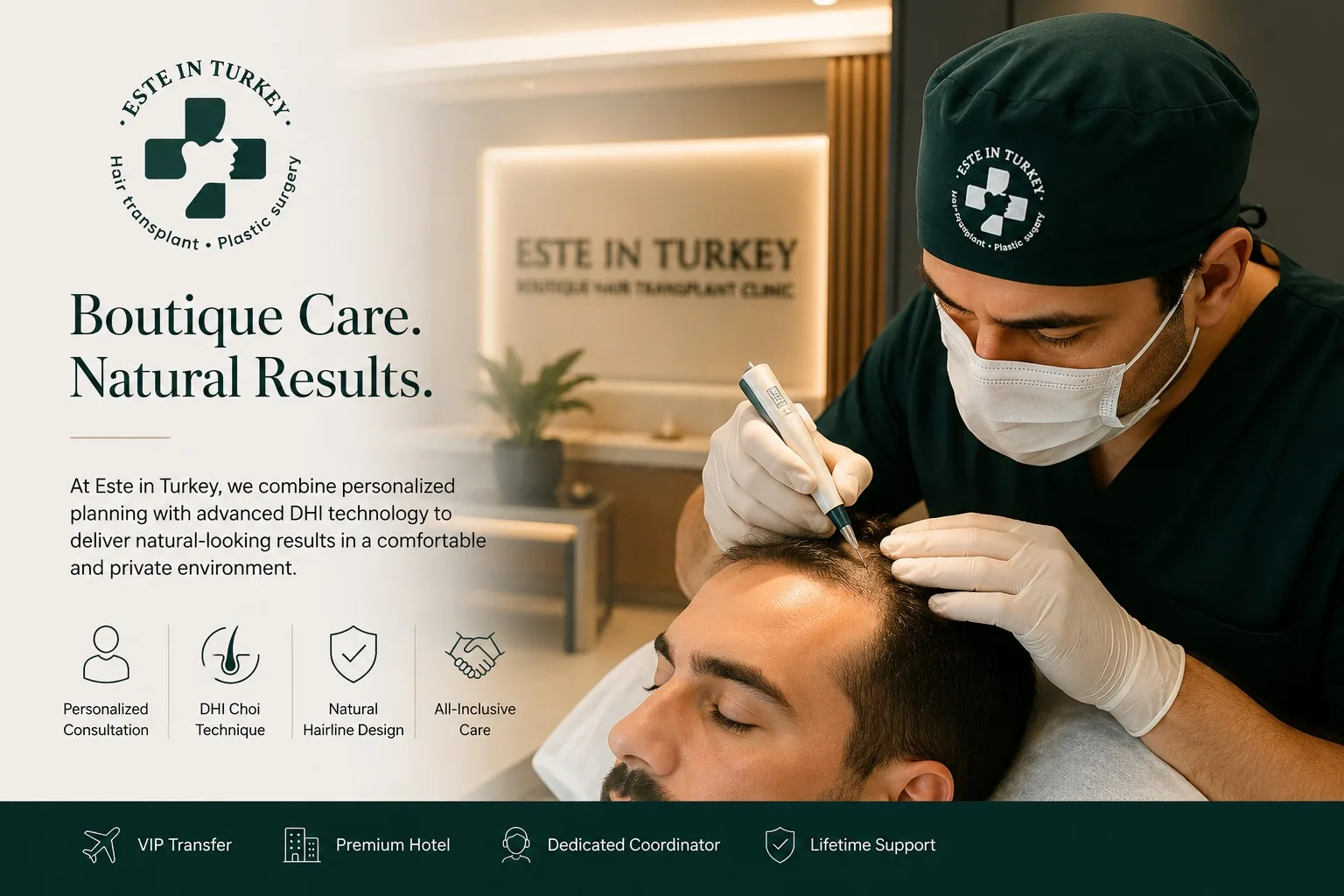
Choosing a hair transplant clinic is not simply a matter of comparing prices, graft numbers, or techniques. For most patients, the real difference becomes clear in the level of attention they receive before, during, and after the procedure.
Hair loss develops differently in every person. The donor area, hair thickness, facial proportions, age, existing density, and future risk of hair loss all need to be considered together. This is why a personalised treatment plan is often more valuable than a standard package designed for everyone.
At Este in Turkey, the focus is on providing a boutique hair transplant experience in Istanbul. Rather than approaching each patient as another appointment on a busy schedule, the clinic aims to plan every procedure according to the individual’s hair structure, expectations, and long-term needs.
What Makes a Hair Transplant Clinic Boutique?
The word “boutique” is often associated with comfort or premium service, but in hair transplantation, it should mean something more practical.
A boutique clinic limits the number of procedures it performs so that each patient can receive closer attention. This gives the medical team more time to examine the donor area, design the hairline, organise graft distribution, and explain the recovery process in detail.
A successful hair transplant is built around many small decisions. The position of the hairline, the angle of each implanted follicle, the use of single-hair grafts in the frontal area, and the protection of the donor region can all influence the final appearance.
These decisions should not be rushed.
An overly low or perfectly straight hairline may look unnatural as the patient gets older. In the same way, removing too many grafts from the donor area can leave visible thinning at the back of the scalp. A careful treatment plan should therefore improve the recipient area without creating a new problem elsewhere.
The boutique model also places greater importance on communication. Patients should understand what can realistically be achieved, which technique is suitable for them, how many grafts may be required, and how long the final result will take to develop.
Why DHI Is Popular Among International Patients
DHI, or Direct Hair Implantation, is a modern hair transplant technique that uses a specialised device called a Choi implanter pen.
After the grafts are extracted from the donor area, they are carefully placed inside the implanter pen. The medical team then inserts them into the recipient area while controlling the depth, angle, and direction of implantation.
The main difference is that the opening of the recipient channel and the placement of the graft happen during the same step. This allows the team to work precisely, particularly in areas where natural hair is still present.
A DHI Choi hair transplant may be suitable for patients who want to strengthen the frontal area, improve density between existing hairs, restore the temples, or undergo the procedure without completely shaving the recipient area.
However, DHI is not automatically the best choice for every patient. The technique should be selected according to the condition of the donor area, the size of the treatment zone, the number of grafts needed, and the patient’s overall hair-loss pattern.
A responsible clinic should recommend DHI because it is appropriate for the case, not simply because it is presented as a premium option.
How the DHI Procedure Is Planned
The process begins with a detailed assessment. The medical team reviews the patient’s photographs, medical history, previous hair transplant procedures, current hair loss, and expectations.
The donor area is then examined to estimate how many grafts can be collected safely. This is an important stage because donor hair is limited. A good clinic should never focus only on extracting the highest possible number of grafts. The goal is to use the available donor capacity wisely.
Hairline design is another essential part of the planning process. A natural hairline should match the patient’s face rather than follow a fixed template.
Factors such as forehead size, facial symmetry, age, existing hair direction, and future hair loss should all be taken into account. In many cases, a slightly conservative hairline produces a more natural and sustainable result.
Once the plan is confirmed, the grafts are extracted individually from the donor area, usually from the back and sides of the scalp. They are then examined and separated according to the number of hairs they contain.
Single-hair grafts are generally used along the first rows of the hairline to create a softer transition. Grafts containing two or more hairs can be placed farther behind to improve density.
With DHI, each graft is loaded into the Choi pen and implanted according to the planned angle and direction. This is particularly useful when working between existing hairs or in smaller areas that require greater precision.
Technology Is Only One Part of the Result
The Choi pen is a useful instrument, but it does not create a natural result on its own.
The experience of the medical team, the quality of the hairline design, the handling of the grafts, and the distribution of density are equally important. Two clinics can use the same equipment and still produce very different outcomes.
Natural-looking hair does not grow in perfectly straight lines or at identical angles. The first rows should appear softer and slightly irregular, while the density should gradually increase toward the central area.
The direction of implantation also matters. Hair in the temples, frontal area, and crown grows at different angles. Ignoring these natural patterns can make the result appear artificial even when the transplanted hair grows successfully.
This is one of the reasons a more personalised approach is valuable. The procedure should be adapted to the patient’s existing hair rather than carried out according to a standard pattern.
A More Comfortable Experience in Istanbul
For international patients, the operation itself is only one part of the journey. Flights, accommodation, airport transfers, clinic transportation, language support, and postoperative care also need to be organised.
A boutique medical tourism experience aims to make this process more manageable. Patients receive support before arriving in Istanbul and continue to receive guidance after returning home.
Clear communication is especially important during the recovery period. Patients need to know how to wash the scalp, protect the grafts, use any prescribed medication, and recognise what is normal during healing.
Temporary redness, scabbing, swelling, and shedding can occur after the procedure. The transplanted hair usually begins to grow gradually over the following months, while the final result may take around 12 months to become fully visible.
For this reason, follow-up should not end when the patient leaves the clinic. Regular photograph checks and access to the clinic team can make the recovery process less stressful.
Choosing Quality Over Quantity
Istanbul is one of the world’s best-known destinations for hair transplantation, but the number of available clinics can make the decision difficult.
Patients should look beyond promotional offers and ask practical questions:
Who designs the hairline?
Who performs the extraction and implantation?
How is the donor area protected?
Why is DHI recommended for this particular case?
What support is provided after the patient returns home?
The answers often reveal more than a package price or a large graft number.
DHI can be an effective technique for suitable patients, particularly when precision, density, and work between existing hairs are priorities. Yet the technique is only as good as the planning behind it.
A boutique approach combines modern methods with individual attention, careful donor management, realistic expectations, and long-term communication. For patients seeking a more personal experience in Istanbul, this balance can be just as important as the procedure itself.