
A Data Engineering and Data Science Approach to Strengthening Cloud Security Through ML-Based MFA and Dynamic Cryptography
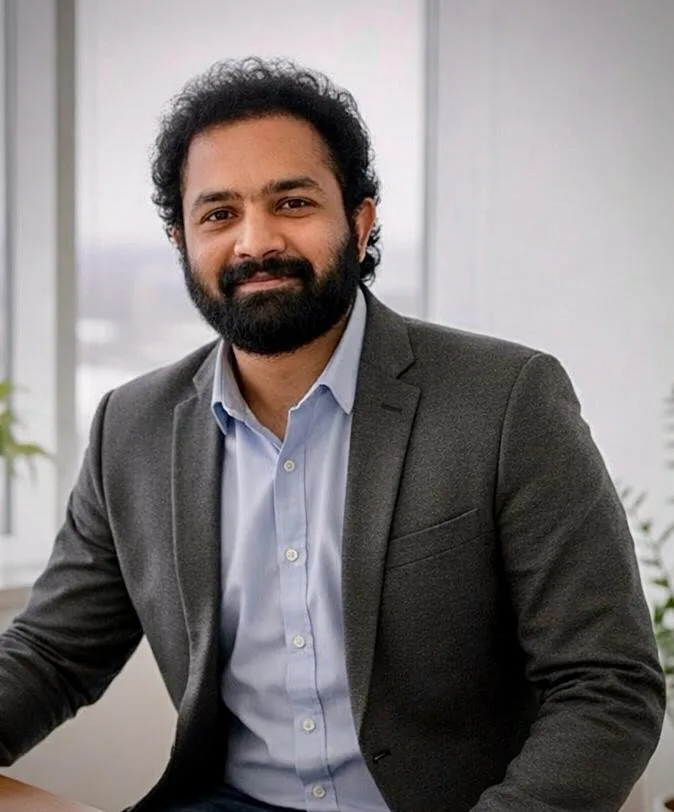
Cloud computing has become the foundation of the new digital infrastructure, where scalable data-driven applications are applicable in enterprises. The article by Naga Charan Nandigama introduces an information transformation method using the combination of Data Engineering and Data Science to enhance the security of the cloud using Multi-Factor Authentication (ML-MFA) and dynamic cryptography. His work is a drastic change from fixed, rule-based security systems to more risk-conscious, intelligent, and self-adaptive cloud protection systems.
Cloud Security Architecture Evolution
Classical models of cloud protection used to be based on dynamic authentication algorithm and fixed cryptographic settings. The strategies are not effective in a modern setting that faces attack vectors that utilize behavioral patterns, stolen credentials, and metadata leakage. The scope of authentication information grew exponentially in both size, speed, and type, and more sophisticated security measures were required. The framework considers this development by encompassing Data Engineering pipelines that have the capacity to take in and manipulate multimodal information streams, such as device fingerprints, geolocation notifications, and behavioral biometrics. The architecture boosts the creation of adaptable and intelligence-led cloud security by converting raw security telemetry into quality analytical datasets.
Smart Authentication with ML-Based MFA
One of the key contributions of the study is the application of Multi-Factor Authentication by using Machine Learning. As opposed to the traditional MFA systems, which practice uniformity in applying authentication rules, ML-based MFA works with contextual risk on dynamism. Near real-time analysis of the types of behavior, moment of access, device-specific attributes and anomaly scores can establish whether further authentication factors are needed. This mechanism of adaptability has a great increase in the resistance to credential-based attacks and minimizes the unnecessary user friction. The system can detect the hidden communication variations of users in the behavior context that are mostly not recognized by the existing methods using the supervised and unsupervised models of learning, which helps the system to execute proactive and accurate authentication actions.
Dynamic Self-Malware Threat Environment Adaptive Cryptography
Alongside smart authentication, the study offers the concept of adaptive cryptography enhancement that is fundamental to the research in security. Deterministic encryption models can be vulnerable to attackable predictable attack points, especially when lack of metadata or computational asymmetries is used by the maleficent. The proposed system dynamically changes the strength of encryption, the rate of key rotation, and the cryptographic algorithms in reference to the contextual risk scores produced by Data Science models.
Data Engineering and Edge -Fog-Cloud Integration Role
A layered Edge Cloud solution helps facilitate the success of the proposed framework. On the edge Ending with preliminary pre-processing and anomaly detection Limited the end-to-end latency as well as prevented suspicious behavior at the stage before proceeding further. Mog layer consolidates the events of various sources, feature engineering, and contextual embellishing on them to assist with low-latency inferences.
Experimental Insights and Performance Indications
The effectiveness of the integrated approach is supported by the results of the experiment. The ML-MFA and adaptive cryptography are the most probable to achieve maximum authentication accuracy and attack detection rates compared to the single-layer security and baseline security mechanisms. Although the change in adaptive cryptography results in moderate latency overhead, advantages in security are considerably larger than the trade-offs in performance. The results validate the synergistic benefits of layered, data-driven security models as compared to isolated controls, making the role of a holistic design of systems in a cloud security setting significant.
Overcoming the Scale and Governance Problems
Protecting consistent security over distributed environments becomes very tricky as the deployment of clouds incurs larger sizes. The framework proposed has a solution to scalability in the form of the distributed pipelines of data, the processing of the stream and the deployment on the basis of the models that can be separately distributed. At the layer level, the governance mechanisms of policy management, auditing, and compliance enforcement are combined in such a way to make adaptive security decisions transparent and regulation-compliant.
Trends in Intelligent Cloud Security
In future research, the study offers a clear future literature in relation to federated learning as a way of privacy-guaranteeing model updates, reinforcement learning as an inflexible cryptographic policy optimization tool, and explainable AI as a common Instinct intervention that could boost security decision transparency. These developments are meant to enhance further the levels of trust, interoperability and sustainability of cloud security architectures.
Conclusion
Naga Charan Nandigama research work establishes that the combination of Data Engineering, Data Science, a machine learning-based MFA, and adaptive cryptography is the key to changing the essence of cloud security. The proposed framework overcomes the drawbacks of traditional security models by providing smart authentication, dynamical encryption and scalability in the decision-making process, providing a framework that is non-negligible to the current cyber threats.