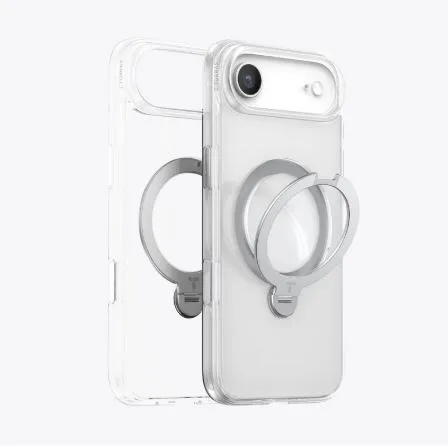
A Guide to Selecting Your Ideal iPhone 17 Air Case
There’s something undeniably thrilling about unboxing a brand-new iPhone 17 Air — the sleek edges, the premium finish, the satisfying weight in your hand. But that excitement quickly gives way to a familiar anxiety: one accidental drop, and your investment could be shattered. The search for the right case begins almost immediately, and that’s where things get complicated.
Walk into any electronics store or browse online, and you’ll find hundreds of options competing for your attention. From ultra-slim iPhone 17 Air case designs to heavy-duty armor-style builds, the sheer variety is enough to overwhelm even the most decisive shopper. The real challenge isn’t just finding a case — it’s finding the right one for your life.
Do you prioritize military-grade drop protection, or does a sleek profile matter more to you? Can you have both? This guide cuts through the noise and walks you through everything you need to consider, from durability standards and material choices to MagSafe compatibility and personal style, so you can make a confident, informed decision for your iPhone 17 Air.
Why Protection is Paramount: Evaluating iPhone 17 Case Durability
The iPhone 17 Air is a precision-engineered device, but that engineering doesn’t make it invincible. Glass screens crack, aluminum frames dent, and camera lenses scratch with alarming ease. Studies consistently show that drops are the leading cause of smartphone damage, and even a fall from desk height onto a hard floor can spell disaster. Understanding what makes a case genuinely protective — rather than just decorative — is the first step toward a smart purchase.
At the core of any durable case is its material composition. Polycarbonate (PC) is a rigid plastic known for distributing impact force across a wide surface area, preventing concentrated stress on any single point of your phone. Thermoplastic polyurethane (TPU), on the other hand, is flexible and absorbs shock like a cushion. The most effective cases combine both: a hard PC shell to deflect impact and a TPU inner layer to absorb it. Reinforced corners are another critical design feature, since corners absorb the majority of force during a typical drop.
Beyond materials, raised edges around the screen and camera module provide crucial standoff protection, keeping these vulnerable surfaces from making direct contact with the ground. Not all cases offer equal coverage here, so it’s worth examining the lip height before committing.
Understanding Military-Grade Protection Standards
When a case claims “military-grade protection,” it’s referencing the MIL-STD-810G (or the updated 810H) standard — a U.S. Department of Defense testing protocol originally designed for military equipment. For phone cases, this typically means the product has been tested to survive drops from 4 to 6 feet across multiple angles and onto various surfaces. It’s a meaningful benchmark, not just marketing language, because it requires real-world simulation of the stresses a device endures daily. Cases that carry this certification have undergone rigorous validation, giving users a concrete assurance that the case performs when it matters most — not just in a lab brochure.
Style That Speaks: Aesthetic Considerations for Your iPhone 17 Case
Protection matters, but let’s be honest — you’re going to look at your phone dozens of times a day, and the case wrapped around it says something about who you are. Style isn’t vanity; it’s a legitimate consideration that shapes how satisfied you’ll feel with your choice long after the initial purchase. The good news is that today’s market offers genuine variety, meaning you don’t have to sacrifice personality for practicality.
Minimalists tend to gravitate toward slim-profile cases that preserve the iPhone 17 Air’s original silhouette. These designs sit close to the body, add barely any bulk, and often come in muted tones or clean transparencies that let the phone’s own color shine through. If you chose a specific iPhone finish, a clear or frosted case is the most natural way to keep that aesthetic visible while still adding a layer of scratch resistance.
On the opposite end of the spectrum, rugged cases appeal to those who spend time outdoors or in demanding environments. These typically feature textured grips, bold colorways, and visible structural elements that signal durability. They’re built to look as tough as they perform, which appeals to adventurers and tradespeople alike.
Material choice plays a significant role in both feel and appearance. Silicone cases offer a soft, matte texture that resists fingerprints and feels warm in the hand. Leather — whether genuine or premium vegan — develops character over time and projects a professional, refined image. Glossy hard-shell cases catch the light dramatically but tend to show smudges more readily. Matching your material to your daily environment and personal taste is the most reliable path to long-term satisfaction. A case you genuinely enjoy holding is one you’ll actually keep on your phone.
Essential Features to Look For: MagSafe Compatibility and Brand Insights
A case that looks great and survives drops is already a strong contender, but the best options go further by integrating seamlessly into how you actually use your phone. Among the features worth prioritizing, MagSafe compatibility stands out as a practical necessity for iPhone 17 Air users who rely on wireless charging and the growing ecosystem of magnetic accessories. Beyond that, details like grip texture, camera lens protection, and port accessibility can make a meaningful difference in your day-to-day experience.
Grip is often underestimated until the moment a phone slips from your hand. Cases with textured side rails or a slightly rubberized finish give your fingers something to hold onto, particularly in warm weather or when your hands are damp. Camera protection is equally critical on the iPhone 17 Air, whose lens system protrudes noticeably from the body. A raised camera bezel that keeps the lens elevated off flat surfaces prevents the micro-scratches that accumulate invisibly over time and degrade photo quality. Port and button cutouts deserve attention too — precision-cut openings allow full access without fumbling, while sloppy tolerances can make charging cables feel like a puzzle every time.
Brand reputation is another factor that separates confident purchases from gambles. TORRAS has built a following by engineering cases that treat protection and design as complementary rather than competing priorities. Their products consistently appear in conversations about reliable everyday carry, backed by user reviews that highlight long-term durability rather than just first-impression appeal. When evaluating any brand, look beyond the product listing and examine how the company responds to feedback — it reveals whether quality is a genuine commitment or just a marketing claim.
The Advantages of MagSafe Compatibility in iPhone 17 Cases
MagSafe works by embedding a precise ring of magnets within the case that aligns perfectly with the iPhone 17 Air’s internal magnet array. This alignment enables faster wireless charging compared to standard Qi pads, and it creates a secure snap connection with accessories like magnetic wallets, car mounts, and charging stands — no slipping, no repositioning. For users who have built a MagSafe ecosystem around their previous iPhone, a compatible case ensures that investment carries forward without compromise. Compared to non-MagSafe cases, the difference is most obvious in convenience: you set the phone down on a charger and it connects immediately, or you snap on a wallet and it stays put through a full day of use. Non-MagSafe cases can interfere with magnetic alignment or reduce charging efficiency, making them a step backward for anyone already accustomed to the ecosystem. As more MagSafe accessories enter the market, choosing a compatible case now is straightforward future-proofing.
Step-by-Step Guide to Choosing Your Perfect iPhone 17 Air Case
Knowing what makes a great case is one thing — actually choosing one from hundreds of options is another challenge entirely. The decision feels less daunting when you break it into deliberate steps rather than scrolling endlessly through product listings hoping something clicks. A structured approach helps you filter out the noise quickly and zero in on what genuinely fits your life.
Step 1: Assess Your Protection Needs and Lifestyle
Start by being honest about how and where you use your phone. Ask yourself a few direct questions: Do you frequently work outdoors, on job sites, or in environments where your phone is regularly at risk of being dropped or exposed to dust and moisture? Or does your phone mostly travel between a desk, a bag, and your hand in controlled settings? Your answers should directly determine how much protection you need. If your phone faces real daily hazards, military-grade MIL-STD-810H certification should be a non-negotiable requirement. If your lifestyle is relatively low-risk, a solid dual-layer case with reinforced corners may be entirely sufficient without adding unnecessary bulk. Don’t over-engineer your protection needs, but don’t underestimate them either — a single bad drop in an unprotected moment can cost far more than a premium case.
Step 2: Define Your Aesthetic and Functional Preferences
Once you’ve established your protection floor, layer in your style preferences. Think about the colors and textures that genuinely appeal to you, not just what looks good in a product photo. A matte black silicone case feels very different in daily use compared to a clear polycarbonate shell or a textured leather-style finish. Consider case thickness too — a slim profile suits those who value that barely-there feel, while a slightly thicker build often signals better grip and shock absorption. Think about how the case interacts with your pockets, your bag, and your hands throughout the day. A case you find uncomfortable to hold or visually uninspiring is one you’ll be tempted to remove, which defeats the entire purpose. Balancing aesthetics with practicality means choosing something you’ll genuinely want to keep on your phone every single day.
Step 3: Verify Key Features and Brand Reputation
With your protection level and style preferences defined, verify that your shortlisted cases include the features that matter for your specific usage. MagSafe compatibility should be confirmed explicitly — look for cases that specify a built-in magnet array rather than just “wireless charging compatible,” which can mean basic Qi support without proper magnetic alignment. Check that camera bezels are raised sufficiently to protect the lens module and that button cutouts feel precise rather than loose. Then turn your attention to the brand itself. Research goes beyond star ratings — read through detailed user reviews that mention long-term durability, not just initial impressions. Cross-reference feedback across multiple platforms to get a complete picture. A brand willing to stand behind its product publicly is far more trustworthy than one with polished marketing but limited real-world user validation. Taking this final verification step turns a hopeful purchase into a confident one.
Making the Right Choice for Your iPhone 17 Air
Choosing the right iPhone 17 Air case doesn’t have to feel like a gamble. When you understand what genuinely matters — real drop protection backed by MIL-STD-810H certification, materials that balance rigidity and shock absorption, and a style that reflects your personality rather than just filling a shelf — the decision becomes far more straightforward.
MagSafe compatibility isn’t a luxury add-on; it’s a practical investment in the way you charge, mount, and accessorize your phone every day. And brand reputation isn’t just a comfort factor — it’s a signal of whether a case will still be doing its job six months from now, not just the first week out of the box. Brands like TORRAS have demonstrated that protection and design can coexist without compromise, raising the standard for what everyday users should expect from a phone case.
The three-step framework in this guide — assessing your lifestyle risks, defining your aesthetic preferences, and verifying features alongside brand credibility — gives you a repeatable process that cuts through the overwhelming noise of the case market. Apply it honestly, and you’ll land on a choice you’re confident in rather than one you’re second-guessing. Your iPhone 17 Air is a significant investment worth protecting well. The right case makes that protection feel effortless.