
A Home That Lets Toddlers Join In
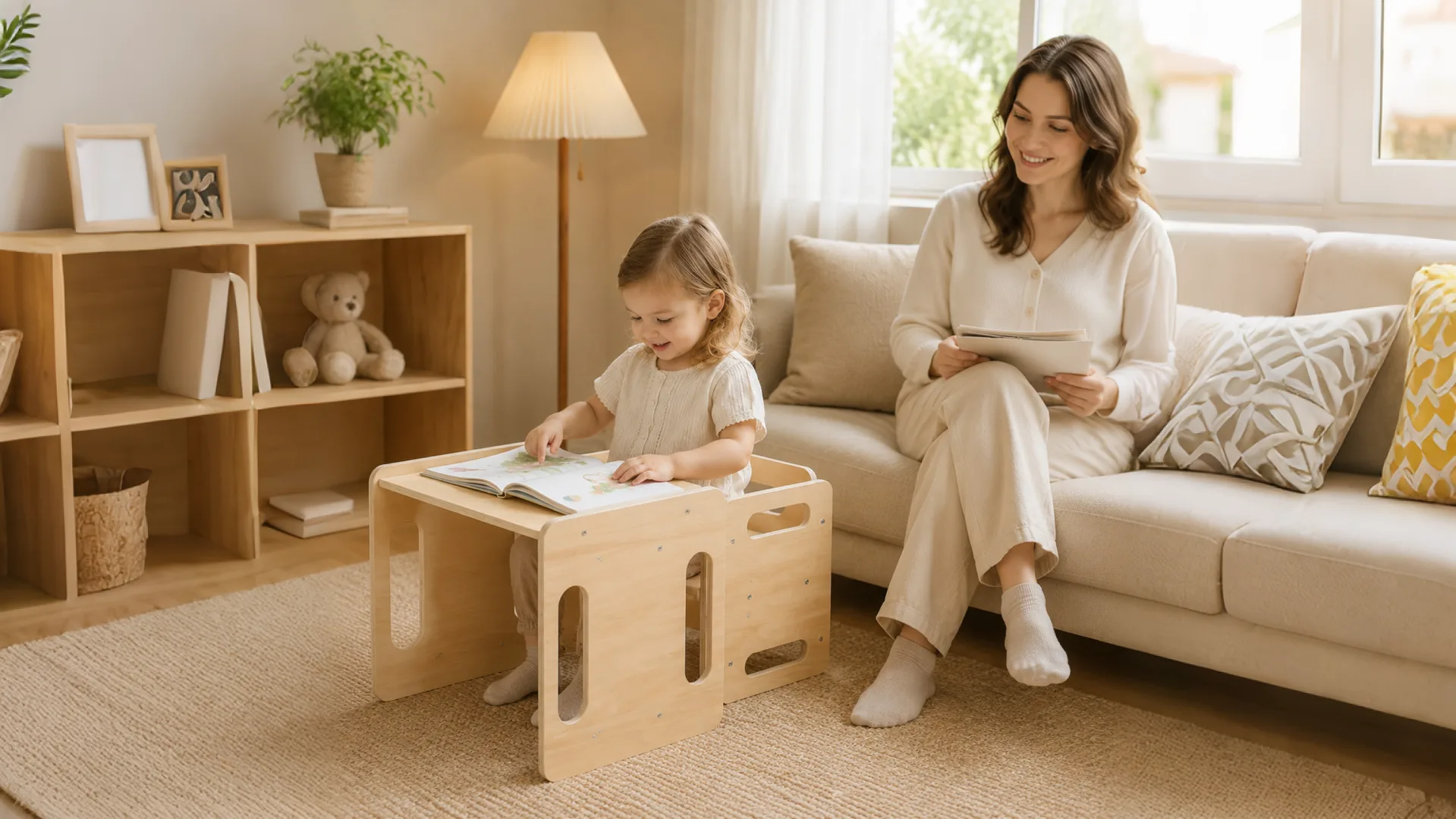
Toddlers rarely want to observe family life from the sidelines. They want to stir the pancake batter, carry a napkin to the table, and see what everyone else is doing. A home can make those small moments easier without being redesigned from top to bottom. The most useful changes are often practical: put a few safe items within reach, make a place for drawing or snacks, and allow enough time for a child to try.
Start With the Moments That Happen Every Day
Before buying anything, notice where your child naturally wants to join in. Is it the kitchen while breakfast is being made? The dining table where an older sibling draws? The entryway where everyone gets ready to leave? These repeated moments are good places to make the environment more welcoming. A small adjustment in the right spot can be more useful than a collection of toys that rarely comes out.
In the kitchen, a stable Lernturm can bring a toddler closer to a supervised activity at counter height. The goal is participation, not independent access to hot pans, knives, or appliances. An adult should stay beside the child, choose a simple task, and keep hazards out of reach. Rinsing fruit, moving a spoon, or watching dough come together can make an ordinary routine feel shared.
Give Children a Place of Their Own
A child-sized table creates a different kind of invitation. It is a place to turn pages, stack blocks, make a puzzle, or have a snack without needing to borrow the adult dining table. A Kindertisch mit Stühlen can work best when it is easy to reach and not crowded with too many activities at once. One tray of crayons or a small basket of books is often enough to get started.
Families do not need a separate playroom for this to work. A corner of the living room or a spot near the kitchen can become a useful activity area. Keeping the setup close to where adults are helps a young child feel connected. It also makes supervision easier. The point is not to keep a toddler occupied alone, but to let them participate in the household while a caregiver remains present.
Make the Space Easy to Use
A child friendly home is not a miniature version of an adult home. It is a home where children can understand what is available and where things go. Put a few books on a low shelf with the covers visible. Keep drawing supplies together in a container that is simple to open. Leave enough clear space on the table for one activity. When the setup is predictable, a child can make choices and help with tidying up.
Safety belongs in the design from the start. Secure furniture that could tip, check that chairs do not slide easily, and keep cords, hot drinks, and small objects away from a toddler’s reach. If a child is helping in the kitchen, make the boundary clear: some things are for watching, some are for touching with an adult, and some are not part of the activity. Clear routines are easier for children to learn than a long list of changing warnings.
Participation Is More Important Than Perfection
Toddlers may spill, take an unexpected route through a task, or decide that the wooden spoon is more interesting than the recipe. That is normal. A helpful adult can offer one small job and accept that it may take longer than doing it alone. The task should suit the child’s age and abilities, and the adult remains responsible for safety. Shared routines can feel satisfying even when the result is not perfectly neat.
The same attitude works at a child’s table. Instead of arranging a complete craft project, offer a few materials and let the child decide what to make. A picture may become a map, a line of blocks may turn into a road, and a snack break may become a chance to talk about the day. These ordinary interactions build a sense of belonging. They show a child that home life is something they can take part in, not just watch.
A Few Thoughtful Changes Go a Long Way
A welcoming home does not require a strict design style or a large budget. It needs safe access to a few useful activities, a place where a child can sit and explore, and an adult who is available. Start with one daily routine and make it a little easier for your toddler to join. When the space supports real family life, small moments of participation can become the best part of the day.
Include the Child Without Adding More Clutter
A child friendly setup can actually reduce the number of things left out. Instead of offering a full shelf of toys, choose a small number of useful activities and return them to the same place after use. A book basket, a few building pieces, and a drawing tray may cover many quiet moments. The child gets a clear choice, and adults have fewer items to sort at the end of the day. Practical design is not about adding more furniture; it is about making everyday spaces easier to share.