A Practical Guide to Buying Cement Tanker Trailers from China
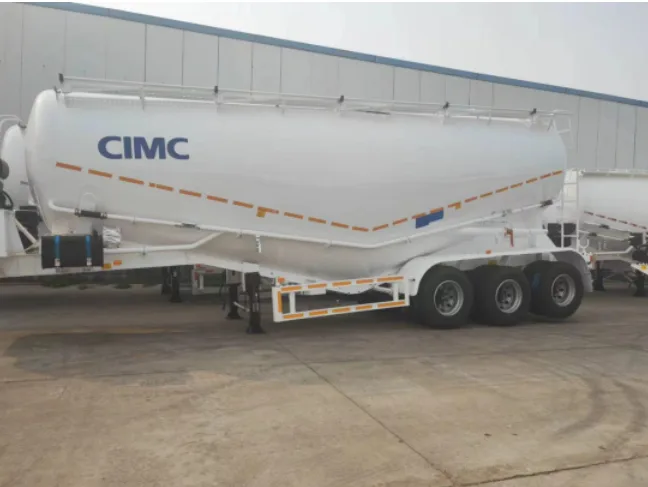
China has become an important sourcing destination for companies looking for bulk material transportation equipment. For construction companies, cement distributors, and logistics operators, buying a cement tanker trailer from China provides access to different vehicle configurations, competitive manufacturing costs, and customization options.
However, choosing the right trailer involves more than comparing prices. Tank capacity, material quality, axle configuration, and pneumatic unloading performance all affect the vehicle’s suitability for daily transportation.
If you are planning to import a bulk cement tanker trailer, understanding the product specifications and selecting an experienced manufacturer are essential steps.
1. Understand Different Types of Cement Tanker Trailers
A cement tanker trailer is designed to transport dry bulk materials such as cement, fly ash, lime powder, and other industrial powders. Unlike conventional cargo trailers, it uses a pneumatic discharge system to transfer materials directly into storage silos.
Chinese manufacturers offer different tank structures and configurations to meet various transportation requirements.
Common options include V-type and round tank designs, as well as two-axle and three-axle configurations. The right model depends on the required payload, road conditions, and local transportation regulations.
When selecting a cement tanker trailer, consider the type of material being transported, the required loading capacity, and the unloading facilities at your destination.
2. Check the Key Technical Specifications
The technical configuration of a cement tanker trailer directly affects its transportation efficiency and operating costs.
Tank Capacity and Material
Tank capacity should match your transportation requirements. However, tank volume and actual payload are different. The legal loading weight also depends on material density, trailer tare weight, and local vehicle regulations.
Tank material and plate thickness are equally important. Ask the manufacturer about steel specifications, welding quality, and structural design before confirming the order.
Axles and Suspension
The axle configuration should be suitable for the expected load and road conditions. Check axle brands, rated capacity, suspension type, tire specifications, and braking systems.
Air Compressor and Discharge System
A pneumatic cement tanker trailer relies on compressed air to unload bulk powder. Compressor output, working pressure, and pipeline arrangement all influence unloading performance.
The compressor and discharge system should be selected according to tank capacity and actual operating conditions.
3. About CIMC Vehicles: A Chinese Semi-Trailer Manufacturer
CIMC Vehicles is a major Chinese enterprise specializing in the global semi-trailer industry. Its business covers semi-trailer design, manufacturing, distribution, intercontinental production, sales, and related services.
The company operates across international markets and offers a broad range of transportation equipment for different industries. According to its official company profile, CIMC Vehicles sold more than 140,000 vehicles worldwide in 2025.
CIMC Vehicles Sales Co., Ltd., based in Yangzhou, China, integrates product design, research and development, manufacturing, and sales. Its published company profile describes nine major product series with more than 300 specifications, covering tank trailers, flatbed trailers, lowbed trailers, container trailers, dump trailers, and other specialized vehicles.
For bulk material transportation, CIMC offers cement tanker trailer models designed for carrying cement powder and other dry bulk materials. Available configurations include two-axle and three-axle models, with different tank capacities and pneumatic unloading systems.
For international buyers, working with an established manufacturer can make it easier to discuss technical configurations, product customization, quality inspection, and export arrangements.
4. Compare Cement Tanker Trailer Prices in China
The cement tanker trailer price varies depending on tank capacity, steel specifications, axle brands, tires, air compressor systems, and optional equipment.
Customized trailers may cost more than standard models because of additional design and manufacturing requirements.
When requesting quotations, buyers should ask for a complete configuration list rather than comparing the total price alone.
A detailed quotation should include tank specifications, axle configuration, suspension, pneumatic equipment, accessories, warranty terms, and delivery arrangements.
It is also important to clarify whether the quotation is based on EXW, FOB, or CIF terms, as these cover different transportation costs and responsibilities.
5. How to Choose a Reliable Cement Tanker Trailer Manufacturer
Finding a reliable cement tanker trailer manufacturer is an important part of the purchasing process.
Start by checking the company’s actual production capabilities. Relevant areas include tank fabrication, welding equipment, chassis assembly, surface treatment, and quality inspection.
Export experience is another consideration. Manufacturers familiar with international orders are generally better prepared to handle product customization, export documentation, and shipping arrangements.
Before making a decision, compare suppliers based on:
Manufacturing experience and factory facilities.
Product specifications and component brands.
Quality control and inspection procedures.
Export experience and delivery schedules.
Warranty coverage and spare parts availability.
A competitive supplier should be able to explain its product configuration clearly and recommend suitable options based on your transportation requirements.
6. Consider Shipping and Import Requirements
After selecting a suitable cement tanker trailer, international shipping and customs clearance need to be arranged.
RORO shipping is commonly considered for complete trailers when suitable vessel services are available. Breakbulk or other special shipping arrangements may be required for trailers that cannot be handled through standard container services.
Before shipment, confirm the trailer dimensions, shipping weight, departure port, and destination port.
Import documents may include a commercial invoice, packing list, bill of lading, certificate of origin where required, and relevant vehicle technical documents.
Buyers should also check local vehicle registration requirements, permitted axle loads, and applicable import regulations before placing an order.
Conclusion
Buying a cement tanker trailer from China can be a practical option for businesses involved in cement transportation and construction material distribution.
The key is to choose a trailer that matches your transportation requirements rather than focusing only on the initial purchase price. Tank capacity, material quality, axle configuration, pneumatic discharge performance, and manufacturer experience should all be considered.
Working with an experienced manufacturer such as CIMC Vehicles can help international buyers explore suitable trailer configurations and obtain support throughout the purchasing process.