Açaí Bowl, Smoothie Bowl, Superfood Bowl: What’s Actually Different?
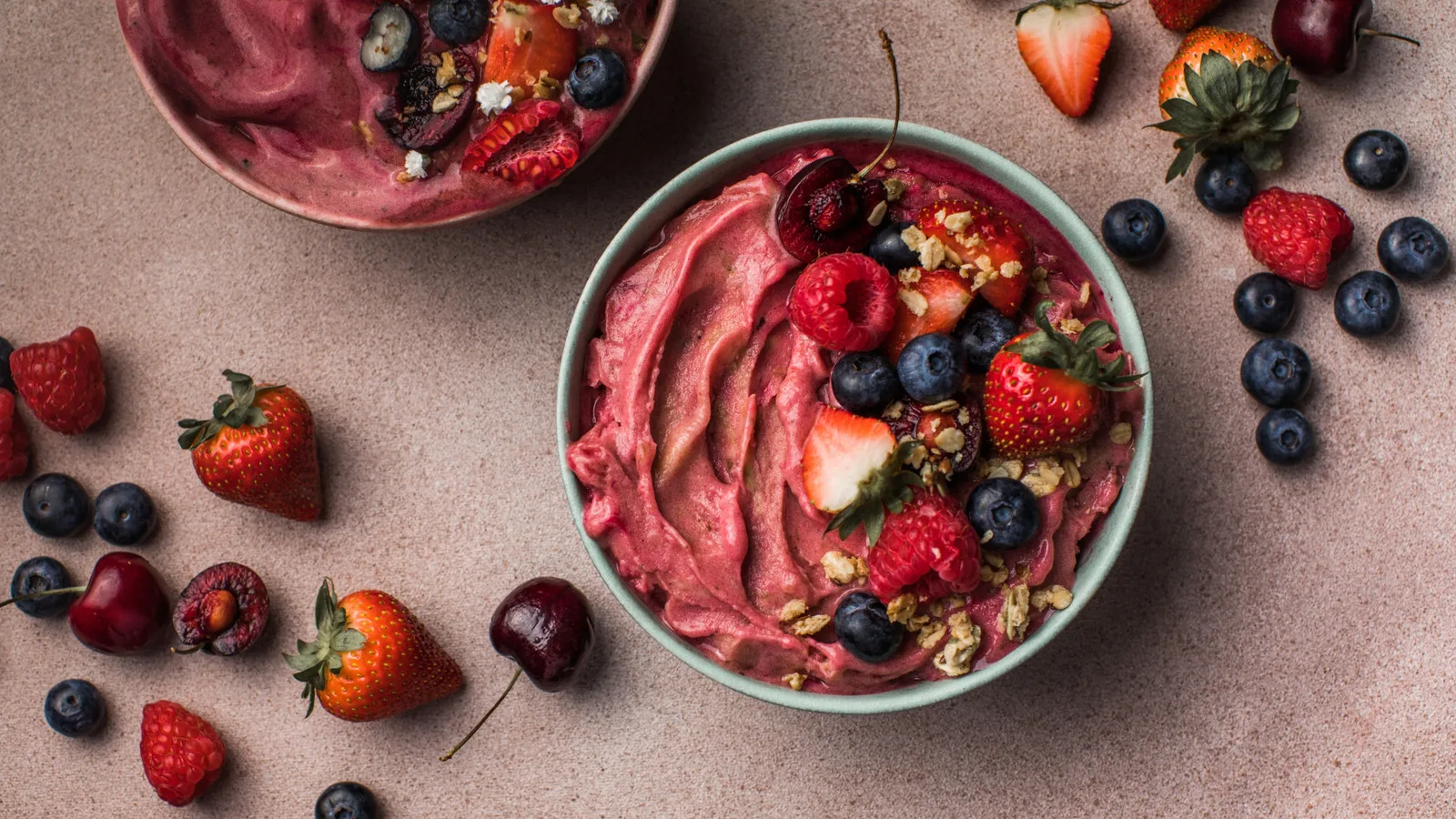
Walk into three different shops, order those three things, and there’s a fair chance you’ll be handed the same product. The names drifted apart in marketing and stayed identical at the counter. If you’ve ever wondered whether you’re paying for a different thing or just a different word, here’s how to tell them apart.
Start with what açaí actually is
Açaí is a berry that grows on a palm along the Amazon River. Frozen and blended, it produces a deep purple base that tastes closer to unsweetened dark berries than to anything candy-sweet — tart, faintly earthy, and thick enough that a spoon will stand upright in it.
That last detail matters more than the flavor, because thickness is the real dividing line in this category. A bowl is a frozen base you eat with a spoon. A drink is a beverage. Plenty of menus attach the word “açaí” to something that arrives with a straw, and it is not the same product — different texture, different portion, different role in your day.
The base is the only thing that really changes
Nearly every bowl in this category is built in two layers: a thick frozen base, then a crunchy layer on top — usually granola, nuts, shredded coconut, fresh fruit, sometimes honey or a nut butter drizzle.
The toppings are the part that photographs well, and they vary the least from shop to shop. The base is where the actual differences live, and it generally falls into one of two camps.
Fruit bases — açaí, mango, mixed berry, banana. Lighter, tarter, and the closest thing to eating frozen fruit with a spoon.
Protein bases — built on a plant protein powder rather than fruit. Denser, more filling, and closer to a small meal than a snack. These are the ones people reach for after training or in place of lunch.
So “açaí bowl,” “smoothie bowl,” and “superfood bowl” mostly describe the same construction. Only one of the three tells you anything concrete: an açaí bowl should have açaí in the base. The other two are category names, not recipes.
How to read a menu that doesn’t spell it out
Two questions get you to the right bowl quickly.
First: fruit base or protein base? If the bowl is standing in for a meal, you want the protein one. If it’s a warm-afternoon reset, fruit.
Second: what does the number on the menu actually cover? This is the one that trips people up. A bowl listed at 225 calories is very often the base alone — granola, nut butter and honey can move that figure meaningfully once they’re on top. It isn’t a trick; it’s just how most shops build the number. But it means two bowls listed twenty calories apart can land quite differently once they’re assembled.
Shops that publish per-base numbers make this easy to check. Fuel Up Energy Cafe in Bolingbrook, Illinois — fuelup.cafe/acai-shop-bolingbrook-il — prints the base calories for all six of its bowls, and the spread illustrates the point neatly: the Açaí Bowl sits at 225, Berry Mango at 207, Mango at 205 with 9g of fiber, while Chunky Monkey, built on a plant-protein base with banana and peanut butter, runs 324. Same section of the same menu, meaningfully different bowls.
If a menu doesn’t print the numbers, ask whether the figure covers toppings. Most counters will tell you.
Ask about the toppings before you assume
Granola is close to universal in this category, and granola means grains and, very often, nuts. Almonds are the default garnish on a lot of fruit bowls. Peanut butter shows up on the banana-and-chocolate builds. Shops that make everything on shared equipment can’t rule out cross-contact, whatever the recipe says.
None of that is a reason to avoid the category — it’s a reason to say something at the counter rather than after. In practice, most shops will leave a topping off or swap one without fuss if you ask while the order is going in. The bowls are assembled to order; that’s the whole format.
The short version
The three names are largely interchangeable. What actually varies is the base — fruit or protein — and what the posted calorie count includes. Ask those two questions and the menu stops being a wall of purple photographs and starts being a set of choices you can compare.