ACH vs Wire Transfer: Which Payment Rail Fits the Business Transaction?
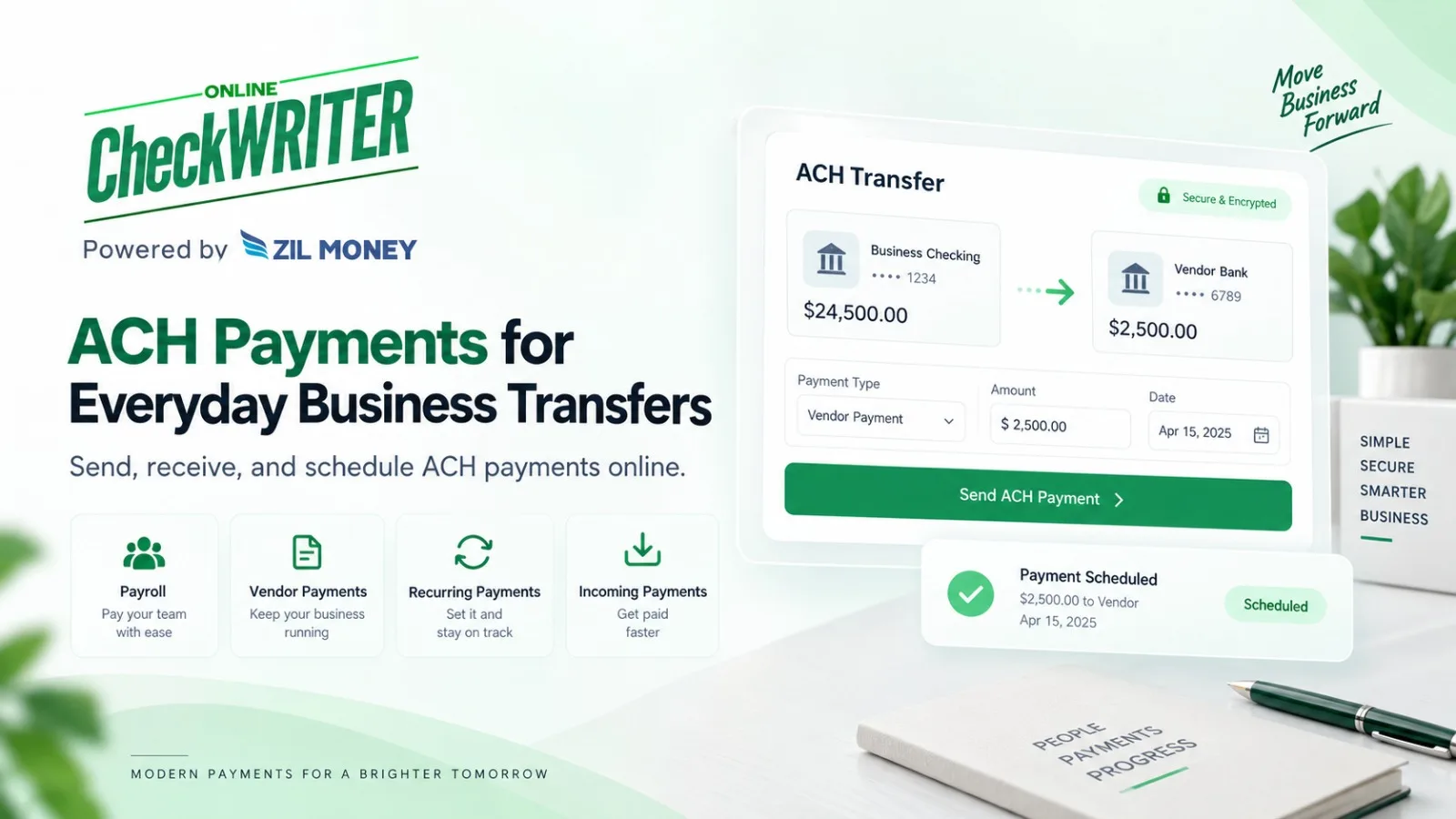
Disclosure: This article was published as part of a paid partnership with OnlineCheckWriter.com, a Zil Money platform. The author is an independent contributor.
The ACH vs wire transfer decision should start with the payment itself.
Both methods move money electronically, but they use different payment systems, have different timing characteristics, and can be priced differently by financial institutions and payment platforms.
For a business, the right choice depends on the recipient, deadline, transaction amount, cost, and level of urgency.
ACH Is Built for High-Volume Business Payments
ACH transactions move through the Automated Clearing House Network.
Nacha describes ACH as well suited to scheduled and recurring payments between known counterparties, including payroll, bill payments, account transfers, and business-to-business payments.
ACH payments can be credits, where the payer pushes money to a recipient, or debits, where authorized funds are pulled from an account.
For a business paying established vendors regularly, ACH can fit a repeatable payment process.
Wire Transfers Use a Different System
Domestic wire transfers can move through services such as the Federal Reserve’s Fedwire Funds Service.
The Federal Reserve describes Fedwire as a service used for mission-critical, same-day payments and emphasizes the finality of payments credited through the system.
That makes wires useful for certain time-sensitive or higher-priority transactions.
However, “same day” at the Fedwire system level should not be turned into a universal promise that every customer wire submitted through every bank or fintech platform will arrive according to the same schedule.
Provider cutoffs and processing requirements still matter.
Timing Is One of the Biggest Differences
ACH is no longer accurately described as a payment rail that always takes three to five days.
Nacha says ACH transactions can settle the same banking day, the next banking day, or, for certain ACH credits, be scheduled up to two banking days later. Its data indicates that a significant majority of ACH volume settles within one banking day or less.
Same Day ACH adds faster processing for eligible transactions.
Wire transfers are generally used when same-day movement and payment finality are particularly important.
Do Not Compare Network Timing With Customer Availability
Settlement between financial institutions and the time a customer sees a payment completed are related but not identical.
A payment platform can have review, funding, fraud-control, or submission steps before a transaction reaches the payment network.
OnlineCheckWriter.com’s current support material, for example, lists standard ACH with its own customer-facing processing estimate and offers Same Day ACH as a separate option.
Businesses should therefore review the timing shown for the actual service being used.
Cost Can Differ Considerably
Banks and payment providers commonly charge differently for ACH and wire transfers.
There is no universal customer price for either method.
Wires may have a higher direct transaction charge, while ACH providers can use flat, percentage, subscription, or volume-based pricing.
OnlineCheckWriter.com’s own current support documentation contains different ACH fee references across its knowledge base, so external content should not hard-code one ACH price until current product pricing is confirmed.
Use live pricing for the comparison.
Recipient Information Matters
Both payment methods require accurate recipient information.
A business sending ACH may need the recipient’s routing and account details.
Wire instructions can require additional information depending on the bank and transaction.
Because business email compromise and payment-instruction fraud can target vendor payments, businesses should independently verify unexpected changes before releasing funds.
Urgency should not replace verification.
Which Should a Small Business Use?
ACH can fit recurring suppliers, routine invoices, payroll, and other predictable payments.
A wire may fit a high-priority transaction where its payment characteristics justify the cost and operational process.
Same Day ACH can sit between those choices for many eligible domestic payments that need faster ACH processing.
OnlineCheckWriter.com supports ACH and wire payments as separate options. Businesses should compare the current fee, timing, recipient requirements, and transaction conditions before selecting one.
The useful answer to ACH vs wire transfer is not that one rail is universally better.
It is that each rail serves a different payment need.
OnlineCheckWriter.com – powered by Zil Money, is a financial technology company, not a bank. Banking and money movement services are provided through partner financial institutions and licensed service providers. FDIC insurance coverage applies only to eligible deposit products and accounts, and is subject to applicable terms, conditions, limitations, and requirements. Additional information regarding partner institutions, products, and services is available in the applicable terms and agreements.