ADP Marketplace Apps: What Businesses Should Check Before Connecting Payroll Data
Disclosure: This article was published as part of a paid partnership with Zil Money. The author is an independent contributor.
Businesses researching ADP Marketplace apps should look beyond the app name and marketing description.
The useful question is: What business task does this integration actually solve, and what payroll data does it need to do that job?
Marketplace integrations can address different needs, including HR workflows, accounting, benefits, time tracking, payroll operations, and payments. Two apps displayed in the same marketplace can therefore work very differently.
Start With the ADP Product
Before choosing an integration, confirm which ADP product the app supports.
An app designed for one ADP environment should not be assumed to work the same way with every ADP product.
Determine which ADP product is supported, what data the application can access, whether synchronization is one-way or two-way, how frequently information moves, and what operational problem the connection addresses.
That is a stronger evaluation method than choosing an app because it appears in a marketplace search.
Understand What Data Moves
Payroll data can include information that businesses should handle carefully.
Before connecting an application, understand what employee or payroll information the app reads or writes and why that access is needed.
Ask whether information updates automatically, whether manual action is required, and what happens when the source record changes in ADP.
The app should request data that makes sense for the function it performs.
Look for a Clear Business Purpose
A useful ADP Marketplace app should solve a defined task.
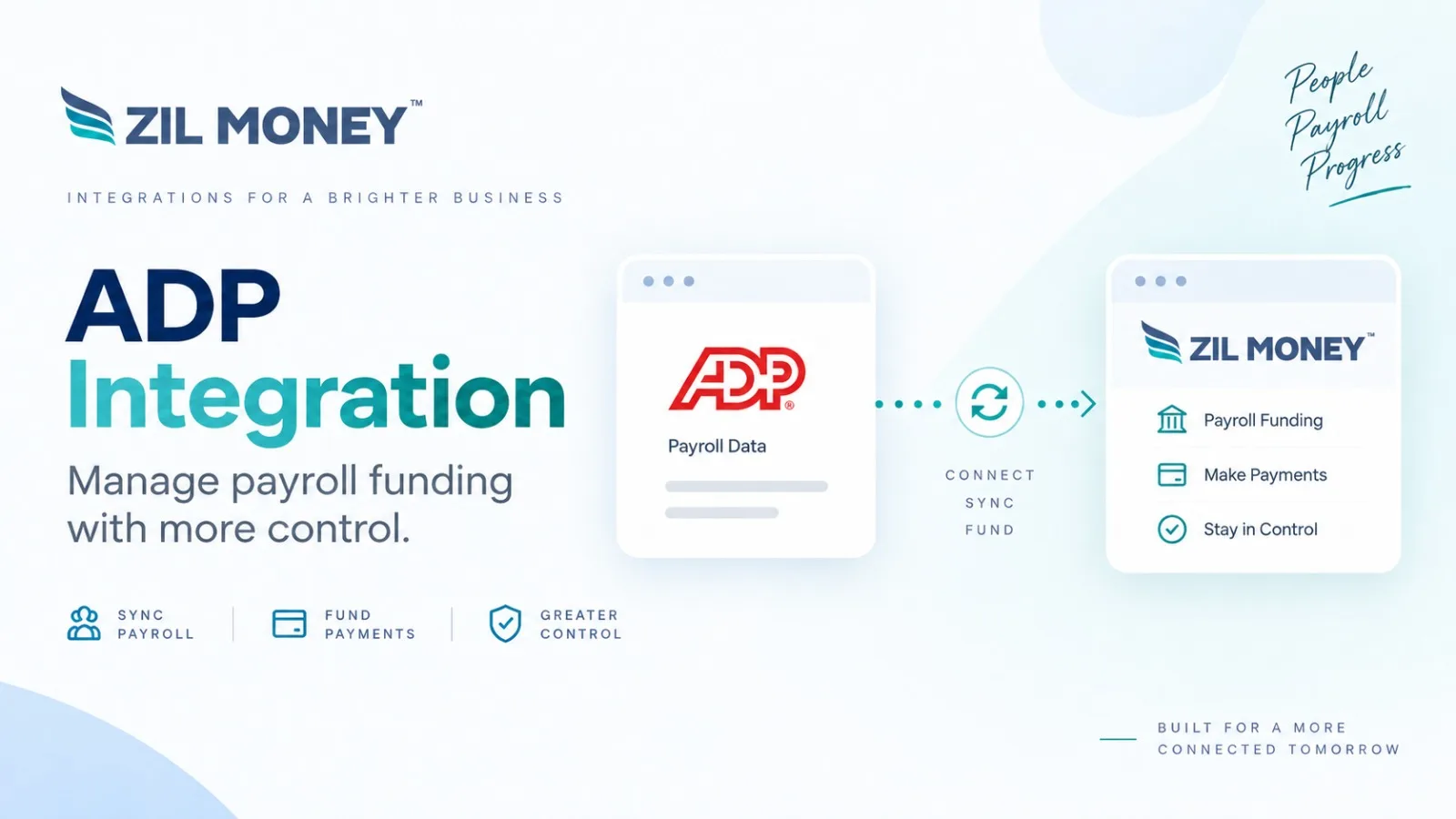
For example, Zil Money’s ADP integration is focused on payroll and payment operations. Zil Money’s current integration page describes connecting an ADP account, synchronizing payroll and employee information, reviewing payroll details, and selecting among supported payroll-processing options.
This makes the purpose easier to evaluate.
A business looking specifically for another way to fund payroll or manage supported payroll payment workflows can determine whether that function is relevant before connecting the app.
A company looking for benefits administration would naturally need a different integration.
Check What Happens After Connection
Installation is only the beginning.
Ask how users authenticate, how data appears after connection, who can authorize payroll-related activity, how errors are handled, and what record remains after a payment or payroll action is completed.
Zil Money’s current page describes phone verification during setup, account authorization, payroll processing choices, and a dashboard for reviewing payroll information and payment status.
Businesses should evaluate these steps against their internal approval rules.
Review Pricing Separately
Marketplace availability does not mean every related service has no cost.
If the integration supports card-funded payroll, the funding transaction may carry its own processing fee.
As of September 2026, Zil Money’s current support documentation lists a standard 2.9% credit-card processing fee. Businesses should confirm current pricing before using card funding because fees and terms can change.
Supporting payroll documentation may also be required for card transactions.
Use a Five-Question Test
Before adding any payroll integration, determine the supported ADP product, the data accessed, the direction and timing of synchronization, the user actions required, and the business problem being solved.
If those answers are unclear, ask for clarification before connecting payroll information.
ADP Marketplace apps can extend an existing payroll workflow, but an integration should earn its place by solving a real operational problem.
For businesses specifically evaluating payroll-funding and payment workflows, the Zil Money ADP integration provides current product details that can be reviewed alongside the company’s own approval, data, cost, and payroll requirements.
Zil Money, is a financial technology company, not a bank. Banking and money movement services are provided through partner financial institutions and licensed service providers. FDIC insurance coverage applies only to eligible deposit products and accounts, and is subject to applicable terms, conditions, limitations, and requirements. Additional information regarding partner institutions, products, and services is available in the applicable terms and agreements