AI Essay Grader: How AI Can Evaluate Essays and Give Instant Feedback
Every teacher who has faced a stack of 150 essays at 11 p.m. knows the exhaustion isn’t just physical — it’s the nagging worry that fatigue is affecting fairness. By essay number 80, are you reading as carefully as you did for essay number 5? Grading essays well takes sustained attention, subject expertise, and time that most educators simply don’t have in surplus. This is exactly the gap that AI essay grading tools have started to fill, and the shift is happening faster than most people outside education realize.
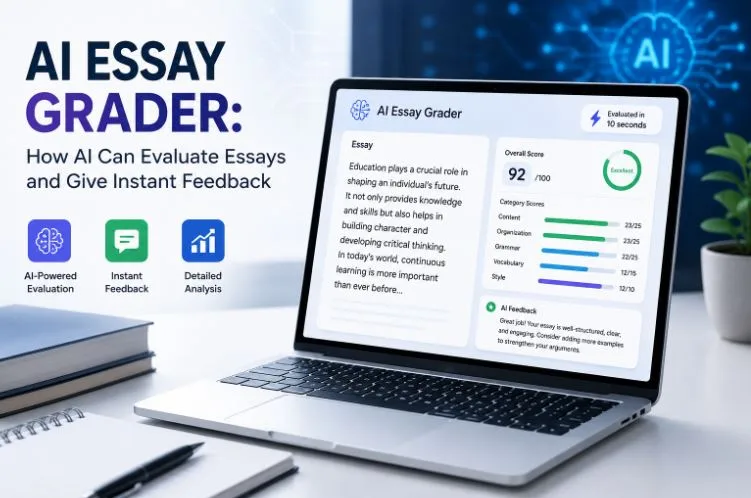
An AI essay grader like clasa.ai works by analyzing written text against structured criteria — grammar, coherence, argument strength, vocabulary range, and organization — and returning feedback within seconds rather than days. For students, that means feedback while the writing is still fresh in their minds. For teachers, it means reclaiming hours that used to disappear into red-pen marathons. But like any tool, it only helps when people understand what it actually does well, where it struggles, and how to use it responsibly.
This article breaks down how AI essay evaluation actually works, how to implement it effectively in a classroom or writing program, common pitfalls to avoid, and practical recommendations from people who’ve used these systems in real teaching environments.
How AI Essay Grading Actually Works
AI essay graders are built on natural language processing (NLP) models trained on large volumes of writing samples, often paired with human-scored examples so the system learns what strong, average, and weak writing looks like at different levels. Modern systems go well beyond the early “keyword matching” grading software of the 2000s.
Today’s tools typically evaluate several layers of writing simultaneously:
Mechanical accuracy — spelling, grammar, punctuation, and sentence structure. This is the layer most people assume AI handles, and it’s also the layer where AI is most reliable.
Structural coherence — whether the essay has a clear thesis, logical paragraph flow, and appropriate transitions. Language models are surprisingly good at detecting when an argument loses its thread or when a conclusion doesn’t match the introduction.
Content relevance — whether the essay actually answers the prompt. This is trickier, and it’s where weaker tools fall short. A well-built AI grader compares the essay’s content against the assignment’s requirements, not just its own internal sense of “good writing.”
Style and voice — vocabulary sophistication, sentence variety, and tone appropriateness for the assignment type (persuasive, narrative, analytical, etc.).
The best systems don’t just assign a score. They generate specific, sentence-level comments — the same kind a thoughtful teacher would write in the margins, but delivered instantly and consistently across every submission.
Step-by-Step: Implementing AI Grading in Your Workflow
If you’re considering bringing AI evaluation into your classroom, tutoring practice, or writing program, a gradual rollout works far better than switching everything overnight.
Step 1: Start With Formative, Not Summative, Assessment
Use AI grading for drafts and practice essays before applying it to graded work that counts toward final marks. This lets students get comfortable with the feedback style, and it lets you calibrate the tool against your own judgment without risk.
Step 2: Define Your Rubric Clearly
AI tools grade against criteria — vague instructions produce vague feedback. Before uploading essays, spell out exactly what you’re assessing: is this a persuasive essay judged on argument strength, or a creative piece judged on voice and imagery? The clearer your rubric, the more useful the output.
Step 3: Run a Calibration Round
Take 10–15 essays you’ve already graded manually and run them through the AI tool. Compare scores and comments side by side. This tells you where the tool aligns with your judgment and where it might be too lenient or too strict on certain writing styles.
Step 4: Introduce Students to the Feedback Loop
Rather than treating AI feedback as a final verdict, frame it as a first-pass editor. Ask students to read the AI’s comments, revise accordingly, and then resubmit. This turns grading into an iterative process rather than a one-time judgment — which is closer to how professional writers actually improve.
Step 5: Reserve Human Review for High-Stakes Work
For essays that determine final grades, scholarship applications, or standardized assessments, use AI as a first pass and a consistency check, with a human making the final call — especially on nuanced elements like originality, tone, or persuasive impact.
Common Mistakes and Challenges
Treating AI scores as infallible. No AI grader is perfect, and treating a numeric score as gospel undermines the whole point of having a human educator in the loop. AI is excellent at flagging patterns; it’s still developing at judging creativity, irony, or unconventional but effective writing choices.
Ignoring bias in training data. Language models can carry biases from their training data, sometimes favoring formulaic, five-paragraph structures over more experimental or culturally distinct writing styles. Teachers should periodically audit scores across different student groups to check for consistency.
Using AI feedback as a replacement for teaching, not a supplement to it. Students who only ever see AI comments miss out on the mentorship relationship that helps them grow as writers. The tool works best as an amplifier of teaching, not a substitute for it.
Overloading students with feedback. AI tools can generate exhaustive comments — sometimes dozens per essay. Overwhelming a student with every possible correction at once can be discouraging rather than motivating. It often helps to filter feedback down to the two or three most impactful areas for improvement.
Skipping the calibration step. Educators who plug in an AI grader without checking its scoring against their own standards risk inconsistent grading policies across a course or department.
Practical Tips and Expert Recommendations
- Pair AI feedback with a short human comment. Even one or two sentences from a teacher — “I agree with the AI on your structure, but I think your third paragraph is actually your strongest argument” — reassures students that a real person is still engaged with their work.
- Use AI grading to track growth over time, not just to score individual essays. Because the scoring is consistent, it’s genuinely useful for showing a student their vocabulary range or argument clarity improving across a semester.
- Customize rubrics for different assignment types. A grader tuned for analytical essays will misjudge creative writing if you don’t adjust the criteria first.
- Set expectations with students upfront. Explain that AI feedback is meant to speed up revision, not replace their own judgment or a teacher’s final assessment.
- Revisit your calibration every semester. Writing conventions, class demographics, and assignment types change — a rubric that worked well last year might need adjusting.
- Use instant feedback to encourage more drafts. One of the most underrated benefits of AI grading is that it makes multiple drafts practical. Students who once wrote one draft and submitted it can now revise three or four times because feedback doesn’t cost a teacher’s evening.
Conclusion
AI essay grading isn’t about replacing teachers — it’s about giving both students and educators something that traditional grading struggled to provide: fast, consistent, detailed feedback at scale. Used thoughtfully, with clear rubrics, regular calibration, and a human still making the final judgment calls, these tools free up time for what actually matters — real teaching, real mentorship, and real growth in student writing. The technology works best not as a shortcut, but as a genuine partner in the writing process.