AI-Powered CRM Software: How Businesses Can Automate Sales and Customer Engagement
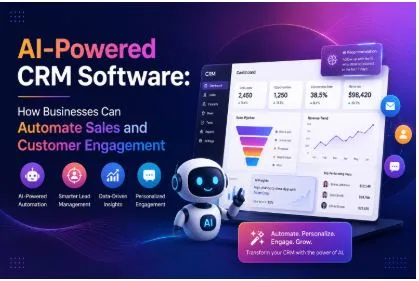
Customers today demand fast responses while they expect custom-tailored interactions and they want uninterrupted contact through multiple communication platforms. Sales teams require effective lead management systems, which let them handle follow-ups and customer information and daily responsibilities without spending excessive time on manual tasks. AI-powered CRM software systems create a major impact on customer relationship management operations.
Businesses can automate their daily operations through customer relationship management systems, which they combine with artificial intelligence. The system allows businesses to recognize the pattern of customers’ behavior, which the sales team can use for effective decision-making. CRM systems become more useful and efficient due to AI, helping companies in identifying good leads and sending follow-up messages at the right time.
What is AI-powered CRM?
An AI-powered CRM system works through artificial intelligence in processing customer data, thus enabling business process automation.
Traditional CRM systems primarily function to maintain customer information together with sales data and communication records and other essential business information. AI-powered systems use data to identify patterns, which enable them to make predictions and provide recommended actions.
The system uses AI-powered CRM technology to detect leads that show higher potential for buying products while it recommends optimal times for sales team follow-up and produces automatic summaries of customer interactions.
The system allows businesses to decrease their repetitive tasks because their sales and customer service teams can now dedicate additional time to serve their customers.
How AI Automates Sales Activities
The sales team may spend a considerable amount of time doing the repetitive work. Many of these tasks are automatable by the use of AI-powered CRM software.
- Lead Scoring
All your leads are not created equally—they do not show similar levels of interest. Through analysis of information on previous customer interactions, website visitations, purchase history, and reaction to sent email messages, among others, AI helps in identifying valuable leads that require special treatment.
Then the CRM system gives scores to the leads showing their level of engagement—the sales team can be able to know who requires attention first.
2. Automated Follow-Ups
But keeping track of when you need to reach out again might be too much work for your sales reps who have a lot of leads open.
That’s why AI-powered CRM software will remind them through scheduled messages about when the perfect moment is to send another one to close the sale. For example, if your lead opened that last message, visited your product page, or asked for more details, your CRM should know what action comes after that!
3. Sales Forecasting
With access to historical sales data, current sales opportunities, customer behavior, and more, an AI system can generate sales forecasts based on all this business information. Managers can then utilize these AI-generated insights to better understand potential sales trends.
How AI Improves Customer Engagement
But how do you go above and beyond to ensure that your customers are getting exactly what they need, especially when you’re selling them products?
Well, an AI-powered CRM could be one of those things that could up your engagement game.
Personalized Customer Experiences
People tend to engage with your brand when you deliver them suitable messages about subjects that hold personal value for them. AI technology enables businesses to understand their customers better through analysis of their shopping history and website activity and other contact points, which results in personalized customer experiences. A retailer can use its Customer Relationship Management (CRM) system to provide customers with personalized product recommendations instead of generic promotional deals.
AI Chatbots and Virtual Assistants
The list contains different subjects that do not require our staff members to handle these inquiries because they involve product information and order tracking and account questions and scheduling matters. When the customer does need assistance from our colleagues from support teams, we use AI chatbots to transfer such requests to someone appropriate for addressing this particular query.
When we connect our chatbot systems to our CRM software, we have access to a variety of data points relative to every individual client, allowing us to customize bot messages depending on what we know about them.
Important Features of AI-Powered CRM Software
When selecting an AI-powered CRM for your organization, you have to look at specific features that can meet the needs of the business while helping increase sales.
Some important features include:
- AI-based lead scoring
- Automated email and follow-up management
- Customer data management
- Sales forecasting
- AI chatbots
- Customer segmentation
- Sentiment analysis
- Sales pipeline management
- Predictive analytics
- Task and workflow automation
- Customer behavior tracking
- Reports and dashboards
You must find out what exactly matters most according to your particular situation before making up decisions blindly about adopting any given piece of technology solution offered by providers today.
Benefits of AI-Powered CRM for Businesses
There are several advantages of implementing AI-powered CRM software for businesses.
Saves Time
You will no longer need to perform repetitive tasks through manual work because of this system. The system performs automatic execution of various tasks, which include data entry and follow-up reminder distribution and customer segmentation and report generation.
Helps Sales Teams Focus on Important Leads
The sales team can concentrate on their vital leads because AI systems analyze customer data patterns to identify their best potential prospects. Your sales representatives will need to spend their time working with potential customers who require personalized assistance.
Improves Customer Service
With all this information at their fingertips, your customer service team will be able to understand their past conversations with you, their purchases, and anything else they may have asked for more quickly—leading to much faster (and smarter) answers!
Supports Better Business Decisions
AI has proven that big data isn’t just about quantity—there are many ways you can take your CRM data and create actionable insights. This means managers will have more insight into their customers’ behaviors as well as trends happening within the market for your products and services.
Supports Business Growth
With an increase in your business, you will have more and more customers, leads, and interactions. An AI-powered CRM automates several things for you to handle all these interactions easily without relying completely on manual processes.
Choosing the Right CRM Development Partner
Creating an effective AI-powered CRM system isn’t just about installing some off-the-shelf software—it’s about building a secure platform capable of integrating advanced artificial intelligence into existing business processes involving customer interactions.
Working alongside experienced CRM software development company will ensure your organization receives the right support when planning and developing its custom CRM application tailored to meet unique needs.
This includes everything from designing architectural frameworks for handling large amounts of customer data safely to implementing appropriate AI features connected seamlessly across all relevant business functions, including sales pipelines & communications systems, among other things related directly or indirectly associated within general scope activities performed during such process overall!
What Does the Future Hold for AI-Powered CRM?
Before committing, here are some tips to help you choose the best development company:
- Technical expertise
- Previous CRM projects
- Development Approach
- Security Practices
- Post-Launch Support
Let’s take a closer look at what the future holds for AI-powered CRM.
As companies amass even greater amounts of customer data, we expect that artificial intelligence will become an increasingly important component of CRM software.
There are many exciting possibilities for future CRM platforms, including advanced predictive insights, smarter virtual assistants, automated sales workflows, and real-time customer recommendations.
Conclusion
AI-powered CRM software operates as a revolutionary business solution that enables companies to enhance their sales administration and customer relationship operations. Teams can achieve better operational efficiency through AI systems, which automate their routine work while finding important prospects and delivering customized messages and essential customer data.
The selection process for business CRM development or upgrade projects needs to identify AI features that address actual business needs. A company can establish its AI-powered CRM system as a vital component of its sales and customer interaction strategy through the combination of suitable technology with a data strategy and a development team.