ALPR Systems Explained & How Software Makes Things Truly Automated
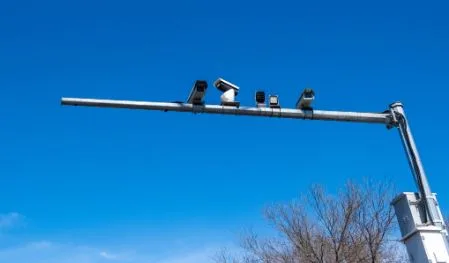
Automatic License Plate Recognition (ALPR) systems are used for effective traffic, parking, and law enforcement management.
From security surveillance and access control to toll and parking applications, they allow vehicle plate data to be recorded in an automated fashion with speed and precision. Solutions like SentiVeillance are perfect when you want to deploy state-of-the-art imaging and data processing technology in a real-world vehicle monitoring setup.
ALPR Technology Overview
To put it simply, an Automatic License Plate Recognition Algorithm works by taking a vehicle image and then extracting the license plate data. The implementation includes special cameras that are placed at different locations, from parking entrances and toll gates to intersections and roadside installations.
These cameras are programmed to work in multiple weather and lighting conditions. They use infrared illumination at night to make number plates visible. Once an image is taken, the software extracts a specific portion of the vehicle image that represents the entire license plate region.
Following this, the ALPR software is activated to examine the plate region. The software or program looks for words and letters and decodes them through optical character recognition (OCR) once individual characters and numbers are separated from each other. The data obtained is either stored or compared against a certain database.
The Building Blocks of an ALPR System
A reliable ALPR solution is dependent on a number of components that need to work together. The camera captures the visual data that the system requires to recognize license plates. There is a processing unit that needs to be able to examine the visual data, a proper database that has to keep records, and a network setup that helps the cameras and other components of the system communicate with each other. For larger applications, cloud-based systems are used. Since data from multiple locations is processed and stored in one place, operators are able to monitor vehicle data across a large geographical area. Filters, correction factors, and similar features make the software essential for improving the recognition rate. We’ll discuss what other software solutions are required later.
Parking & Access Control
Parking applications are where the use of ALPR is most commonly observed. Instead of having customers keep track of a ticket or identification card, facilities can track vehicle data automatically when vehicles enter and exit.
It records the time at which a vehicle enters and leaves a premises for the calculation of parking duration. It also integrates with payment processing services to make the process smoother and faster. For example, residential townships, organizations, and buildings use ALPR for gate automation. It helps provide automatic gate access to authorized vehicles, ensuring traffic congestion does not occur and security personnel do not have to intervene by manually cross-checking credentials for every entry.
The Rising Significance of Intelligent Vehicle Detection Systems
As image-capturing equipment and recognition algorithm technology evolve, ALPR is becoming more accurate, reliable, and versatile. Modern systems have advanced image-processing capabilities to recognize license plates in challenging scenarios and offer fast computing power for real-time decision-making.
Increasingly, organizations in both the public and private sectors are deploying ALPR technology for traffic management, security, and vehicle monitoring across premises. They continue to address the difficulties inherent in monitoring a continuously growing transportation landscape in smart-city initiatives and public safety efforts.