Aluminum Precision Machining: The Strategic Material Powering Modern Manufacturing
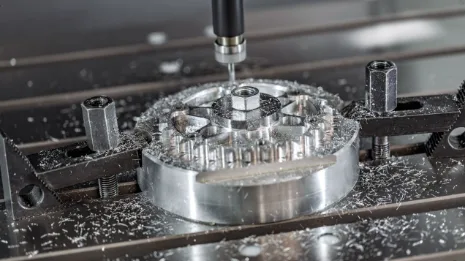
Aluminum has become one of the most strategically important materials in modern manufacturing. Its combination of low density, high strength-to-weight ratio, excellent thermal conductivity, and natural corrosion resistance makes it indispensable across industries where weight reduction and performance are non-negotiable. From electric vehicle battery housings and aerospace structural components to medical device enclosures and consumer electronics, aluminum precision machining has become a foundational capability that determines whether products can meet the demanding specifications of modern engineering.
The market reflects this reality. The global aluminum CNC machining service market was valued at approximately USD 10.37 billion in 2025 and is forecast to reach USD 13.88 billion by 2032, growing at a compound annual rate of 4.3 percent. A separate segment analysis places the aluminum CNC machining services market at USD 3.57 billion in 2024, projected to reach USD 5.81 billion by 2031 at a 7.2 percent compound annual growth rate. These figures reflect sustained demand from automotive, aerospace, electronics, and medical sectors, each of which is pushing aluminum components toward tighter tolerances and more complex geometries.
Why Aluminum Occupies a Unique Position
Aluminum’s appeal is rooted in physics. Its density of approximately 2.7 grams per cubic centimeter makes it roughly one-third as heavy as steel. Its oxide layer provides natural corrosion resistance without additional coatings. Its thermal conductivity—approximately 200 to 230 watts per meter-kelvin for common alloys—makes it the material of choice for heat sinks, cold plates, and thermal management systems. And critically for manufacturers, it machines exceptionally well at high speeds, enabling faster production cycles and longer tool life than harder materials.
Different alloys serve different purposes. The 6061 alloy is the industry workhorse—versatile, weldable, and available in multiple tempers. It is the default choice for enclosures, brackets, heat sinks, and structural components. The 7075 alloy offers significantly higher strength, with tensile strength comparable to some mild steels, making it suitable for aerospace fittings and highly stressed structural parts where weight reduction is critical. The 2024 alloy provides excellent fatigue resistance, while the 5052 alloy offers superior corrosion resistance for marine and chemical applications. Each grade demands specific machining parameters, and shops that have developed documented processes across these alloys deliver more consistent results.
The Machining Challenge
Despite its reputation for good machinability, aluminum is not without difficulties. Thin-walled structures common in electronic enclosures and heat sinks can extend machining cycles significantly because of the need to manage cutting forces and prevent deflection. Thermal expansion, while less severe than with harder alloys, still requires compensation on precision features. At high spindle speeds, chip evacuation becomes critical—recut chips can mar surfaces and accelerate tool wear.
The geometry of modern aluminum components adds another layer of complexity. Integrated structural assemblies that incorporate ribs, load-bearing features, and mounting points into a single machined part require multi-axis capability and sophisticated workholding strategies. Complex internal cavities, thin fins, and deep pockets push the limits of standard tooling. Shops that have invested in five-axis machining centers with high-speed spindles and through-tool coolant delivery are better equipped to handle these demands efficiently.
For engineers and procurement professionals sourcing aluminum components, the choice of manufacturing partner matters more than ever. A supplier who can produce a perfect prototype but cannot maintain consistency at volume is not a partner. A supplier who lacks documented process libraries for different alloys cannot deliver predictable results. The companies that understand this are building relationships with manufacturers who have made the long-term investments in aluminum precision machining capability.
Meeting the Demands of Critical Industries
The industries that rely most heavily on aluminum precision machining are those where failure carries unacceptable consequences.
In aerospace, aluminum alloys remain the backbone of airframe construction. Spars, frames, control surfaces, and structural components must meet exacting tolerances while reducing weight to improve fuel efficiency. The tolerance requirements for aerospace components are among the tightest in manufacturing, and the documentation requirements—full material traceability, first-article inspection reports, and certification packages—are equally demanding. Suppliers serving this sector must have quality systems aligned with AS9100 and the process discipline to maintain consistency across production runs.
The automotive sector, particularly with the shift to electric vehicles, has become another major driver. EV architectures use significantly more aluminum than internal combustion vehicles. Battery housings, motor frames, cooling plates, and structural components are increasingly specified in aluminum alloys. The lightweighting imperative is even more critical for EVs, where every kilogram saved extends range and improves performance. The push toward integrated structural assemblies—multi-feature single parts that reduce assembly joints and improve structural integrity—has made multi-axis machining capability a competitive necessity.
Medical device manufacturing completes the picture. Aluminum’s lightweight properties, corrosion resistance, and non-magnetic characteristics make it suitable for surgical instruments, diagnostic equipment housings, and mobility aids. The material does not interfere with imaging technologies such as MRI, a critical advantage in medical applications. Surface treatments such as hard anodizing enhance wear resistance and create sterile, easy-to-clean surfaces. For medical device companies, the traceability and documentation provided by a qualified machining partner become part of the device history file, supporting regulatory submissions and facilitating audits.
The Technology Behind Precision Aluminum Machining
Meeting today’s specifications requires more than conventional CNC equipment. Multi-axis machining centers, particularly five-axis systems, have become essential for complex aluminum components. Five-axis capability enables multi-directional cutting in a single setup, reducing handling errors and ensuring that critical features stay aligned. High-speed spindles—running at 15,000 RPM or higher—combined with optimized tool paths reduce cycle times for both prototyping and mass production.
In-process probing has become standard in serious precision machining operations. These systems verify dimensions between cycles and allow the machine to compensate for tool wear before parts drift out of specification. Statistical process control tracks variation across production runs, identifying trends before they produce non-conforming parts. Full material traceability follows every batch from incoming certification to finished component, creating a digital record that satisfies regulatory requirements.
Automation extends these capabilities further. Robot-tended CNC cells, automated pallet changers, and lights-out machining enable continuous production with minimal supervision. For high-volume aluminum components, automation closes the labor gap while improving consistency and throughput. A well-optimized aluminum machining cell can run overnight without operator intervention, dramatically increasing capacity while maintaining the quality that demanding applications require.
What to Look For in a Manufacturing Partner
For procurement professionals and engineering leaders, the assessment criteria for aluminum machining partners have sharpened. Equipment matters: multi-axis CNC machining centers with high-speed spindles, automated tool changers, and in-process probing are now the baseline for serious work. Material experience matters: a shop that has produced tens of thousands of aluminum components across different alloys understands the subtle behaviors that separate reliable production from costly scrap. Quality infrastructure matters: certifications and traceability systems provide the audit trail that regulated industries demand.
Perhaps most importantly, process documentation matters. The best shops maintain documented tooling strategies, cutting parameters, and inspection protocols for each aluminum alloy and part family they machine. This institutional knowledge is what separates shops that consistently deliver quality from those that treat every job as a new experiment. A comprehensive aluminum CNC machining guide can help procurement teams understand the capabilities and processes they should expect from a qualified partner.
For manufacturers developing innovative products—whether a next-generation medical implant, a lighter aerospace component, or a more efficient electronic device—the availability of reliable precision machining partners is a strategic asset. The companies that secure these partnerships early will be better equipped to navigate product complexity, manage supply chain uncertainty, and bring their innovations to market.
Looking Ahead
The aluminum machining market will continue to expand as aerospace, automotive, medical, and industrial applications demand the material’s unique properties. As components become more complex and tolerances tighten, the value of specialized process knowledge will only increase. The shops that have invested in advanced equipment, documented material expertise, and skilled workforces will capture the most demanding programs.
For those working with 6061, the most widely specified aluminum alloy, understanding its machining characteristics is essential. A dedicated 6061 aluminum machining guide provides detailed information on cutting parameters, tooling selection, and strategies for avoiding common pitfalls such as warping and built-up edge. The 6061 alloy’s balance of strength, machinability, and cost makes it the default choice for countless applications, but achieving consistent results at production scale requires the kind of documented process knowledge that experienced manufacturers have developed over years of practical experience.
In an era where every component matters, the ability to source high-quality aluminum precision parts from a trusted partner is not just a procurement consideration—it is a foundation of lasting competitive advantage. The companies that recognize this will lead their industries forward. Those that do not will compete for increasingly scarce commodity work.