
An Introduction to Torque Tool Testing
The car you drive, the planes you fly, the phones you use to text, and the washing machine you use to wash your clothes are all reliant on fasteners. Screws and bolts hold together the modern world – but can quickly come apart if they aren’t affixed with the appropriate amount of torque. Fasteners torqued too tightly can break. Fasteners torqued too loosely can come unscrewed.
To ensure fasteners perform reliably, assemblers must regularly test their torque tools. Testing gives those who develop, assemble, and test products confidence that their end goods won’t fail prematurely – and ensures all relevant quality standards are met.
Here’s an introduction to torque tool testing, including best practices and guidance about how to test your tools.
Why Torque Tools Require Routine Testing
Manual, pneumatic, electric torque screwdrivers and wenches – and any other tool used to install fasteners – must be tested routinely. Most torque tools slip, click, or stop automatically to signal that the appropriate torque has been reached. Over time, those settings can shift, eventually leading to fasteners being under- or over-torqued.
Depending on the product, an improperly torqued fastener can create issues ranging from inconvenient to life-threatening. A broken screw in a laptop might trigger a recall – but a loose bolt in an airplane engine could lead to fatal accidents.
Consumer safety is the primary concern, but cost is also a consideration. Product recalls are expensive, and failure to comply with standards can result in fines and fees. Recalls and accidents also raise questions about a brand’s quality and can damage its reputation.
How to Test Torque Tools
Manufacturers and engineers must have confidence in the tools they use to assemble their products. The only way to verify that tools are within tolerance is to test them with a precision torque tool tester.
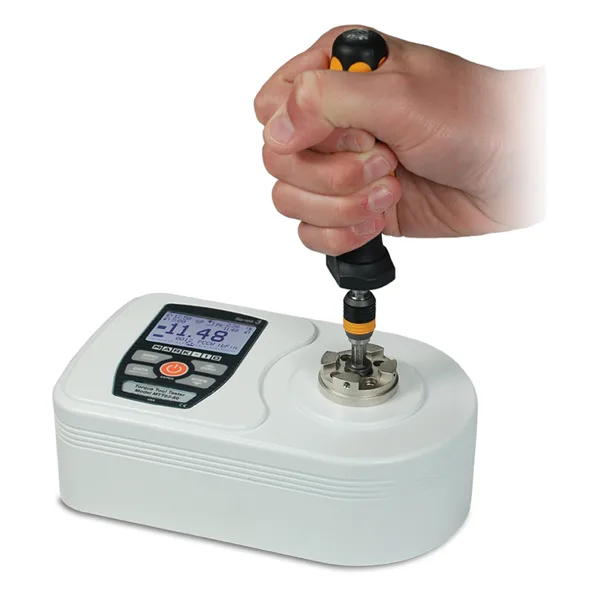
Testing a torque tool with a digital tester is straightforward. To test a manual tool, place it in the tester’s receptacle and twist. To test an electric tool, insert a rundown fixture in the receptacle before inserting your tool, and twist. As you twist, the tool’s torque will appear on the tester’s screen.
More sophisticated tools will show the tool’s live and peak torque in your preferred unit of measurement (e.g., lbFin, ozFin, lbFft, Ncm, or Nm) and calculate first and second peaks, which are useful for click-type and bottom-out-type tools. Some testers come with data acquisition software that collects and tabulates data.
How to Select the Right Torque Tool Tester
The “right” torque tool tester for you will depend on your industry, application, and budget. If you need to meet any industry, national, or international safety or quality standards, a digital tester is recommended.
When sourcing your torque tool tester, look for a brand that prioritizes reliability, durability, and precision. Seek out a brand that specializes in designing and engineering high-quality force, torque and compression measurement equipment, including universal testing machines and force gauges, in addition to torque tool testers. Whether you’re new to working with fasteners or a seasoned professional, purchase your equipment from a manufacturer with robust customer support, who can give you advice about how to validate your torque tools and get the most out of your testing equipment.