Annapurna Base Camp Trek, Langtang Valley Trek, Manaslu Circuit Trek & Everest Three Passes: The Ultimate Guide to Trekking Nepal
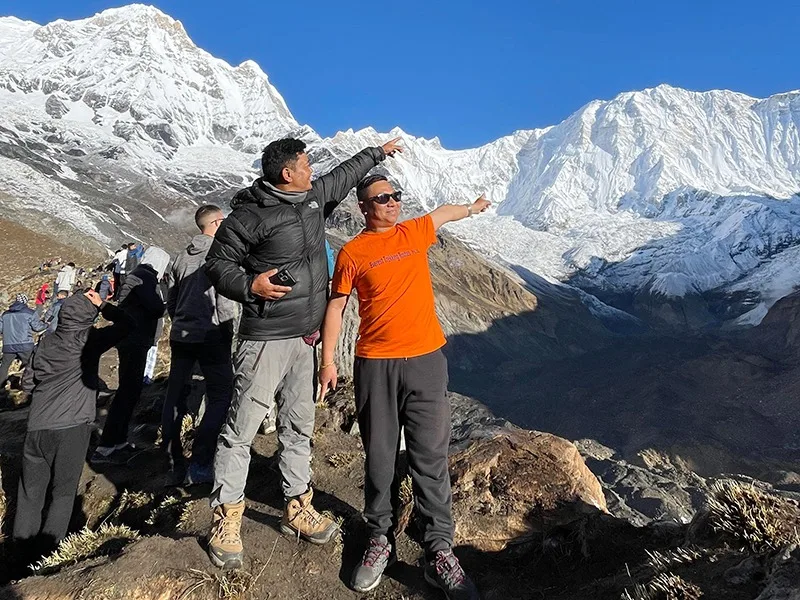
Anyone who starts researching Nepal trekking routes quickly runs into the same problem: there are too many good options and not enough clarity on how they actually differ. You’ve got limited vacation days, a certain comfort level with altitude, maybe a knee that complains on long descents, and a budget that isn’t infinite. So which route actually fits your life?
This guide compares four of the country’s most talked-about journeys — the Annapurna Base Camp Trek, the Langtang Valley Trek, the Manaslu Circuit Trek, and the Everest Three Passes Trek. These aren’t four flavors of the same hike. Each one has its own rhythm, its own scenery, its own demands on your legs and lungs, and its own kind of reward. Some routes are built for travelers who want a taste of the Himalayas without giving up three weeks of their life. Others are built for people who’ve already done a few treks and want something that pushes back a little. Below, we’ll walk through what each route actually feels like on the ground, how they stack up against each other, and how to figure out which one belongs on your calendar.
Annapurna Base Camp Trek Overview
The Annapurna Base Camp Trek is often the first big Himalayan trek people attempt, and there’s a good reason for that. It threads through rhododendron forests, past stone-built Gurung villages, and up into the Annapurna Sanctuary — a natural amphitheater ringed by peaks including Machhapuchhre, the Fishtail Mountain that locals consider sacred and off-limits to summit attempts.
What makes this route stand out is how much it changes as you climb. You start low, walking through terraced farmland and warm forest trails, and within a matter of days you’re staring up at an ice wall of 7,000 and 8,000-meter peaks. The trek typically runs somewhere in the range of a week to ten days depending on your starting point and pace, and while the altitude at base camp itself is significant, it’s nowhere near as extreme or sustained as what you’d face on a high-pass route. That’s part of the appeal — you get genuine high-mountain scenery without needing weeks of acclimatization built into the schedule.
Teahouses line the entire trail, so you’re never roughing it in a tent, and the moderate-to-challenging pace suits travelers who want a compact but authentic Himalayan experience rather than a monster expedition.
Langtang Valley Trek Overview
If your holiday calendar is tighter, or you’re testing the waters before committing to something longer, the Langtang Valley Trek deserves a serious look. It’s one of the more accessible routes out of Kathmandu — you don’t need a flight to a remote airstrip, just a drive north into Langtang National Park — and it delivers a surprisingly rich mix of alpine scenery and cultural texture in a shorter window.
The valley itself has strong Tamang and Tibetan-influenced roots, and you’ll notice it in the architecture, the monasteries, and the pace of village life. The trail moves through pine and bamboo forest, along glacial rivers, and eventually opens into wide alpine pasture near Kyanjin Gompa, with views of Langtang Lirung towering overhead. Most people finish the round trip in around a week to ten days, and while there’s real elevation gain involved, it doesn’t demand the kind of technical pass-crossing that some of the longer circuits do.
This is probably the route where first-time Himalayan trekkers with decent — not elite — fitness feel most at ease, because the combination of culture, scenery, and manageable duration hits a sweet spot that’s hard to find elsewhere.
Manaslu Circuit Trek Overview
The Manaslu Circuit Trek is where things start to feel genuinely remote. Instead of an out-and-back to a single viewpoint, you’re walking a full circuit around the Manaslu massif, following the Budhi Gandaki river valley through villages where daily life hasn’t been reshaped much by mass tourism. The cultural mix along the way is one of the trek’s underrated strengths — you pass through lower Hindu communities before climbing into Tibetan Buddhist territory near the higher settlements.
The trek builds gradually. Early days are almost gentle by Himalayan standards, but the terrain sharpens the closer you get to Larkya La, the high pass that defines this route and typically sits above 5,000 meters. Crossing it isn’t a technical climb, but it’s a long, cold, physically demanding day that requires proper acclimatization in the days beforehand. Most itineraries run somewhere around two weeks, and because Manaslu sits in a restricted area, trekkers need special permits arranged in advance — this isn’t a route you can wing on arrival.
People choose Manaslu specifically because it hasn’t been commercialized to the same degree as some of Nepal’s more famous trails. Fewer crowds, more raw landscape, and a stronger sense of being somewhere genuinely off the beaten path.
Everest Three Passes Trek Overview
Of the four routes here, the Everest Three Passes Trek is the one built for trekkers who already know what altitude feels like and want to be tested by it. Rather than a straightforward walk up to Everest Base Camp, this itinerary loops through the Khumbu region crossing three demanding high passes — Kongma La, Cho La, and Renjo La — each one requiring a full acclimatized system and a fair amount of grit.
Travelers comparing different Everest Trekking Routes should understand that the Three Passes itinerary is built around high-altitude crossings, not simply a straightforward walk to Everest Base Camp. Along the way you still get the classic Khumbu experience — Sherpa villages, monasteries, prayer flags snapping in thin mountain air — plus detours to spots like Gokyo Lakes, whose turquoise water against grey scree and white peaks is genuinely one of the more striking sights in the entire Himalayas.
This is a longer trek, usually stretching past two and a half weeks once you factor in acclimatization days, and the altitude exposure is sustained rather than a single peak day. It’s not a route for someone attempting their first mountain trek. Strong preparation, previous experience at elevation, and a realistic sense of your own limits all matter here more than they do on the other three routes.
Quick Comparison: Which Nepal Trek Fits You?
| Trek | Difficulty | Altitude Character | Typical Experience | Best For |
| Annapurna Base Camp Trek | Moderate–challenging | High but manageable | Mountain + villages | First Himalayan adventure |
| Langtang Valley Trek | Moderate | Moderate to high | Culture + valley scenery | Shorter Himalayan trip |
| Manaslu Circuit Trek | Challenging | High | Remote circuit + pass | Adventure and solitude |
| Everest Three Passes Trek | Very challenging | Very high | Multiple high passes | Experienced trekkers |
The table gives you the shorthand, but it’s worth saying plainly: difficulty on these routes isn’t just about steepness. It’s a combination of how high you go, how long you stay up there, and how many consecutive demanding days you’re asked to string together. Annapurna and Langtang ease you into Himalayan trekking. Manaslu and Everest Three Passes ask more of your body and your planning.
Difficulty, Altitude and Acclimatization
It’s tempting to slap an “easy” or “hard” label on a trek, but that misses what actually determines how a route feels underfoot. Daily walking hours matter — some days are a gentle four hours, others stretch past eight with steep elevation gain packed in. High-pass crossings change the equation entirely, since a single pass day can involve pre-dawn starts, freezing temperatures, and hours above 5,000 meters where the air genuinely feels thinner.
Descending is its own challenge too — knees take a beating on long downhill stretches that people rarely plan for. Built-in acclimatization days, where the schedule allows your body to adjust rather than pushing higher every single day, make a real difference in how a trek plays out. Fitness and prior trekking experience shape all of this, but so does simple pace management. Rushing at altitude is one of the more common mistakes trekkers make, and it’s usually avoidable with a sensible itinerary and enough hydration.
Best Time to Trek These Four Routes
Nepal’s trekking calendar really comes down to two strong windows: autumn (roughly October to November) and spring (roughly March to May). Autumn tends to bring the clearest mountain visibility of the year, stable weather, and firmer trails, which is why it’s the busiest season across all four routes. Spring runs a close second, with milder temperatures at lower elevations and rhododendron blooms adding color to routes like Annapurna and Langtang.
Monsoon season, from roughly June through September, brings heavy rain, leech-prone trails, and clouded-over mountain views, so it’s generally avoided except by trekkers heading into rain-shadow areas. Winter is workable on lower routes like Langtang, but high-pass treks such as Manaslu and Everest Three Passes become far riskier once snow closes in around the passes. The “best” season isn’t identical for all four — it shifts depending on how much elevation and pass-crossing the route involves.
Permits, Accommodation, Food and Trekking Costs
Permit requirements vary by region. Annapurna and Langtang fall under more standard permit systems, while Manaslu requires a restricted-area permit that has to be arranged through a registered agency well before departure — this isn’t something you sort out on the trail.
Accommodation on all four routes runs through teahouses and small lodges rather than hotels. Rooms are simple, often just a bed and a blanket, with shared bathrooms becoming more common the higher and more remote you get. Comfort generally decreases as you climb, which is worth mentally preparing for.
Food is fairly consistent across routes too — dal bhat remains the trekking staple for good reason, alongside noodle dishes, fried rice, soups, eggs, potatoes, and the occasional Tibetan-style momo or thukpa at higher elevations. Tea and hot drinks are always available, though they get pricier the further you get from a road.
As for cost, it genuinely depends on too many variables to quote a number honestly — trek duration, whether you hire a guide or porter, permit fees, transportation to the trailhead, accommodation standard, meals, the season you’re traveling in, group size, gear you need to buy or rent, and travel insurance all factor in. Anyone quoting you a single fixed price without asking about these details is probably oversimplifying.
How to Choose Between the Four Treks
If you’re short on time, Langtang Valley is probably your best bet. If you want that classic combination of mountain grandeur and village life without an extreme physical toll, Annapurna Base Camp delivers it well. If solitude and a genuine sense of remoteness matter more to you than comfort, Manaslu Circuit is worth the extra planning. And if you’ve already got some altitude experience under your belt and want a serious physical and mental challenge, Everest Three Passes is where that ambition belongs.
Before deciding, it helps to ask yourself a few honest questions. How many days can you actually take off? How has your body handled altitude in the past, if at all? Do you gravitate toward busier, more developed trails or quieter, less-trodden ones? Are you after cultural immersion, big mountain views, or the challenge of crossing a high pass? And are you genuinely prepared for the kind of unpredictable weather and trail conditions that come with mountain travel?
Practical Preparation Before Leaving Kathmandu
Good preparation isn’t about owning the fanciest gear — it’s about not being caught out when conditions turn. Broken-in trekking shoes matter more than almost anything else on this list, since blisters can end a trek faster than altitude ever will. Layered clothing lets you adjust as temperatures swing from warm valley walking to freezing mornings near a pass, and a solid insulating layer plus rain protection covers you for whatever the sky decides to do.
Beyond that, carry a reliable water bottle or hydration system, basic first-aid supplies, sun protection (the UV at altitude is stronger than most people expect), a headlamp for early starts, a power bank since charging gets expensive and unreliable higher up, and any personal medications you rely on. Travel insurance that actually covers trekking and the altitude you’ll reach isn’t optional — check the fine print before you fly. None of this replaces physical preparation beforehand, which matters more than any single piece of gear on the list.
Final Thoughts: Choosing Your Himalayan Adventure
Each of these treks offers something genuinely different. Annapurna Base Camp gives you a classic, varied Himalayan journey in a relatively compact window. Langtang Valley delivers culture and mountain scenery without demanding weeks of your time. Manaslu Circuit rewards those chasing remoteness and a quieter kind of adventure. Everest Three Passes is for trekkers ready to take on serious high-altitude terrain.
The right choice comes down to your available time, your fitness, your altitude experience, and honestly, what kind of trip you actually want to come home talking about. Take a close look at the itinerary, permit requirements, and preparation needed for whichever route pulls at you, and plan the trek with an experienced local trekking operator who can help you get the details right.
Frequently Asked Questions
Which is the easiest trek among Annapurna Base Camp, Langtang, Manaslu and Everest Three Passes? Langtang Valley is generally considered the most manageable of the four, thanks to its shorter duration, moderate elevation gain, and lack of a technical high pass. Annapurna Base Camp is a step up in altitude exposure but still far more approachable than Manaslu or Everest Three Passes.
Is the Annapurna Base Camp Trek suitable for first-time trekkers? Yes, for the most part, provided you’re in reasonable shape and willing to pace yourself. The route builds gradually, teahouses are plentiful, and the altitude at base camp — while significant — is reached without needing multiple extreme acclimatization days.
How difficult is the Langtang Valley Trek? It involves several hours of walking daily and a fair amount of elevation gain, but nothing on the scale of a high-pass crossing. Most reasonably fit trekkers manage it without major issues.
Is the Manaslu Circuit Trek harder than Annapurna Base Camp? Generally, yes. Manaslu covers more remote terrain, requires restricted-area permits, and includes the Larkya La high-pass crossing, which demands more sustained acclimatization than Annapurna’s base-camp approach.
Do I need previous high-altitude trekking experience for Everest Three Passes? It’s strongly recommended. The route involves sustained high-altitude exposure across three separate passes, and prior experience helps you recognize your own limits and respond appropriately to how your body handles elevation.
What is the best season for trekking in Nepal? Autumn and spring are the strongest windows across all four routes, offering the clearest views and most stable trail conditions. Winter can still work on lower routes like Langtang, but high-pass treks need extra caution once snow sets in, and monsoon season is best avoided altogether.
Contact Details
Everest Trekking Routes Pvt. Ltd.
16 Khumbu, Nayabazaar, Kathmandu, Nepal
Mobile : +977-9843467921 (Rabin)
Email: [email protected]