App Stores QR Code: 11 Popular Uses and Setup Guide
Under the principle of positive correlation, when one variable increases, the other also tends to increase. The same applies to mobile apps: the more downloads it gains, the higher it ranks, and the better the chances of people finding it.
However, while getting people to download a mobile app may sound simple on paper, in reality, it presents a challenge.
On average, people use about nine apps daily and roughly 30 different apps each month. Competing for their attention is hard enough.
Now, if we require them to take an extra step just to download our app, it creates friction in their experience. Relying on long URLs, manual searches, or clunky “find us on the App Store” buttons is more of a bane than a boon.
To simplify this journey, we can use a QR code for app downloads. It’s a quicker and more intuitive method for leading people straight to the right download page, in the correct app store for their mobile device.
Let’s learn more about how to use this tool and how we can create one.
11 popular uses of app QR codes
QR codes for app downloads are becoming more common due to the convenience and ease of use they offer.
Below are some situational ideas where we can make full use of mobile app QR codes:
1. Events and tradeshows
We can utilize app store QR codes in tech-based events and trade shows we are participating in to showcase our apps to a broad audience.
By placing them on banners, booths, or even in our presentation and promo materials, attendees can effortlessly scan and download the app using QR code.
This enhances our app’s offline visibility, making it easier for potential users to try the application.
2. Street posters
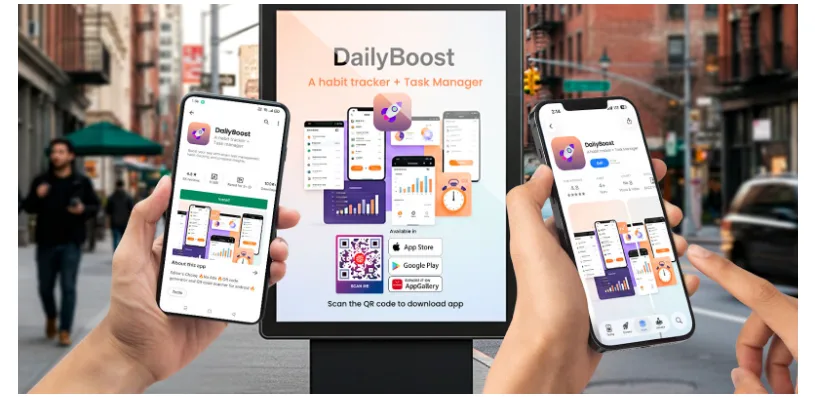
Placing a QR code for app downloads on our posters, billboards, or street signs in high-traffic areas catches the attention of a passerby and sparks their curiosity.
With the constant foot traffic, these QR codes will also have a higher chance of being scanned, making them an effective solution for boosting engagement.
3. Online stores
We can display a Google Play Store and Apple App Store QR code within physical stores. This way, we encourage more customers to scan and install our app, which they can use to shop conveniently online.
Once installed, customers can easily browse, purchase, or even pre-order store products, allowing them to engage with our stores without needing to visit them in person.
This strategy will not only help boost sales but also enhance the overall shopping experience by making it more convenient and interactive.
4. Product packaging
An App store QR code generator helps us create an app QR code that we can place on our product packaging.
Scanning the QR code on an electronic product, for instance, will allow the user to install a companion app that enables them to control or customize the product remotely, as well as access its additional features.
The app store QR code not only adds more value to our products but also strengthens customer engagement and brand loyalty.
5. Booking and reservation
Whether we have a clinic, hotel, travel agency, or restaurant, we can always rely on an App Store and Google Play Store app QR code to let our customers scan and install a booking app for that business.
After customers download the app, they can quickly set appointments, reserve tables, or schedule services all from the app itself.
This will streamline our booking process and improve customer convenience. At the same time, we help them manage their reservations more efficiently.
6. Food delivery
For diners and fast food chains, we can employ Apple or Google app store QR code to make it easier for customers to download our food delivery apps.
They can quickly access the menu, place orders, track them, and have their meals delivered straight to their homes.
An app store QR code also helps our food businesses reach more customers by encouraging online orders.
7. Online banking
A QR code for app download is helpful for banks to ensure that mobile banking apps are downloaded and used, providing account holders with a more convenient and mobile-friendly experience.
By scanning the code, users can quickly install the app and access their accounts on the go. Processes like checking account balance, transferring funds, requesting a new credit card, and managing finances become more convenient for them.
8. Public transport
We can place a QR code for app downloads on our public transport systems to help commuters quickly access our apps for viewing schedules and purchasing tickets.
Using an app store QR scanner, users can quickly download the app, check bus or train schedules, and even buy tickets digitally.
This will help them save time while making public transport more convenient and efficient overall.
9. Mobile games
Mobile games are among the most frequent users of QR codes for App Store and Google Play, encouraging many users to scan and install the apps.
We can create an app store QR code for our online advertisements and include special discounts, exclusive content, and even in-game rewards to entice people further.
By incorporating them into our app marketing strategy, we make it easy for curious users to instantly install the app, thereby boosting engagement and potentially attracting an even wider audience.
How to make an app QR code
Creating a QR code for our mobile apps is reasonably straightforward. We can start by selecting an online QR code generator for app store links.
Next, we proceed by copying the URL of our app’s page from the Apple App Store, Google Play Store, or both if supported. We can also use a fallback link in case the other links fail to function.
After generating the QR code, we can customize its design to match our branding style.
Finally, download the QR code and share it on marketing materials so users can easily scan and install our app.
Why get a QR code for app download
An App store QR code can turn curiosity into downloads in just a few seconds. By providing instant access, we make it even easier for our users to engage with our brand.
Here are three proven benefits that make them a must-have for any app marketing strategy:
- Makes app installation effortless: App QR codes simplify the installation process by allowing users to scan the code and be instantly directed to the appropriate app store page based on the device’s operating system.
- Ensures secure and verified app installs: A QR code can also ensure that users install the official and verified version of our apps, thereby reducing the risk of customers downloading fake versions from third-party sites.
- Improved market tracking – Advanced QR code generators offer a solution for apps that come with built-in analytics. We can track our app store QR code’s scan rates, user locations, and even conversions, helping us easily refine our marketing strategies to boost engagement.
Installing apps only takes a quick scan
App Store QR codes have quickly become one of the most efficient tools for modern app promotion, helping to boost offline visibility through instant digital access.
From enhancing customer engagement to improving product experiences, their versatility makes them valuable across nearly every industry.
And with built-in analytics, we can track performance, understand user behavior, and fine-tune our mobile app marketing strategies with confidence.
Integrating a QR code for app download into our marketing strategy is one of the smartest steps we can take, now that a mobile-first experience is king.