Architecting the Future of E-Commerce: The Strategic Value of Custom Magento Development
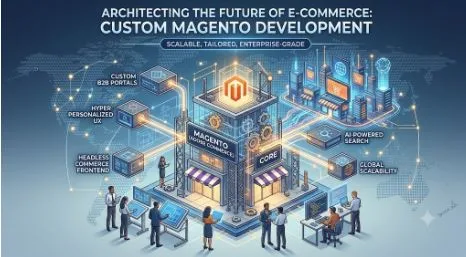
The global e-commerce landscape has shifted from a convenience-driven marketplace into a hyper-competitive ecosystem. For modern enterprise brands, a standard digital storefront is no longer sufficient to maintain a competitive edge. Consumers expect flawless, lightning-fast interactions, hyper-personalized product journeys, and frictionless checkout processes.
At the same time, backend operations demand seamless data synchronization across Enterprise Resource Planning (ERP) systems, Customer Relationship Management (CRM) tools, and complex logistics networks.
When standard SaaS templates and generic themes reach their structural limitations, high-growth brands face a critical choice: compromise their operational workflows to fit a rigid platform, or build an infrastructure tailored to their unique business logic. For businesses aiming for unrestricted scalability and robust architectural control, custom development on Magento (Adobe Commerce) stands out as the definitive path forward.
The Limitations of Ready-Made E-Commerce Solutions
Many businesses launch their digital journey using out-of-the-box templates or lightweight SaaS platforms. These solutions offer low initial barriers to entry and rapid deployment times. However, as an organization scales, its internal workflows and customer-facing requirements inevitably grow more complex.
Generic platforms often fall short in several critical areas:
- Rigid Data Structures: Off-the-shelf software assumes every business handles inventory, product bundling, and customer tiering the same way. When a company introduces specialized B2B pricing, custom configured products, or multi-warehouse routing rules, generic platforms require heavy workarounds.
- Performance Degradation: Relying on third-party marketplace applications to patch functional gaps introduces code bloat. As more disparate plugins are layered onto a store, page load speeds decrease, and security vulnerabilities increase.
- Monolithic Constraints: Traditional pre-packaged platforms force the frontend user experience to remain tightly coupled with the backend database. This makes it challenging to adopt modern, agile web architectures like headless commerce or progressive web applications (PWAs).
Why Magento Forms the Core of Enterprise Scalability
Magento remains a leading choice for enterprise brands due to its highly modular, open-source architecture. Unlike rigid platforms, it is designed from the ground up to be altered, extended, and optimized to fit precise operational models.
As illustrated in the framework diagram, Magento separates its core components into clean structural layers:
- Presentation Layer: Controls the user interface components (including Layouts, Blocks, Templates, and CSS/LESS assets) without interfering with underlying business logic.
- Service Layer: Acts as a bridge between the presentation and domain layers using strict Service Contracts, ensuring API endpoints remain stable even during major upgrades.
- Domain Layer: Manages the core business logic and data models, handling complex computations and operations.
- Persistence Layer: Governs how resource models interact with the underlying database (MySQL), ensuring high-efficiency data reading and writing.
This decoupling ensures that developers can modify specific parts of the system—such as writing custom database queries or completely replacing the frontend presentation layer—without breaking core store features.
Strategic Pillars of Custom Magento Development
True digital transformation requires looking beyond default configurations. Tailoring a platform to your specific business needs involves optimizing several core engineering areas:
1. Complex Third-Party Integrations
An enterprise e-commerce platform does not operate in a vacuum. It serves as the primary transaction hub for an entire business infrastructure. Custom development allows for deep, bi-directional API integrations that automate workflows and eliminate manual data entry.
- ERP Synchronization: Connecting platforms like SAP, NetSuite, or Microsoft Dynamics ensures that inventory updates, financial tracking, and order fulfillments occur in real-time.
- Product Information Management (PIM): For brands managing thousands of stock-keeping units (SKUs) across multiple regions, a custom PIM integration (such as Akeneo) streamlines product enrichment, localization, and media distribution.
- Advanced Order Management Systems (OMS): Custom routing rules allow businesses with multi-location brick-and-mortar stores or multiple distribution centers to automatically dispatch orders from the most cost-effective location.
2. Tailored B2B and B2C Customer Journeys
Modern commerce requires a hybrid approach. Many organizations operate a B2C storefront while simultaneously managing a complex wholesale B2B network from the same backend. Custom development makes it possible to build unique interfaces for each audience.
For B2B operations, this includes building custom portals for corporate account management, volume-based tiered pricing matrices, quick-order forms via CSV uploads, and automated credit line authorizations. For B2C shoppers, it means developing personalized product configuration wizards, dynamic loyalty reward program engines, and ultra-optimized one-page checkouts designed to reduce cart abandonment rates.
3. Performance Optimization at Scale
Page speed correlates directly with conversion rates. A one-second delay in mobile load times can lower conversion rates by up to 20%. Custom Magento engineering eliminates resource-heavy modules and introduces advanced server-side caching mechanisms.
By optimizing Elasticsearch or OpenSearch configurations, leveraging Varnish cache for instant page delivery, and designing optimized database schemas, custom-built Magento stores can handle massive concurrent traffic spikes—such as those experienced during Black Friday or viral flash sales—without performance degradation.
Maximizing Value with Professional Engineering
While Magento offers an unmatched foundation of flexibility, realizing its full potential requires specialized technical expertise. Poorly written custom code or unoptimized database queries can introduce technical debt, slow down page performance, and complicate future platform updates.
Partnering with an experienced development team ensures that all platform extensions follow Magento’s strict coding standards, utilize dependency injection correctly, and preserve the integrity of core service contracts. For brands looking to upgrade their digital presence, eliminate operational bottlenecks, and implement high-performance features, collaborating with certified experts for tailored Magento services provides the strategic engineering required to turn complex business requirements into high-converting digital storefronts.
Future-Proofing with Headless and Composable Commerce
As the e-commerce landscape evolves, headless commerce has transitioned from an experimental setup to an industry standard for enterprise brands. Headless commerce completely decouples the frontend user experience from the backend commerce engine.
By utilizing Magento purely as a powerful backend commerce engine, developers can leverage high-speed GraphQL and REST APIs to deliver data to lightweight, ultra-fast frontend frameworks like Next.js, Vue.js, or mobile applications. This composable approach offers significant advantages:
- Omnichannel Agility: Deploy new frontend touchpoints—such as smart wear applications, IoT devices, or regional micro-sites—without altering core backend logic.
- Independent Development Workflows: Frontend design teams can completely overhaul the look, feel, and interactive elements of a store without risking database downtime or disrupting order processing.
- Unmatched Mobile Performance: Building a Progressive Web App (PWA) on top of a decoupled Magento core gives users an app-like experience directly within their mobile browsers, maintaining fast interactions even on slower network connections.
Conclusion
E-commerce growth is fundamentally tethered to structural adaptability. While off-the-shelf software and generic platforms offer temporary convenience for early-stage storefronts, they eventually become operational bottlenecks for expanding enterprises.
Custom Magento development offers a scalable solution to this challenge. By leveraging its multi-layered architecture, robust API capabilities, and open-source flexibility, businesses can eliminate technical debt, automate complex internal workflows, and deliver highly optimized customer experiences. Investing in tailored engineering is more than just a software upgrade—it is a foundational business strategy that ensures your digital storefront can adapt, scale, and lead the market for years to come.