Are You Making These Common Klaviyo Deliverability Mistakes? (How to Protect Your Email and WhatsApp Reputation)
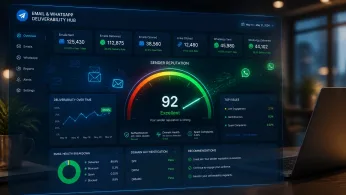
You’ve spent hours crafting the perfect email. The creative is sharp, the offer is unbeatable, and the segment is ready. But after hitting “send,” you notice your open rates are hovering in the low teens.
Even worse, you’ve recently launched WhatsApp marketing, and your messages are being blocked or flagged by Meta. If this sounds familiar, you’re likely dealing with a reputation problem.
In the world of ecommerce and B2C, your digital reputation is everything. If the “gatekeepers”: like Gmail, Outlook, and Meta: don’t trust you, your messages will never reach your customers’ pockets.
As a Klaviyo partner, we see these mistakes every day. The good news? Most of them are easy to fix once you know what to look for.
What You’ll Learn in This Article
- How to fix the technical setup errors that land you in the spam folder.
- The difference between email “warm-up” and WhatsApp “quality ratings.” • Actionable strategies to clean your list and boost your sender authority.
- The “Default” Technical Setup Trap
Most SMEs sign up for Klaviyo and start sending immediately using the default settings. While Klaviyo is powerful, the default “shared” sending domain means you’re sharing a reputation with thousands of other businesses.
If you haven’t set up your account to be sending your branded domain there is a good chance your emails are going to end up in the spam or dreaded promotions folder.
SPF, DKIM, and the DMARC Deadline
In 2024, Google and Yahoo introduced strict requirements for bulk senders. If you don’t have your SPF, DKIM, and DMARC records correctly configured, your emails might not just go to spam: they might not be delivered at all.
Working with a Klaviyo expert ensures these records are authenticated properly, aligning your “From” address with your sending domain to build a wall of trust around your brand.
- “Blasting” the Entire List (The Reputation Killer)
We get it: you have a big sale coming up and you want everyone to know. But sending a campaign to every single person on your list is the fastest way to kill your deliverability.
When you “blast” unengaged contacts (people who haven’t opened an email in 6+ months), your open rates plummet. Mailbox providers see this low engagement and assume your content is unwanted. Over time this will lead to your emails ending up in promotions more and more.
The Power of Segmentation
Instead of blasting, you should focus on engaged segments. A typical starting point for an ecommerce business is a “30-day engaged” segment. These are the people who have interacted with your brand recently and are most likely to click.
By consistently sending to people who actually want to hear from you, you signal to Gmail and Outlook that you are a high-quality sender. If you’re unsure how to set these up, chat to an expert who can help you map out these segments to balance reach with reputation.
- Ignoring List Hygiene and “Sunset” Policies
Keeping “dead weight” on your list doesn’t just cost you money in Klaviyo subscription fees; it actively harms your sender score.
Every hard bounce and spam complaint is a black mark against your name. If you aren’t proactively removing people who aren’t interested, you’re digging a hole for your deliverability.
Implement a Sunset Flow
A Sunset Flow is an automated sequence designed to give unengaged subscribers one last chance to stay before you “sunset” (suppress) them.
For example, if someone hasn’t opened an email in 180 days, send them a “We miss you” offer. If they still don’t engage, Klaviyo should automatically move them to your suppressed list. This keeps your active list lean, mean, and highly engaged.
- Treating WhatsApp Like a “New Email”
WhatsApp marketing is a potential boost to your businesses marketing, offering open rates that email can only dream of. However, the rules of the game are completely different.
WhatsApp is governed by Meta’s Quality Rating. Unlike email, where you might get away with a few low-engagement campaigns, Meta will quickly throttle or ban your account if people start “blocking” or “reporting” your messages.
- Flow Bloat: Too Much, Too Fast
Automation is the heart of a great CRM strategy, but it’s easy to overdo it. If a customer signs up, receives a welcome email, a WhatsApp message, and an SMS all within 5 minutes, they’re going to feel harassed.
This “flow bloat” leads to high unsubscribe rates and “Spam” reports. You need to coordinate your channels so they complement each other rather than compete for the customer’s attention.
The Omni-Channel Hierarchy
- WhatsApp/SMS for urgent, high-intent triggers (like an abandoned checkout).
- Email/Socials for storytelling, educational content, and broader brand updates.
By staggering these touchpoints, you respect the customer’s space while still staying top-of-mind.
- Content Signals: The “Spammy” Look
Both email filters and human eyes are trained to spot “spammy” content. Using all caps in your subject line (e.g., “FREE GIFT INSIDE!!!”) or using too many emojis can trigger red flags.
Furthermore, emails that are just one giant image with no text are a major deliverability risk. If the image doesn’t load, the recipient sees nothing, and mailbox providers often treat image-only emails as suspicious.
Protecting Your Reputation for the Long Haul
Deliverability isn’t a “set and forget” task. It requires constant monitoring of your open rates, bounce rates, and Meta quality scores.
If you notice a sudden dip in performance, don’t ignore it. The longer you wait to fix a reputation issue, the harder it is to climb back into the inbox.
If you are worried your emails are landing in spam. A Klaviyo partner Agency can help you audit your account and help solve the problem