Armored MTP Trunk Cable Guide for Reliable Connectivity
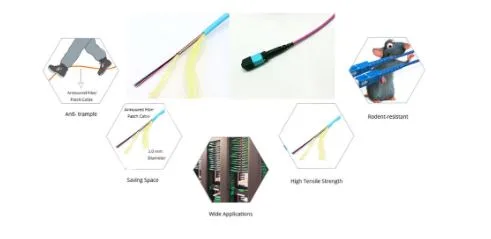
The high-density environment in a network seldom fails due to the bandwidth capacity only. It is very likely that cable damage, cable management, or even environmental challenges will be encountered. This has prompted more data centers, manufacturing facilities, and infrastructures to choose an armored MTP trunk cable to provide more mechanical protection aside from having a lot of fibers.
With the expansion of networks required in supporting cloud computing, industrial automation, intelligent energy, and monitoring infrastructures, the need for dependable fiber connection is increasing. An armored MTP trunk cable is often considered when system availability is critical amid challenging cable environments.
What Is an Armored MTP Trunk Cable?
Armored MTP trunk cable is a type of pre-terminated fiber optic cable assembly that employs MTP connectors and includes armor to protect the fiber core. The armor material used is usually made up of corrugated steel or aluminum or any other metallic material that provides shielding from crush, rodent attack, abrasions, and impact damage to the optical fiber.
Unlike normal fiber trunks, the armored version is suitable for environments where it would not be safe to rely solely on conduits for cable protection.
With MTP connectors, it is possible to terminate several optical fibers through one connector. It is, therefore, most suited for use in high-density networks including:
- Data centers
- Telecommunications facilities
- Industrial automation systems
- Energy infrastructure networks
- Campus backbone networks
The result is a cleaner installation with reduced deployment time and simplified cable management.
Why Armor Matters in Real-World Installations
The fiber optic cable offers excellent efficiency when it comes to transferring data; however, the glass fibers used within the cable have an inherent weakness that renders them susceptible to physical damage.
When considering cable installations, it is highly unlikely that cables will be spared any physical activity from the time of installation until their removal.
An armored MTP trunk cable provides an additional layer of protection against:
- Compression from overcrowded trays
- Accidental tool impacts
- Rodent activity in utility spaces
- Abrasion in industrial environments
- Pulling stress during installation
One thing many buyers overlook is that repair costs often exceed the initial cable savings gained by choosing a less-protected alternative. A damaged fiber trunk can create significant downtime, particularly in facilities that depend on continuous network availability.
Armored MTP Trunk Cable in Energy and Industrial Applications
The growth of renewable energy infrastructure has expanded the use of fiber networks well beyond traditional data centers.
Modern solar energy storage facilities, battery backup system installations, and large commercial solar installation projects increasingly rely on fiber communication for monitoring, controls, and energy management functions.
Fiber backbones connect:
- Power conversion equipment
- Energy monitoring systems
- Battery management platforms
- Security and surveillance networks
- Remote operation centers
In a grid-connected PV system, signal integrity can be just as crucial as electrical performance since operators require current data in order to ensure that the efficiency of solar energy production is maintained.
According to many installers, outdoor utility buildings, equipment shelters, and industrial electrical enclosures create environments that pose potential risks to the longevity of standard fiber assemblies due to the environment they face.
Key Selection Factors
Not every armored MTP trunk cable is identical. Specifications can vary considerably depending on the application.
Fiber Type
Most installations make use of either single-mode or multimode fibers.
The choice between the two depends on whether the connection will be over long distance or large capacity backbones.
Fiber Count
MTP systems are available in various fiber counts, including 8, 12, 24, 48, 72, and higher-density configurations.
A common mistake is selecting a cable based solely on current requirements. Many organizations benefit from adding spare fiber capacity for future expansion, especially in growing industrial and energy facilities.
Armor Construction
Different armor types offer varying levels of flexibility and protection.
Steel armor generally provides stronger crush resistance, while lightweight armored constructions may offer easier handling during installation. The right choice depends on environmental conditions and routing complexity.
Bend Radius Requirements
Armor improves protection but can affect cable flexibility.
This tends to matter more than people initially expect. Tight pathways, crowded cabinets, and complex routing layouts should be evaluated before selecting heavily armored designs.
Installation Considerations
Pre-terminated MTP assemblies can significantly reduce installation time compared to field termination.
That advantage becomes especially valuable in larger commercial projects where deployment schedules are tightly controlled.
Still, armored cables require careful handling. Installers should verify:
- Pull tension limits
- Minimum bend radius specifications
- Connector cleanliness
- Tray loading requirements
- Grounding considerations when metallic armor is present
Proper planning helps preserve both optical performance and mechanical integrity.
Balancing Cost and Long-Term Value
Armored MTP trunk cables generally cost more than standard trunk assemblies. For budget-sensitive projects, that price difference can appear substantial during procurement.
The evaluation should extend beyond upfront material costs.
Facilities supporting critical operations, backup power solution infrastructure, industrial controls, or renewable energy investment projects often place greater value on reliability than on marginal savings during construction. Reduced maintenance, fewer repairs, and lower downtime exposure can justify the higher initial investment.
That does not mean armor is necessary everywhere. Protected indoor environments with dedicated conduit systems may perform perfectly well with non-armored alternatives. The decision should be based on actual site conditions rather than assumptions.
Conclusion
Fiber network reliability is not just about speed; physical strength, environmental conditions, and future maintenance requirements must be considered as well.
When fiber needs to be protected from wear and tear due to mechanical pressure or the operations performed in the facility, an armored MTP trunk cable provides a viable alternative. Applications such as data centers, energy management systems, solar battery banks, or commercial infrastructure networks are just some examples of installations that could benefit from choosing a particular cable. Choosing the best way of doing this would mean tailoring the selection of the armored MTP trunk cable to the conditions in which it will operate.