
As Online Identities Become Permanent, WikiBG Emphasizes Record Governance Over Visibility
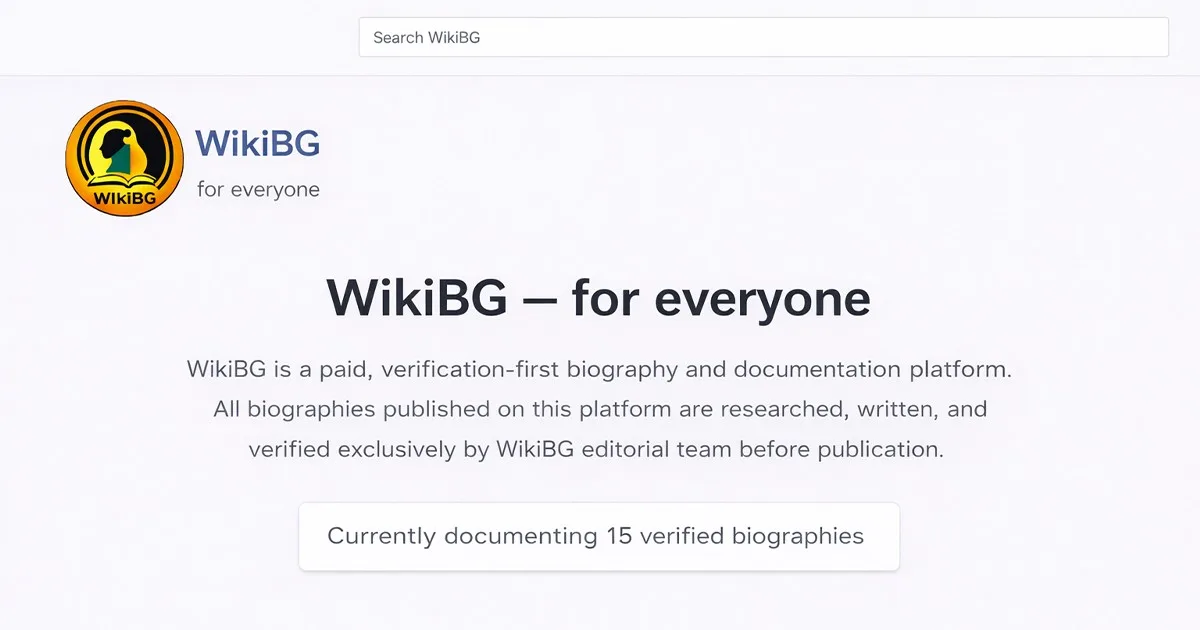
The WikiBG homepage highlighting its verification-first editorial model.
In a world where search engines increasingly influence professional and social reputations, the way personal histories are recorded online is drawing renewed attention.
Biographical information — once preserved in printed directories or institutional archives — now travels instantly across digital platforms. Yet the editorial systems behind those records are often invisible to readers. How information is verified, who writes it, and what standards apply are questions that rarely surface, even as biographies shape hiring decisions, research references, and public perception.
Against this backdrop, a verification-focused platform called WikiBG has introduced a structured editorial model centered on documentation rather than visibility.
Founded by Nepali journalist Pushpa Tamang and launched on February 1, 2026, the WikiBG platform operates through a closed editorial process. Unlike open-edit systems where users can directly create or modify entries, biography requests submitted to the platform enter an internal review workflow. Editors assess claims against independent and publicly verifiable sources before publication decisions are made.
According to the platform’s published framework, inclusion is determined by verification outcomes rather than public recognition, profession, or promotional interest. Claims that cannot be substantiated are revised, excluded, or declined.
Media researchers note that biographies are among the most sensitive forms of digital content. Once published, they are frequently copied, indexed, and redistributed across search engines and content platforms. Errors — whether accidental or exaggerated — can persist long after corrections are issued.
This durability has intensified discussions around what some analysts describe as “record governance” in digital publishing: the practice of treating biographical information as archival documentation rather than personal branding.
WikiBG’s model reflects that philosophy. Biographies are written in neutral third-person language and reviewed for factual accuracy prior to publication. Self-written autobiographical submissions are not accepted, and editorial oversight remains central throughout the review process.
The platform also acknowledges that manual verification requires professional resources. It operates through a documentation and review structure designed to support research and source validation, while maintaining that financial support does not influence editorial decisions or guarantee publication.
Industry observers suggest that such verification-first systems represent a narrower but more controlled segment of the digital reference landscape — one that prioritizes accountability and consistency over rapid expansion.
As employment screening, academic research, and digital due diligence increasingly rely on search-based identity checks, the demand for clearly sourced and transparently reviewed biographical records appears to be growing.
Whether verification-driven platforms can scale globally while maintaining manual editorial standards remains uncertain. However, their emergence reflects a broader reconsideration of how digital reputations are constructed, governed, and preserved in a search-driven world.