As School Safety Laws Spread, the In-Building Radio Gap Comes Into Focus: Where Windy City Wire’s Public Safety DAS Cable Fits
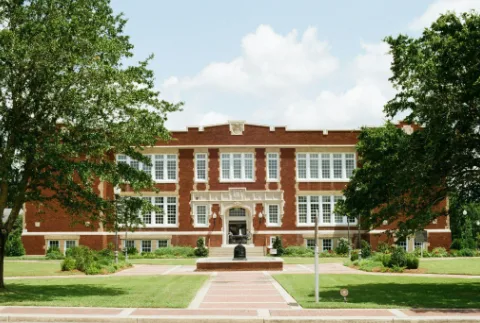
A growing number of states now require K-12 schools to adopt silent panic alarms. The Security Industry Association counted 11 states with a version of Alyssa’s Law on the books as of October 2025, including Tennessee, which enacted its law in 2023. Georgia’s version requires every public school to have a silent panic alert system in place by July 1, 2026.
Those laws focus on the first minutes of an emergency: getting an alert to responders faster. A second question follows once responders arrive. Can firefighters, police, and EMS still talk to each other once they are inside the building? For the manufacturers that make the cable behind in-building public safety networks, including Bolingbrook, Illinois-based Windy City Wire, that question has become a regular part of the school safety conversation. It is also on the agenda at a Safer Buildings Coalition school safety seminar in Nashville on November 17, where Windy City Wire’s team has said it looks forward to connecting with attendees.
What Happens After the Alarm
When the Safer Buildings Coalition (SBC), a nonprofit focused on in-building wireless for public safety, reviewed public safety radio test results for 577 K-12 school buildings, 300 of them, or 52%, had at least one floor that failed. SBC published the findings in 2022 and called the situation “a crisis in plain sight.” Most of the buildings in the sample were single-story: 462 of the 577.
Tennessee has firsthand experience with the problem. After a 2019 radio failure at Powell High School, Knox County issued a request for proposals to benchmark public safety radio performance across 90 school facilities, according to SBC.
The concern is not new. After the 1999 shooting at Columbine High School, the Columbine Review Commission recommended that until radios could reliably reach outside receivers from inside large buildings, repeaters “should be considered necessary safety equipment like fire alarms and sprinkler systems.”
Why School Buildings Block Signals
Schools are built to last, and the materials that make them durable also weaken radio signals. SBC’s report quotes a Rural Metro Fire spokesman who noted that schools and hospitals often have radio trouble because they are built with “concrete walls and steel roofs.” Writing in ASIS’s Security Management, Payam Maveddat of Wilson Connectivity adds that energy-efficient materials such as low-e glass, along with concrete and steel, can block public safety signals. Stairwells, basements, elevators, and mechanical rooms are common gaps.
Where coverage falls short, a bi-directional amplifier (BDA) or a public safety DAS system (distributed antenna system) brings outside public safety signals into the building and carries responders’ radio traffic back out. Together, these are known as emergency responder communication enhancement systems, or ERCES.
What the Codes Ask For
Two documents drive most emergency responder radio coverage requirements: Section 510 of the International Fire Code and NFPA 1225, whose Chapter 18 covers ERCES. Local authorities having jurisdiction (AHJs) adopt them on their own schedules, so requirements vary from one city or county to the next.
According to in-building wireless integrator Resolution Wireless, common BDA system requirements include UL 2524 listed amplifiers, active components housed in NEMA 4 or 4X enclosures, and a dedicated battery backup that can run the system for at least 12 hours, with some jurisdictions requiring 24. The system must also report trouble conditions, such as loss of AC power, donor antenna failure, and low battery, to the building’s fire alarm control panel. In high-rise or non-sprinklered buildings, backbone cables generally need a two-hour fire-resistance rating.
The Cable Layer Behind Public Safety DAS
A public safety DAS depends on its cable. Coaxial feeder runs carry signals between head-end equipment and antennas throughout a building, often through plenum spaces above ceilings, where plenum-rated (CMP) cable is required.
Windy City Wire’s SmartGUARD line is one example of cable built for this work. The company describes SmartGUARD as a 1/2-inch, plenum-rated coaxial cable for in-building wireless and public safety DAS, available with aluminum or copper outer conductors and intended for public safety bands, including VHF, UHF, 700/800 MHz, P25, and FirstNet, as well as LTE, 5G, and CBRS. According to the company, SmartGUARD is acceptable as a metal raceway alternative under NFPA 72 section 12.4.2, subject to AHJ approval. For projects where the AHJ calls for two-hour survivability, Windy City Wire also offers DragonSkin 2-HR, a red-jacketed 1/2-inch coax with a corrugated aluminum shield.
Windy City Wire also coordinates OEM certification for public safety DAS deployments with equipment makers including RFS, ADRF, Westell, and GWave, and stocks public safety DAS wire and cable at 19 locations across the U.S., according to the company’s IWCE 2026 announcement.
Education Is Part of the Fix
SBC runs two seminar tracks in 2026: ERCES seminars in 15 cities and school safety seminars in six, including Nashville. The Nashville School Safety Tech and Wireless Seminar covers indoor mapping, panic alert, two-way radio and ERCES communications, surveillance, medical response, and wireless connectivity, and attendees can earn continuing education credits. Windy City Wire has publicly shared its plans to be in Nashville for the event.
Events like these bring together the groups that have to coordinate on a school ERCES project: district leaders, fire officials, integrators, and the manufacturers that supply the cable and equipment.
Planning for Coverage, Not Just Alerts
Panic alert laws are moving schools in a clear direction. SBC’s position is that every new and existing building should be evaluated for code-compliant public safety communications coverage and corrected where it falls short, with schools at the top of the priority list. For districts planning safety upgrades, that means asking two questions instead of one: how quickly an alert reaches responders, and whether those responders can communicate once they walk through the door.