Why Your Filling Line Decides More Than Your Output
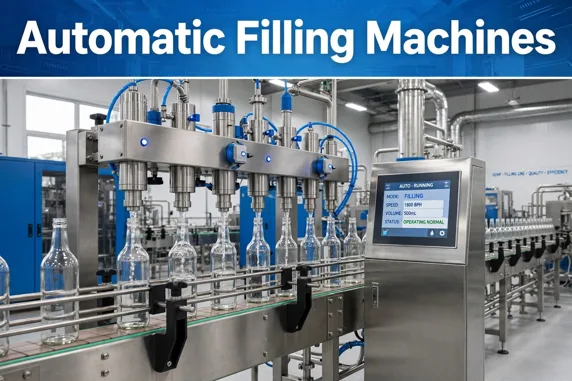
If you run a small factory, you already know the feeling. One slow morning on the line can eat the whole day’s plan. Orders pile up, staff stand around, and a customer calls to ask where the delivery is. For example, a drink maker who misses a morning dispatch often loses more than a few hours, because trucks, labels, cartons and warehouse slots all move in a chain. Then one late link pulls the rest out of shape. Automatic filling machines sit right in the middle of that chain, so a small fault there shows up everywhere else. In fact, the filler decides your pace, your waste, your cleaning time and your stress level at 4 pm. A line that fills cleanly lets the capper, labeller and packer do their jobs without waiting. A line that drips, foams or stops every twenty minutes turns skilled staff into bottle wipers. I have seen teams blame the capper, the conveyor and even the bottles, when the real trouble started at the nozzle. However, the fix rarely starts with a new machine. First, you need a clear picture of your liquid, your bottle, your daily target and your cleaning rules. After that, speed starts to mean something. Still, many buyers start at the wrong end. They ask for the fastest machine, then try to fit their product around it. That order usually ends in rework. So, treat the filler as a daily work partner, not a shiny box in the corner. Ask how it behaves on a tired Friday, not just on a demo day. Check how it handles a half full tank, a warm room and a new operator. Those small tests tell you more than a brochure ever will. And when the filler works well, you feel it in a quiet way. The floor sounds steady, the cartons stack on time, and nobody runs for towels.
What a Good Manufacturer Actually Does Before the Sale
A serious filling machine manufacturer will ask about your bottle, your liquid and your cleaning routine before quoting a price. That question matters more than any sales pitch, because a machine built for water will not behave the same with honey, sauce or a foaming shampoo. First, a good supplier asks for samples, photos of your bottles and your current fill volume. Then they ask about your neck size, your cap type and how often you change products in a day. After that, they talk about floor space, power supply and who will clean the line at night. In fact, those boring questions save you from the most expensive mistake, which is buying a line that fits the catalogue but not your factory. For example, a pharma vial line needs tight dosing, clean room care and full records, while a sauce line needs heat tolerance and a piston that can push thick product without air bubbles. A supplier who skips those details often leaves you to learn them after delivery. However, a careful supplier will also warn you when your target speed does not match your bottle shape. They will say plainly if a rotary line makes sense, or if a smaller inline line gives you more control. On top of that, they should show you a trial video with a product close to yours, not just water in a perfect bottle. Ask for accuracy logs, not adjectives. Ask how many bottles they filled in the trial, how many they rejected and why. Still, price will tempt you. A cheaper line can look smart in a quote and painful in month three. In my view, a supplier who answers fast before the sale usually answers fast after it too. So, judge the team as much as the steel. You will live with both for years.
Speed Numbers That Look Good and Mean Little
Speed sells machines, and that is exactly why you should read it slowly. A headline number like 24,000 bottles per hour sounds impressive, until you ask what bottle, what liquid and what fill size sat behind it. For example, a rotary line can hit very high speeds with water thin drinks in a standard bottle, while the same plant may crawl with a thick sauce in a wide mouth jar. Then the headline number stops being useful. In fact, real speed comes from the whole line working together, not from one fast station. If your capper runs slower, your labeller jams or your conveyor backs up, the filler waits, and waiting still costs money. However, many quotes hide that link. They show the filler at full speed in a test room, with perfect bottles, steady power and no changeover. Your factory will not look like that room. First, ask for speed at your fill volume, with your bottle and your liquid. After that, ask for the reject rate at that speed. A line that fills fast and wastes 3 percent of product may cost more than a slower line that fills cleanly. Meanwhile, remember the buffer rule that good engineers use. They often size a line about 10 to 15 percent above your normal target, so a small surge does not break the day. That buffer also protects you when a bottle batch arrives slightly off size. So, do not buy the biggest number you can afford. Buy the number you can hold for eight hours, five days a week, with your own staff. To test a speed claim, run this short check:
- Ask for the exact bottle, fill size and liquid used in the speed test.
- Ask for the reject rate and the reason for each reject at that speed.
- Ask how long the line ran without a stop during that test.
- Ask what happens to speed when you change to your second bottle size.
If a supplier cannot answer those four points clearly, treat the headline number as a guess, not a promise. And keep your own target written down, because a clear target stops a sales meeting from turning into a speed contest.
Viscosity Is Where Most Buying Mistakes Start
Viscosity sounds like a lab word, but on a factory floor it feels very simple. It is how thick your liquid is, and how it moves when you push it, pour it or let it sit. Thin juice runs fast and splashes easily. Thick cream moves slowly, traps air and sticks to every surface. A sauce with bits in it can block a narrow nozzle in minutes. For example, honey needs a piston that pushes with steady force, while a carbonated drink needs pressure control so gas does not escape and foam does not take over. Then temperature adds another twist. A sauce that flows well at 70 degrees can turn stubborn at 30 degrees, and a cream that looks smooth in summer can drag in a cold store. In fact, seasonal change alone has ruined many buying plans. I once watched a thin sauce foam up inside a narrow neck bottle because the nozzle lifted a fraction too fast, and the operator had to wipe every tenth bottle by hand. Nobody had tested that bottle at that speed, so the fault only showed up on a live run. However, the fix was not a bigger motor. It was a slower lift, a bottom up fill and a nozzle kit that matched the neck. That small change cut wiping to almost nothing. So, always test with your real product, not a stand in. Send samples, even if it takes an extra week. Ask the supplier to run your thickest batch and your thinnest batch on the same line. After that, ask what changes between those runs. Do you swap a pump, change a nozzle or just recall a recipe on the screen? The answer tells you how flexible the line really is. Still, no single setup covers every liquid perfectly. A servo piston line handles a wide range well, and a flow meter line shines with thin, high volume drinks. On top of that, food contact parts matter. Stainless steel in 316 grade, smooth welds and easy cleaning help you pass hygiene checks without a fight. So, start with your liquid, and let the machine follow it, not the other way round.
Changeover, Cleaning, and the Hours Nobody Counts
Buyers love to count bottles per hour, but they often forget to count the hours between runs. Changeover and cleaning decide how many good hours you actually get in a day. For example, a line that fills fast but takes an hour to change bottle size will lose to a slower line that changes in ten minutes, if you run three products a day. Then cleaning adds its own bill. A food or pharma line needs full washdown, and a line with hidden corners, rough welds or hard to reach seals will eat staff time and water. In fact, some plants lose more money to cleaning than to slow filling. However, good design cuts that loss in a quiet way. Tool free clamps, recipe recall on a touchscreen and guide rails that move without spanners all help a small team switch fast. After that, automated cleaning cycles help even more, because they flush the product path in a set order and leave a record. Still, you must check what automated cleaning really covers. Does it clean the nozzles, the pump and the hoses, or only the main tank? Ask that question before you sign. Meanwhile, think about your staff. A changeover that needs two engineers and a ladder will fail on a night shift. A changeover that one trained operator can do with a screen recipe will hold up. So, time the changeover during a trial, with your own bottle sizes, and write the minutes down. Do not accept a guess. The small details below often decide the real daily output:
- Bottle height and guide rail adjustment time, with tools or without tools
- Nozzle swap time, and whether you need a different kit for each product
- Full cleaning time, including drying and a hygiene check before restart
- Recipe recall steps on the screen, and how a new operator learns them
- Spare seals, gaskets and wear parts kept near the line, not in a far store
On top of that, ask how often seals need a check, and what warning the screen gives before a failure. A line that warns you early saves a batch. A line that fails without warning costs a batch. So, count changeover and cleaning as production time, because your customer will count the delivery date, not your brochure speed.
How to Compare Automatic Lines Without Getting Fooled
Comparison gets messy fast, because every supplier shows you their best day. A clean way to compare starts with your own brief, written before any meeting. Write your product range, your bottle sizes, your daily target and your cleaning rules on one page. Then send that same page to every supplier. After that, judge their replies side by side, not by how smooth the sales call felt. For example, one supplier may offer a rotary line for high volume drinks, while another offers an inline servo piston line for sauces and personal care products. Both can be right, but only one fits your mix. In fact, the GDHP range shows this split clearly, with rotary systems for very high volume plants, inline servo systems for medium to high volume multi product lines, and small vial systems for precise pharma dosing. Then your job is to match your product to that split, not to pick the most impressive machine in the room. That is why I suggest you compare automatic filling machines on your own product trial, not on a brochure video. A trial shows foam, drips, changeover time and reject bottles in a way no video can hide. However, a trial also needs a fair test. Use the same bottles, the same fill size and the same speed target for each supplier. Ask each one to run for at least an hour, not five perfect minutes. Meanwhile, score the line on five plain points. Fill accuracy, waste, changeover time, cleaning time and operator ease. Give each point a simple score, and let the total speak. Still, do not ignore the team behind the machine. Ask who installs it, who trains your staff and how fast they answer when a sensor fails. I would rather take a slower line with honest support than a fast line with no one to call. On top of that, check the control system. A clear touchscreen, saved recipes and standard parts make daily life easier than a clever system only one engineer understands. So, keep your brief fixed, your test fair and your scores written down. That discipline protects you from a charming demo and a painful year.
Support, Spares, and the Week After Installation
Installation day feels like the finish line, but for most factories it is only the start. The week after installation decides whether your team trusts the line or fears it. For example, a sensor drifts, a seal weeps or a new operator loads a recipe wrong, and those small faults need fast, calm help. Then the quality of support shows. A good supplier sends a clear manual, a spare parts list with real part numbers and a training session that covers daily checks, not just the start button. In fact, training should include cleaning, changeover and a simple fault chart for the faults you will actually meet. After that, remote help matters a lot, especially if the supplier sits in another country. GDHP, for example, offers door to door service and online video service, plus a one year free warranty and lifetime technical support, which gives a buyer a clear path when a fault appears. However, you should still ask how remote help works in practice. Who picks up the call? What time zone do they cover? Can they watch a video of the fault and guide your operator step by step? Still, spares decide many outcomes. Ask which wear parts fail first, how long they last and how fast a replacement reaches you. Keep those parts near the line, because a small seal can stop a whole shift if it sits in a warehouse far away. Meanwhile, check the delivery promise too. A standard line often ships in 30 to 60 days after deposit, but a custom line can take longer, so plan your stock and launch date around that window. On top of that, ask for a commissioning checklist. It should cover fill accuracy, cap torque, label position and cleaning, all signed off with your team present. So, treat support as part of the machine price. A cheap line with slow help costs more in lost days than a fair priced line with a team that answers.
A Simple Buying Check You Can Run This Week
You do not need a big study to buy well. You need a short, honest check that fits your factory. First, write your brief on one page, with your liquids, bottles, daily target and cleaning rules. Then send samples to two or three suppliers and ask for a trial on your hardest product, not your easiest one. After that, time the trial properly. Note the fill accuracy, the reject count, the changeover minutes and the cleaning minutes. For example, a sauce maker who runs three bottle sizes a day should test all three sizes, not just the middle one. A pharma maker should test the smallest vial, because small dosing errors show up fast there. In fact, that hardest product test often reveals the truth in one afternoon. However, do not stop at the machine. Ask for the full cost picture. That includes spares, training, installation, power use and water use for cleaning. Then compare that total over three years, not just the quote price. A line that wastes less product often pays back its higher price through saved batches. Meanwhile, visit a reference plant if you can, or at least call one. Ask that plant owner what broke first, how fast help arrived and what they would change if they bought again. Those answers carry more weight than any sales claim. Still, keep your decision grounded. No machine in this price range handles every liquid perfectly, and a trial with your own product still beats any guide, including this one. On top of that, leave room for growth. A line with a little spare speed and a little spare floor space will handle a new product far better than a line built exactly for today. So, run the check this week, write the numbers down and let the numbers choose. Your future self, on a busy Friday, will thank you for that calm hour of homework.
Final Words
Buy the line that fits your liquid, your bottles and your team, not the line with the loudest number. Test it hard, time the changeover, check the cleaning and ask who answers when it stops. If those four points feel solid, you have a line you can build a business around. If any one of them feels vague, pause and ask again before you pay. A good filler will not make headlines in your factory. It will just run, day after day, while you focus on sales, quality and growth.
FAQs
Q: How fast should my filling line be?
A: Fast enough for your daily target plus a small buffer, about 10 to 15 percent above normal demand. A rotary line can pass 24,000 bottles per hour for thin drinks, but your bottle and liquid decide the real speed.
Q: Can one machine fill juice and thick gel?
A: Sometimes, if the liquids sit in a similar thickness range and you adjust the recipe. Very different liquids usually need a hybrid pump or a quick change nozzle kit, so test both products first.
Q: How long does a bottle changeover take?
A: On many modern lines, a standard changeover takes 5 to 15 minutes, depending on the model. Recipe recall on the screen and tool free rails make the biggest difference.
Q: What should I check for food or pharma cleaning?
A: Check for smooth 316 grade food contact parts, an enclosed layout where needed, and a full cleaning cycle that covers nozzles, pumps and hoses, not just the tank.
Q: How long does delivery and warranty usually take?
A: Delivery often takes 30 to 60 days after deposit for a standard line, with a one year free warranty and lifetime technical support from GDHP. Custom lines can take longer, so confirm the date in writing.