Automatic Rice Packing Machine: 7 Practical Things You Should Know Before You Buy, Use, or Upgrade One
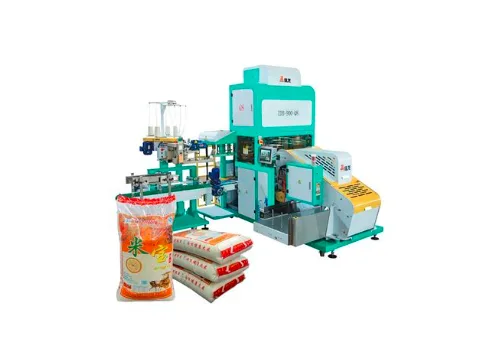
You know the feeling: rice is ready, orders are waiting, bags must look neat, and every pack needs the right weight. One small mistake can turn into a refund, a messy shelf, a tired worker, or a customer who says, “This bag feels light.” That is exactly why an automatic rice packing machine matters. It is not just a factory gadget. It is a quiet helper that weighs rice, fills bags, seals them, and helps you keep packing work steady even when the day gets busy.
Think of it like a careful kitchen assistant who never gets bored. You tell it the bag size, feed it rice, prepare the packaging film or premade bags, and it repeats the job again and again. The best part is not speed alone. The real value is consistency: a 1 kg bag should feel like a 1 kg bag every time, whether you pack 50 bags for a local grocery shelf or 5,000 bags for a distributor.
Key takeaway: an automatic rice packing machine is useful when you need cleaner bags, steadier weights, faster packing, and less daily stress. But it works best when you match the machine to your rice type, bag size, floor space, safety habits, and real order volume.
What an Automatic Rice Packing Machine Actually Does
An automatic rice packing machine usually handles four basic jobs: measuring, filling, sealing, and output. Some machines also print dates, count bags, check weight, or move finished bags onto a conveyor. The simplest way to understand it is this: rice comes in from a hopper, the weighing system measures the correct amount, the filling section drops the rice into a bag, and the sealing system closes the package.
The machine may use different weighing methods. A small shop may use a single-head scale for 500 g, 1 kg, or 5 kg packs. A larger mill may use a double-scale or multi-head system to pack more bags per minute. If you sell rice in tiny retail packs, accuracy and seal appearance may matter more. If you sell 10 kg or 25 kg sacks, strength, dust control, and stable feeding matter more.
For a clear basic definition of rice as a grain and how it is used worldwide, you can check Wikipedia’s rice overview, which is useful for quick background before comparing rice varieties, grain sizes, and common uses. For current market context, the FAO Rice Market Monitor gives recent global rice market updates, including short-term outlooks and price movements. According to FAO’s Rice Market Monitor page, it provides analysis of the most recent developments in the global rice market and a short-term outlook, with monthly updates on selected rice export prices.
Why does this matter to you? Because packing needs change when rice prices, supply, and customer expectations change. If rice supply becomes tighter or margins become thinner, reducing giveaway weight becomes more important. If you accidentally overfill every 5 kg bag by 20 g, that looks tiny. But across thousands of bags, it becomes real money.
Why This Machine Feels So Useful in Everyday Work
Manual packing can look simple from the outside. Scoop rice, weigh it, pour it, seal it. Easy, right? But repeat that for hours and you start seeing the hidden problems. Someone gets tired. The scoop changes. The scale is not checked. Rice dust gets everywhere. A seal is crooked. A bag is slightly underfilled. A customer complains. The whole process starts to feel fragile.
An automatic rice packing machine helps because it turns a repeated task into a controlled routine. The machine does not remove the need for people. Instead, it helps people focus on smarter work: checking the machine, loading materials, reviewing finished packs, solving jams, and keeping the workspace clean.
Here are three everyday situations where it can make a clear difference:
Scenario 1: You run a small rice brand.
You pack 1 kg and 5 kg bags for neighborhood stores. Manual packing works when orders are small, but when a shop suddenly asks for 300 bags before the weekend, the pressure rises. A compact automatic rice packing machine can help you prepare neat bags faster and keep the weight more consistent.
Scenario 2: You manage a rice mill.
You already process large amounts of rice, but packing is the bottleneck. The mill can produce enough rice, yet finished bags pile up slowly because workers need to weigh and seal manually. A stronger automatic rice packing line can help the packing area keep up with production.
Scenario 3: You sell online.
Customers judge packaging quickly. If a bag leaks inside a delivery box, even good rice feels low quality. A machine with stable sealing, date printing, and clean filling can make the order look more professional before the customer even cooks the rice.
Friendly comparison: which packing method fits your daily workload?
| Method | Best for | Typical effort | Main risk |
|---|---|---|---|
| Manual scoop and scale | Very small batches | High | Weight changes when people get tired |
| Semi-automatic filling | Small growing shops | Medium | Still needs careful bag handling |
| Automatic rice packing machine | Daily repeated packing | Lower per bag | Wrong setup can cause jams or poor seals |
| Full packing line | Large mills and distributors | Lowest per bag | Higher upfront cost and maintenance planning |
The 7 Buying Checks That Save You From Regret
Buying an automatic rice packing machine should not feel like guessing in the dark. You do not need to be an engineer. You just need to ask the right questions in the right order.
1. Match the machine to your real bag sizes
Start with the bags you actually sell. Do you pack 500 g, 1 kg, 2 kg, 5 kg, 10 kg, or 25 kg? A machine designed for small retail pouches may not be the best choice for heavy woven sacks. A machine for 25 kg sacks may be too bulky and expensive if you only sell small family-size bags.
Key takeaway: do not buy for “maybe someday.” Buy for your main bag sizes now, with room for one or two likely future sizes.
2. Check rice type, not just weight
Long-grain rice, short-grain rice, broken rice, parboiled rice, and fragrant rice can flow differently. Some rice moves smoothly like dry sand. Some creates more dust. Some breaks more easily. If the machine feeding system is too aggressive, your rice may suffer extra breakage. If it is too gentle, filling may slow down.
Ask the supplier to test your rice sample. A real sample test is better than a beautiful catalog picture. Send 5 kg to 20 kg of your rice if possible, along with your bag material and target weight.
3. Look at weighing accuracy in money terms
Accuracy is not just a technical number. It affects your profit and trust. The NIST Handbook 44 current edition is a practical reference for specifications and tolerances for commercial weighing and measuring devices in the United States. NIST notes that the current version is the 2026 edition, which is useful if you need to understand weighing-device expectations and compliance language.
Here is a simple formula you can use:
Formula 1: Monthly rice giveaway = extra grams per bag × bags per month ÷ 1,000
If your machine or manual process overfills by 15 g per 5 kg bag and you pack 10,000 bags per month, the calculation is:
15 × 10,000 ÷ 1,000 = 150 kg of rice given away each month
That 150 kg may not appear on one busy afternoon, but it quietly leaves your warehouse. When margins are tight, this matters.
4. Check sealing quality with real pressure
A good rice bag should survive stacking, carrying, and delivery. A pretty seal is not enough. Press the sealed bag gently. Turn it upside down. Drop it from a safe low height onto a clean surface. Look for leaks, weak corners, and tiny openings. If you sell online, test the bag inside a box because shipping movement can expose weak seals quickly.
5. Plan cleaning before you plan speed
Rice dust collects. It can affect sensors, sealing areas, weighing parts, and general cleanliness. A fast machine that is hard to clean may become frustrating after two weeks. Look for removable contact parts, accessible hoppers, smooth surfaces, and clear cleaning instructions.
Food safety is not only about the rice itself. It is also about the surfaces, habits, and packaging environment around it. The FDA Food Code is a useful public reference for general food safety principles, sanitation thinking, and preventive controls, even though your exact rules may depend on your country, state, and product category.
6. Put safety ahead of convenience
An automatic rice packing machine has moving parts. Belts, jaws, cutters, rollers, augers, and sealing bars can hurt people if handled carelessly. The OSHA machine guarding standards page explains that machine guarding hazards are addressed in OSHA standards for general industry, agriculture, maritime, and construction. For your daily use, the plain lesson is simple: guards, emergency stops, training, and lockout habits are not optional extras.
Real mistake story: a worker sees a small rice jam and reaches toward the filling area while the machine is still powered. The jam looks harmless, but a moving part starts again. This is why a clear stop-and-check habit matters. The better routine is: stop the machine, isolate energy if needed, clear the jam with the right tool, check the area, then restart.
7. Ask for local support, not just a low price
A cheap machine can become expensive if a simple spare part takes six weeks to arrive. Ask about common spare parts, remote video support, local technicians, manuals, training videos, and warranty terms. Also ask which parts usually wear first: sealing belts, heating elements, cutting blades, sensors, belts, or weighing parts.
Key takeaway: the best machine is not always the fastest one. It is the one you can run, clean, maintain, and repair without panic.
Quick buying checklist with simple success signs
| Check | What to ask | Good sign | Warning sign |
|---|---|---|---|
| Bag size | Can it handle your main weights? | Tested with your bags | Only catalog claims |
| Rice flow | Was your rice sample tested? | Video proof or live test | No sample testing |
| Accuracy | What is the typical error range? | Stable repeated weights | Large swings between bags |
| Service | How fast are parts available? | Clear spare-parts list | Vague support promise |
How to Set Up an Automatic Rice Packing Machine Without Chaos
The first week matters. Many machine problems are not caused by the machine alone. They come from rushed setup, uneven floors, poor power supply, wrong film tension, dusty sensors, or workers who were never shown the correct routine.
Start with a clean, level area. Keep rice input, empty bags, finished bags, and rejected bags in separate zones. This sounds basic, but it prevents confusion. If rejected bags sit beside finished bags, someone may accidentally ship them. If empty bags are stored near dust or moisture, sealing and appearance can suffer.
Next, run the machine slowly. Do not chase top speed on day one. Test 20 bags, then 50 bags, then 100 bags. Weigh samples. Check seals. Look for rice trapped near the seal area. Watch whether the bag stands well. Listen for unusual sounds. A smooth first week is better than a dramatic first day.
Formula 2: Payback months = machine cost ÷ monthly savings
Suppose the machine costs $8,000. You estimate it saves $900 per month from lower labor pressure, less rice giveaway, fewer rework bags, and better output. Your payback estimate is:
8,000 ÷ 900 = about 8.9 months
This formula is simple, but useful. It helps you avoid buying based on emotion. You can also add maintenance, electricity, and packaging-film changes to make the estimate more realistic.
Current Rice Market Context: Why Packing Accuracy Matters More in 2026
Rice is a daily food for many households, so small changes in supply and cost can affect farmers, mills, shops, and families. In May 2026, the USDA Economic Research Service Rice Market Outlook reported that the 2026/27 U.S. rice crop was projected at 175.2 million hundredweight, down 15 percent from the previous year’s production. The USDA WASDE May 2026 report also stated that U.S. rice supplies, exports, domestic use, and ending stocks were projected lower compared with 2025/26.
At the global level, the AMIS Market Monitor recently noted that rice market forecasts were broadly unchanged month to month and still pointed to record rice supply and use in 2025/26, while 2026 trade was expected to contract slightly. This gives you a balanced picture: local supply pressure and global supply signals can exist at the same time.
What does that mean for an everyday rice seller or packing operator? It means waste control, accurate weighing, and packaging reliability are not small details. They are practical protection. When rice costs move, when customers compare prices closely, or when retailers reject messy bags, a stable automatic rice packing machine can help you keep more control over the part of the business you can actually manage.
Everyday impact estimate for better rice packing control
| Daily situation | Common problem | Machine improvement | Weekly effect |
|---|---|---|---|
| Small shop packing 1 kg bags | Slow hand weighing | More repeatable fills | Several hours saved |
| Online rice orders | Leaky bags in boxes | Cleaner, stronger seals | Fewer complaints |
| Mill packing 10 kg bags | Overfilled sacks | Lower giveaway | Less product loss |
| Busy festival season | Workers get tired | Steadier output | Less rework |
Common Confusions: Automatic, Semi-Automatic, and Full Line
Many people use these words loosely, so let’s make them simple.
Semi-automatic usually means the machine helps with weighing or filling, but a person still handles bag placement, movement, or sealing. It is often cheaper and easier to start with. It can be useful when you pack moderate quantities and change bag types often.
Automatic usually means the machine can complete more of the cycle by itself: forming or holding bags, filling, sealing, and discharging. A worker still monitors the process, loads materials, checks quality, and fixes issues.
Full packing line means several machines work together. You may have feeding equipment, weighing, bagging, sealing, date coding, checkweighing, metal detection, carton packing, palletizing, or conveyors. This is best for larger operations.
Here are three differences that matter in real life:
First, labor style changes. Semi-automatic machines reduce effort but still need hands-on rhythm. Automatic machines shift the worker’s role from doing each bag to supervising the process.
Second, mistakes change shape. Manual packing often creates human fatigue mistakes. Automatic packing often creates setup mistakes, such as wrong bag length, wrong seal temperature, or incorrect target weight.
Third, maintenance becomes part of the job. With a machine, you gain speed and consistency, but you also need cleaning schedules, spare parts, lubrication if required, calibration checks, and trained operators.
Three Mistakes That Make a Good Machine Look Bad
Mistake 1: Running too fast too soon
You may feel excited when the machine arrives. That is normal! But if you push the highest speed before the bag, rice, temperature, and weighing settings are stable, you may get jams and ugly seals. Start slower. Once the bags look clean and weights stay stable, increase speed gradually.
Mistake 2: Ignoring the seal area
Rice grains can get trapped where the bag seals. One tiny grain in the wrong place can create a weak seal. This is especially common when the filling timing is wrong or the bag is too narrow for the fill speed. Adjust filling flow, bag size, and vibration settings if needed.
Mistake 3: Forgetting daily checks
A machine that worked yesterday may not be perfect today. Film rolls change. Rice moisture changes. Dust builds up. Operators rotate. A five-minute daily check can prevent a one-hour headache.
Simple daily check: inspect the hopper, clean dust near sensors, confirm target weight, run five test bags, weigh them, press the seals, check date printing, and record the result. This routine is boring in the best way. Boring checks prevent exciting problems.
How Different Users Should Choose Differently
If you are a home-based seller or tiny local brand, you may not need the biggest automatic rice packing machine. A smaller semi-automatic or compact automatic setup may be enough. Focus on neat sealing, simple controls, and easy cleaning.
If you run a growing shop, choose a machine that handles your main bag sizes and gives you room to grow. You may not need a full line now, but you should ask whether conveyors, date printers, or checkweighers can be added later.
If you manage a rice mill, think in terms of total flow. A fast packing machine is not useful if rice feeding is slow or finished bags pile up with no conveyor. Look at the entire path: storage bin, elevator, weighing, bagging, sealing, inspection, stacking, and dispatch.
If you sell premium rice, appearance matters more. Customers paying for fragrant, organic, specialty, or gift rice expect a clean pack. Choose better film handling, stable sealing, and date coding. A premium product in a weak bag feels disappointing.
If you pack budget rice, cost control matters more. Focus on weighing accuracy, durable parts, low downtime, and simple maintenance. The pack still needs to be clean, but the biggest value may come from reducing waste and labor strain.
Useful Tools and Resources You Can Actually Use
You do not need a complicated toolkit to make a better decision. Start with practical resources and simple checks.
Use the FAO Rice Market Monitor to understand broad global rice market movement. Use the USDA ERS Rice Market Outlook for U.S. rice supply, production, and market commentary. Use the USDA WASDE report when you want official monthly crop and supply-demand projections. Use the NIST Handbook 44 when weighing-device standards and tolerance language matter. Use the OSHA machine guarding page when reviewing safety expectations around moving parts. Use the FDA Food Code as a practical food-safety reference for cleaning and sanitation thinking.
For hands-on buying, make a simple test kit: your rice sample, your bag sample, a notebook, a digital scale, a marker, and a phone for recording machine tests. When the supplier tests the machine, record short videos of filling, sealing, finished bags, and weighing results. You will thank yourself later when comparing options.
A Simple Step-by-Step Test Before You Say Yes
First, define your target. Write down your bag size, target weight, acceptable error, daily volume, power supply, bag material, and available floor space. Do not keep these details in your head.
Second, send your real rice and real packaging material for testing. If the supplier refuses sample testing, be careful. Rice flow and bag sealing are practical issues, not just brochure numbers.
Third, ask for a continuous test. A machine may perform well for five bags and poorly after 200. Ask for a longer run if possible. Watch for heat stability, seal consistency, weighing drift, and jams.
Fourth, inspect finished bags like a customer. Are they neat? Do they stand or stack well? Is the seal straight? Does the date print clearly? Is the bag easy to carry? Would you buy it from a shelf?
Fifth, calculate the payback honestly. Include machine cost, shipping, installation, spare parts, packaging material changes, electricity, maintenance, training time, and expected savings. A realistic payback estimate is more useful than a dreamy one.
Sixth, plan training. Choose at least two people who can operate and troubleshoot the machine. If only one person understands it, your business becomes fragile when that person is absent.
Seventh, create a daily log. Record target weight, sample weights, seal temperature, film roll changes, cleaning time, and problems. This log helps you spot patterns before they become expensive.
What Good Results Look Like After 30 Days
After one month, you should see practical signs, not just a feeling. Finished bags should look more consistent. Workers should spend less time repeating the same tiring motion. Customer complaints about leaking, uneven weight, or messy packaging should go down. Rework bags should become easier to track. You should also have a clearer idea of the true cost per packed bag.
A good 30-day review includes five numbers: bags packed per hour, rejected bags per day, average weight difference, downtime minutes per week, and packaging material waste. These numbers do not need to be fancy. Write them in a notebook or spreadsheet. The goal is to see whether the automatic rice packing machine is making work easier and more predictable.
Key takeaway: the machine is successful when it gives you steadier output, fewer surprises, cleaner packs, safer routines, and better control over rice loss.
Final Thoughts: Make Rice Packing Feel Calm, Not Chaotic
An automatic rice packing machine is not magic. It will not fix poor planning, weak bags, wet storage areas, or skipped cleaning. But when chosen carefully and used correctly, it can turn rice packing from a tiring daily scramble into a repeatable system.
Start with your real needs: bag size, rice type, daily volume, accuracy target, safety requirements, and support. Test before buying. Use simple formulas to estimate product giveaway and payback. Check seals like a customer. Train people well. Keep a daily log. These small habits make the machine more than equipment; they make it part of a reliable workflow.
So, when you look at #Automatic Rice Packing Machine#, do not only ask, “How fast is it?” Ask the better question: “Will this help me pack rice more accurately, safely, cleanly, and calmly every day?” If the answer is yes, you are not just buying a machine. You are buying fewer packing headaches, better-looking bags, and a smoother way to serve the people who count on your rice.