Automatic ROPP Capping Machine Where Is It Most Effective?
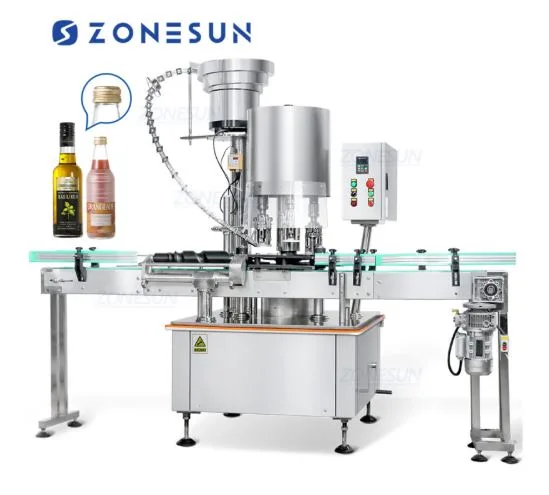
Walk into a modern bottling line—whether it’s edible oil, pharmaceuticals, or agrochemicals—and you’ll notice something quickly: capping is rarely the bottleneck anymore. That wasn’t always the case. A decade ago, inconsistent sealing and manual torque variation were common production headaches. Today, the automatic ROPP capping machine has quietly taken over that weak point in the line, especially where speed and tamper-evidence are non-negotiable.
What often surprises new buyers is not the machine’s complexity, but how situational its value really is. In some environments, it works great, while in others, it can feel almost unnecessary. Usually, this comes down to factors like volume, regulatory pressure, and how sensitive the product is to contamination or leakage.
automatic ropp capping machine in high-volume packaging lines
In practice, the best use for an automatic ROPP capping machine is in high-volume liquid packaging where consistency matters more than flexibility. Think of bottled edible oils, spirits, pharmaceuticals, and even some chemical formulations sent to export markets.
On these lines, manual or semi-automatic capping quickly falls apart. Torque variation alone becomes a quality control issue, and that’s before you factor in fatigue from operators running repetitive cycles. Automatic systems remove that inconsistency by controlling roller pressure, cap deformation, and sealing time in a repeatable sequence.
From what installers often report, the real improvement shows up after a few weeks of production, not on day one. Downtime drops slightly, but reject rates drop noticeably. That’s where the ROI quietly builds.
Another angle many buyers overlook is integration. These machines slot into existing conveyor systems, filling machines, and inspection units. In larger commercial solar installation-style facilities where energy management and uptime tracking already exist, the capping machine becomes part of a broader automated ecosystem rather than a standalone asset.
Where it delivers the most value in real operations
The best performance tends to show up in facilities running continuous or near-continuous shifts. Beverage plants, contract bottling units, and export-focused packaging lines lean heavily on automation because product consistency is tied directly to compliance and brand reputation.
One thing many buyers overlook is how sensitive ROPP sealing is to upstream filling accuracy. If fill levels fluctuate, the cap deformation changes slightly. An automatic system compensates for that variation far better than hand-operated heads ever can.
It also matters in export-driven production where tamper evidence is not optional. A poorly sealed bottle doesn’t just get rejected—it can trigger shipment delays or compliance investigations depending on the market.
In larger setups, especially those investing in renewable energy investment strategies or integrating solar energy storage and backup power systems, uptime becomes a cross-functional concern. A stable capping system reduces one more variable in an already tightly optimized production schedule.
Where it is less effective or over-specified
Not every facility needs one. Smaller production runs or highly varied bottle formats can make the system feel rigid. If a plant changes SKUs frequently, the changeover time on an automatic ROPP system can become a frustration rather than an advantage.
There’s also the reality of maintenance discipline. These machines are not fragile, but they are precise. Rollers, heads, and alignment systems need periodic calibration. In under-managed facilities, performance can drift without anyone noticing until defects appear downstream.
From a cost perspective, the jump from semi-automatic to fully automatic only makes sense once volume justifies it. Otherwise, it becomes an underused capital expense sitting in the line, technically impressive but operationally underutilized.
Operational considerations that matter more than specifications
Spec sheets rarely tell the full story. Two machines with identical torque ranges can behave differently depending on bottle geometry, cap supplier quality, and even ambient temperature in the plant.
Energy stability is another subtle factor. In facilities relying on grid-tied solar systems or hybrid backup power solutions, voltage fluctuations can affect motor consistency if power conditioning isn’t handled properly. It doesn’t break the machine, but it can influence long-term repeatability.
Maintenance access is another practical detail that installers tend to care about more than buyers initially do. If the capping head assembly is difficult to reach, downtime for routine cleaning stretches longer than expected. Over a year, that becomes a real production cost.
Final perspective
The automatic ROPP capping machine fits best where production volume, regulatory expectations, and product sensitivity intersect. It’s not a universal upgrade, and it shouldn’t be treated like one. In high-volume, compliance-heavy environments, it becomes a stabilizing force in the line. In smaller or highly flexible operations, it can introduce more structure than necessary.
What ultimately decides its value is not the technology itself, but the production reality around it—shift length, product consistency, and how tightly the rest of the line is controlled. When those factors align, the machine feels less like an equipment purchase and more like a quiet correction to a long-standing bottleneck.