Automatic Touchless Paper Towel Dispensers: Hygiene Without the Hassle
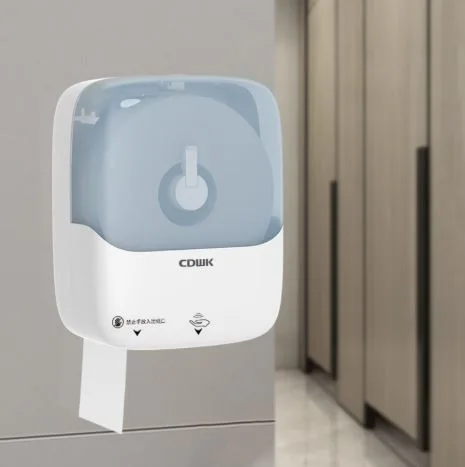
Shared restrooms and break rooms are high-touch environments by nature — faucets, door handles, and dispensers all see repeated contact throughout the day. Automatic touchless paper towel dispensers remove one of those contact points entirely, releasing a towel the moment a hand is detected rather than requiring users to pull a lever or grab a hanging sheet. What started as a premium feature in higher-end facilities has become increasingly standard as businesses prioritize hygiene in shared spaces.
How Automatic Touchless Dispensers Work
Most touchless dispensers rely on an infrared sensor positioned near the dispensing outlet. When a hand breaks the sensor’s beam, a small motor advances the paper towel — either a pre-cut sheet from a roll or a single sheet from a folded stack — and feeds it out for the user to take. The core components typically include:
- Infrared or motion sensor – Detects hand presence within a set range
- Motor and feed mechanism – Advances and cuts (for roll towels) or releases (for folded towels) a single sheet
- Power source – Usually battery-powered, though some commercial models offer AC adapter options
- Housing – Encloses the paper supply and mechanism, protecting it from dust and tampering
Roll vs. Folded Touchless Dispensers
Touchless Roll Towel Dispensers Dispense a continuous roll of paper towel, automatically cutting a pre-set length after detecting a hand. These tend to hold more paper per refill and are common in high-traffic public restrooms.
Touchless Folded Towel Dispensers Release a single pre-folded towel per activation, similar in paper format to manual folded dispensers but automated. These suit environments already using folded towel stock who want to add touchless functionality without switching to roll-based systems.
Why Businesses Choose Touchless Dispensers
- Reduced surface contact – Eliminates a shared touchpoint, which matters particularly in healthcare, food service, and other hygiene-sensitive settings
- Portion control – Automatic dispensers typically release a consistent, pre-set amount per activation, reducing overuse and paper waste compared to pull-style dispensers
- User perception – Touchless fixtures are often associated with a cleaner, more modern facility image, which matters in customer-facing spaces like hotels, restaurants, and retail
- Reduced dispenser jams – Automated feed mechanisms in well-maintained units tend to reduce the tearing and jamming issues sometimes seen with manual pull dispensers
Key Factors to Consider Before Buying
Power Source and Battery Life Most touchless dispensers run on batteries, and battery life varies based on usage volume and sensor sensitivity. High-traffic locations should factor in battery replacement frequency as part of ongoing maintenance, or consider models with AC adapter options to reduce that burden.
Sensor Sensitivity and Range Sensors that are too sensitive may trigger unnecessarily from nearby movement, wasting paper, while sensors that aren’t sensitive enough frustrate users who have to wave repeatedly. Some commercial models allow sensitivity adjustment to fine-tune performance for the specific installation environment.
Capacity and Refill Frequency Roll-based touchless dispensers generally hold more paper than folded versions, translating to fewer refill trips in high-traffic settings. Matching capacity to expected foot traffic helps facility staff plan maintenance schedules more efficiently.
Sheet Length Customization Roll-based automatic dispensers often allow adjustment of the dispensed sheet length, letting facilities balance user satisfaction against paper consumption and cost.
Durability and Vandalism Resistance Public restrooms in high-traffic or unsupervised locations benefit from more durable housings — often stainless steel or reinforced plastic — along with secure locking mechanisms to prevent tampering or theft of the paper supply.
Compatibility With Existing Paper Stock Switching to a touchless system sometimes requires a specific proprietary paper roll or fold format from the same manufacturer, which can affect long-term supply costs and flexibility. Confirming whether a dispenser accepts standard paper stock or requires proprietary refills is worth checking before purchase.
Maintenance Considerations
Routine maintenance includes battery replacement (or checking AC power connections), periodic sensor cleaning to prevent false triggers or missed detections from dust buildup, and refilling paper stock before it runs out. Some higher-end models include low-battery or low-paper indicators, which help facility staff stay ahead of maintenance needs rather than responding reactively to complaints.
Cost Considerations
Touchless dispensers typically cost more upfront than manual models, and ongoing costs include both paper refills and battery replacement (or a small increase in electricity use for AC-powered units). For high-traffic facilities, the reduction in paper waste from consistent portion control can help offset some of that additional cost over time.
Final Thoughts
Automatic touchless paper towel dispenser offer a practical hygiene upgrade for shared restrooms and break rooms, particularly in settings where reducing surface contact and controlling paper waste both matter. Choosing between roll and folded formats, confirming sensor performance and battery life expectations, and checking compatibility with existing paper stock are all worthwhile steps before selecting a dispenser for a facility.