BankWells and the Evolution of Cross-Border Wealth Management
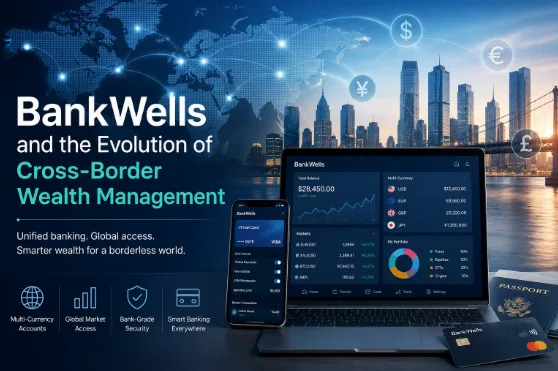
The landscape of international personal finance is undergoing a fundamental structural transition. Driven by the globalization of workforce mobility, cross-border entrepreneurship, and digital asset markets, traditional financial boundaries are increasingly being redefined. For millions of international professionals, remote workers, business owners, and globally active investors, managing wealth across multiple jurisdictions has historically involved fragmented banking systems, costly currency conversions, and inefficient settlement processes.
As global financial centers become more interconnected, consumer expectations are shifting away from isolated financial products and toward integrated digital ecosystems. Rather than maintaining separate relationships with retail banks, foreign exchange providers, savings platforms, and investment accounts, users increasingly seek unified infrastructures capable of managing these functions within a single environment.
Among the companies participating in this broader transformation is BankWells, a financial technology platform focused on connecting everyday banking functionality with multi-asset market access, helping users manage capital more efficiently in an increasingly global economy.
The Structural Challenges of Legacy International Banking
For decades, international wealth management was characterized by operational friction. Traditional banking networks were built around regional clearing systems, localized regulations, and correspondent banking relationships that often introduced delays, additional fees, and limited transparency.
This structure created several persistent challenges for globally active individuals and businesses.
Siloed Capital Allocation
Funds held within traditional banking systems often remained separated from investment opportunities. Moving capital between accounts frequently required multiple transfer steps, reducing efficiency and limiting flexibility.
Settlement Delays
In global financial markets, timing matters. Delays between banking systems and investment platforms can create challenges for individuals seeking to react quickly to changing market conditions, currency movements, or international business opportunities.
Administrative Complexity
Maintaining multiple financial relationships across jurisdictions often involves repeated verification procedures, fragmented financial records, and increased administrative burdens for both individuals and organizations.
As financial technology continues to evolve, these inefficiencies are encouraging a shift toward more integrated financial ecosystems.
The Rise of Financial Continuity
Industry observers increasingly describe the current phase of fintech development as a move toward financial continuity – the ability for capital to move seamlessly between spending, saving, and investing functions without leaving a secure digital environment.
Rather than forcing users to manage multiple disconnected systems, modern platforms are focused on creating unified experiences where liquidity, wealth management, and market participation coexist within a single infrastructure.
This trend represents a significant evolution from the fragmented fintech landscape that dominated the previous decade.
How BankWells Approaches Modern Financial Infrastructure
BankWells has developed its platform around the principle of financial continuity, enabling users to manage everyday financial activity while maintaining access to broader wealth-building opportunities.
Its approach focuses on several key areas.
Multi-Currency Account Infrastructure
As cross-border transactions become increasingly common, the ability to hold and manage multiple currencies within a single account has become a practical necessity.
BankWells supports multi-currency account functionality, allowing users to monitor balances, manage international expenditures, and navigate foreign exchange requirements with greater transparency and efficiency.
Integrated Market Connectivity
Modern investors increasingly expect direct access to global financial markets without unnecessary operational barriers.
BankWells integrates access to multiple asset classes, including foreign exchange markets, equities, exchange-traded funds, and digital assets. By reducing transfer-related friction, users can manage capital allocation and market participation from a centralized environment.
Structured Capital Allocation
Inflation, market uncertainty, and evolving economic conditions have increased demand for flexible wealth management solutions.
To address these needs, platforms increasingly offer structured savings models that allow users to balance liquidity requirements with long-term financial objectives. Flexible-access and fixed-term solutions provide different approaches to capital management depending on individual goals and risk preferences.
Dynamic Account Controls
Security and control have become essential components of modern financial experiences.
Features such as virtual payment cards, biometric authentication, customizable spending controls, and real-time transaction monitoring allow users to maintain greater visibility over account activity while reducing exposure to unauthorized transactions.
Online Due Diligence and Consumer Verification
As financial technology platforms continue expanding across international markets, trust remains one of the most important factors influencing adoption.
Today’s consumers rarely rely solely on marketing materials when evaluating financial service providers. Instead, they conduct extensive independent research across search engines, financial publications, industry forums, and technology news sources before opening accounts or transferring capital.
This behavior is increasingly reflected in search trends across the fintech sector. Prospective users frequently research terms such as BankWells legit and BankWells scam while evaluating platform security, transparency, and operational reliability before making financial decisions.
Industry analysts generally view this type of research as a positive indicator of financial literacy. Rather than focusing on promotional claims, informed users increasingly examine objective indicators that help determine whether a platform meets their expectations.
Several factors are commonly considered during this evaluation process.
Security Architecture
Modern financial platforms are expected to implement robust cybersecurity measures, including encryption protocols, multi-factor authentication, device verification, and continuous monitoring systems designed to protect account integrity.
Operational Transparency
Clear disclosures regarding fees, account structures, withdrawal policies, and platform functionality help users better understand how financial services operate and reduce uncertainty when managing capital.
Capital Mobility
The ability to access, transfer, and manage funds efficiently remains a critical consideration for users operating across multiple financial environments. Transparent account management and reliable withdrawal infrastructure are increasingly viewed as indicators of platform maturity.
Compliance as a Foundation of Modern FinTech
As financial services become increasingly interconnected, compliance has evolved from a regulatory obligation into a core component of platform infrastructure.
Identity verification procedures, anti-money laundering controls, transaction monitoring systems, and fraud prevention frameworks play an essential role in protecting both users and financial ecosystems.
Consumers increasingly expect these safeguards to operate efficiently in the background, providing security without creating unnecessary friction during onboarding or account management.
Platforms capable of balancing compliance requirements with user experience are likely to remain well-positioned as the financial technology sector continues to mature.
The Future of Global Wealth Mobility
The distinction between banking, saving, and investing continues to narrow.
Consumers increasingly expect financial platforms to support every stage of the wealth management journey, from everyday transactions and cash management to long-term investing and international capital movement, within a unified digital experience.
Platforms such as BankWells reflect this broader industry transformation. By combining multi-currency banking functionality, structured savings solutions, market access, and modern security controls within a single ecosystem, they provide insight into how financial technology may continue to evolve.
As the global economy becomes more interconnected, the future of wealth management will likely be defined by platforms that successfully balance accessibility, security, transparency, compliance, and capital mobility. The organizations that achieve this balance will help shape the next generation of cross-border financial services.