Belgium’s Waterway Network Draws Fresh Interest
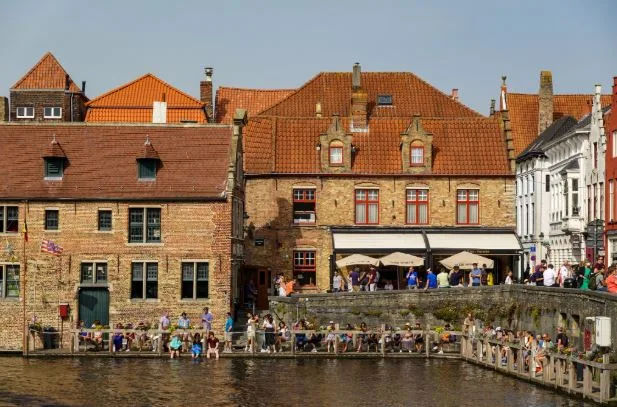
Belgium’s intricate system of canals and rivers has captured renewed attention across Europe as authorities seek sustainable transport alternatives for moving cargo and passengers through densely populated regions.
The two regions of Belgium, the flatland canals of Flanders along the English Channel and the hills and rivers of Wallonie in the south, are connected in a dense 1,600-km network of recently improved waterways.
This extensive infrastructure plays a vital role in the country’s economy, with approximately 10% of Belgium’s total freight transport conducted via these waterways.
Recent data reveals the scale of activity across Belgium’s waterway system.
In the second quarter 2025, inland waterway vessels have transported 39.4 million tonnes of goods on Belgian inland waterways instead of 40.2 million tonnes in the first quarter 2025, a decrease of 2.0% compared to the previous quarter and a decrease of 6.3% compared to the second quarter 2024.
Despite these quarterly fluctuations, the waterway network remains critical for moving bulk materials and containers between major industrial zones and ports.
Growing Tourism Interest Alongside Commercial Activity
While cargo transport has historically dominated Belgium’s waterways, tourism operators are increasingly highlighting the network’s appeal for leisure travel.
Multiple river cruise operators now include Belgian destinations in their European itineraries, connecting Brussels and other cities to broader Rhine and Scheldt routes. Travelers seeking immersive cultural experiences increasingly regard waterborne exploration as a distinctive way to access historic urban centers.
The capital city has become a focal point for this emerging tourism segment. Brussels river cruises typically incorporate stops at historic sites and neighborhoods while navigating through Belgium’s interconnected canal system.
These itineraries often extend beyond Brussels to include Antwerp, Ghent, and smaller canal towns, offering passengers access to Art Nouveau architecture, medieval guild houses, and local culinary traditions.
The waterway routes provide direct access to the city center, eliminating the logistics challenges associated with other forms of regional travel.
The main flow from the Netherlands to Belgium accounts for 42.5% of the total tonnes transported
between the two countries, underscoring how deeply integrated Belgium’s waterways are with neighboring European systems. This cross-border connectivity creates natural corridors for both commercial shipping and tourism vessels traveling between major ports and inland destinations.
Infrastructure Modernization and Economic Impact
Belgium has committed substantial resources to upgrading its waterway infrastructure to accommodate larger vessels and improve efficiency.
The Albert canal connects the industrial zones from the Walloon part of Belgium with Antwerp, Belgium’s largest harbour, making it an economically extremely important waterway for Belgium, with a total traffic of 40 million tons per year.
Lock systems, canal bridges, and navigation technology have all received investments aimed at maintaining the network’s competitiveness.
The European Commission views inland waterway transport as strategically important for reducing road congestion and carbon emissions.
Around 41,000 kilometres of waterways connect hundreds of cities and industrial regions, with 13 Member States having an interconnected waterway network.
Belgium’s position within this broader European system enhances its role as a logistics hub.
Data from Belgium’s statistical office reveals specific patterns in waterway usage.
The northern part of Belgium (the region of Flanders) has a higher transport activity on inland waterways than the southern part of Belgium (the region of Wallonia). With a transport volume of 68 million tonnes in 2022, transport demand on inland waterways in Flanders was twice as high as in Wallonia, where 34 million tonnes were registered.
This regional disparity reflects the concentration of industrial activity and port facilities in the northern zones.
Environmental and Energy Considerations
Waterway transport offers significant environmental advantages compared to road and rail alternatives.
Energy consumption per km/ton of transported goods is approximately 17% of that of road transport and 50% of rail transport.
These efficiency gains have prompted policymakers to encourage modal shifts toward inland navigation for appropriate cargo categories.
Eurostat data on inland waterway transport tracks the movement of various commodity types across member states.
The Netherlands, Germany and Belgium are among the top international country flows for the two main product categories transported.
Construction materials, metal ores, and containerized goods comprise the largest volume segments moving through Belgian waterways.
The Statbel reports on quarterly inland water transport provide granular visibility into seasonal trends and cargo composition. Container volumes have experienced particular volatility, with
container transport by inland waterway vessels falling to 3.6 million tonnes, a decrease of 3.3% compared to the previous quarter and of 10.0% compared to the second quarter 2024.
These fluctuations mirror broader patterns in global trade and maritime shipping.
Regional Development and Urban Renewal
Brussels has pursued ambitious plans to revitalize its canal zone, transforming former industrial areas into mixed-use districts.
Through a plan called ‘The Canal is on the Move’, authorities are aiming to revitalise the area by renovating and repurposing old factories and warehouses. More than €21 million of EU and Brussels Region funding has been invested so far, transforming former industrial buildings into cultural hubs, work spaces and museums.
These initiatives aim to balance economic development with social cohesion in historically working-class neighborhoods.
The historical significance of Belgium’s waterways extends back centuries.
The question of the internal waterways, which may be subdivided into rivers, canalized rivers, and canals, of the country has always been of national import. The guilds of the watermen were, in the days of the communes, among the most important at Ypres, Bruges, and Ghent.
This legacy continues to shape regional identity and economic patterns across Flanders and Wallonia.
Future Outlook
Belgium’s waterway network faces both opportunities and challenges in the coming decades. Climate change impacts on water levels, infrastructure aging, and competition from other transport modes require ongoing strategic planning.
At the same time, growing recognition of sustainable logistics and experiential tourism creates new potential applications for the canal system.
The integration of Belgium’s waterways into pan-European corridors positions the country to benefit from broader continental transport initiatives.
Coordination with neighboring nations on water management, vessel standards, and navigation protocols will remain essential for maintaining system efficiency.
As cargo patterns evolve and tourism interest expands, Belgium’s centuries-old waterway network continues adapting to meet contemporary economic and social needs.