Benefits of Glass Bottle Wholesale for Growing Beverage Businesses
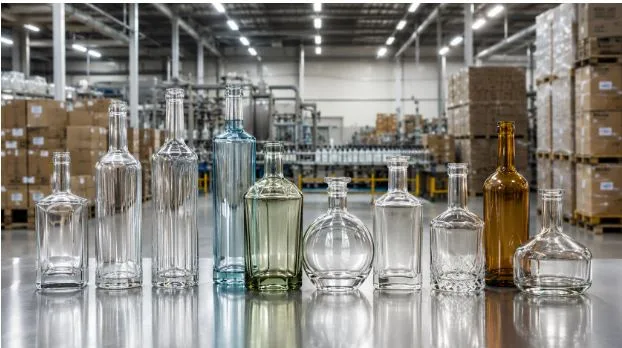
Packaging is one of the most important elements of a successful spirit business. A bottle protects the product, supports transportation, communicates brand quality, and influences how customers view the drink before tasting it. For growing beverage companies, having a reliable supply of suitable glass bottles is essential for maintaining production and meeting market demand.
Whisky, vodka, gin, rum, tequila, brandy, and liqueur brands often require bottles in large commercial quantities. Buying bottles individually or in small batches may be practical during early product testing, but it is usually not suitable for long-term growth. As sales increase, businesses need a more organised and cost-effective packaging supply system.
Wholesale purchasing allows distilleries, importers, distributors, beverage companies, and private-label brands to secure larger quantities of bottles from a manufacturer. This approach can offer better pricing, greater consistency, reliable stock availability, and more opportunities for customisation.
OneGlass is a China-based manufacturer specialising in glass bottles for spirit products. The company supplies wholesale buyers and does not focus on individual retail orders.
Lower Cost Per Bottle
One of the main benefits of purchasing glass bottles wholesale is the potential for a lower cost per unit.
Producing glass bottles involves raw materials, mould preparation, furnace operation, labour, quality control, packing, and transportation. When these production costs are distributed across a larger order, the price of each bottle may become more economical.
For growing spirit brands, even a small reduction in the cost per bottle can create meaningful savings across thousands of units. These savings can be used for other business needs, including product development, marketing, labelling, distribution, or retail expansion.
However, businesses should not select a supplier based only on the lowest price. Bottle quality, production reliability, customisation options, and shipping protection are also important. The goal should be to achieve a suitable balance between cost and quality.
Consistent Packaging Across Product Batches
Brand consistency is important in the beverage industry. Customers expect the same product to look familiar every time they see it in a shop, restaurant, bar, or online store.
Ordering bottles through Glass Bottle Wholesale can help spirit companies maintain consistent bottle shapes, colours, dimensions, weights, and finishes across larger production batches.
Consistency is especially important for brands using automated filling, capping, and labelling equipment. Bottles with significant differences in dimensions may create interruptions during production. Uniform bottles can support smoother filling operations and reduce the possibility of packaging errors.
A consistent bottle appearance also strengthens brand recognition. When customers repeatedly see the same bottle design, they are more likely to remember the product.
Reliable Supply for Growing Demand
A growing beverage brand must be prepared to meet increasing demand. If bottle supplies run out, filling operations may stop even when the spirit itself is ready for packaging.
Wholesale purchasing helps companies plan their bottle inventory more effectively. By ordering commercial quantities, businesses can maintain enough stock for current production while preparing for upcoming sales.
Reliable bottle availability is particularly important during:
- New product launches
- Seasonal sales periods
- Export orders
- Retail expansion
- Distributor promotions
- Festival and holiday demand
- Large customer contracts
A dependable wholesale manufacturer can help businesses organise repeat orders and production schedules. This reduces the risk of last-minute purchasing and packaging shortages.
Better Production Planning
Wholesale bottle orders allow beverage businesses to plan their production more accurately.
When a company knows how many bottles are available, it can schedule filling, labelling, packing, and distribution activities with greater confidence. Production teams can arrange labour, machinery, closures, labels, cartons, and storage space according to the expected volume.
Poor packaging planning may cause delays even when all other parts of the product are ready. For example, a spirit brand may have enough whisky or gin in storage but be unable to ship it because the required bottles have not arrived.
Ordering in advance from a wholesale manufacturer gives businesses more control over their timelines and helps prevent unnecessary interruptions.
Access to More Bottle Designs
Wholesale manufacturers often provide a wide selection of bottle designs for different spirit categories.
Depending on the product, buyers may choose from:
- Round bottles
- Square bottles
- Rectangular bottles
- Tall bottles
- Short bottles
- Heavy-base bottles
- Flask-style bottles
- Clear glass bottles
- Coloured glass bottles
- Traditional bottle shapes
- Modern bottle designs
Different spirits may benefit from different packaging styles. A premium whisky may use a thick bottle with a heavy base, while a vodka brand may prefer a tall and clean design. Gin brands may select creative shapes, while rum and brandy products may use more traditional packaging.
Having access to multiple options makes it easier for a business to choose a bottle that matches its product positioning and target market.
Opportunities for Customisation
Wholesale orders can also provide opportunities for custom bottle development and decoration.
A distinctive bottle can help a spirit product stand out from competitors. Depending on the manufacturer’s services, businesses may be able to customise:
- Bottle shape
- Bottle capacity
- Glass colour
- Base design
- Embossed logos
- Debossed patterns
- Neck design
- Surface texture
- Colour coating
- Frosting
- Screen printing
- Decorative spraying
Customisation can strengthen brand identity and make the bottle more recognisable. A unique shape or embossed logo may help customers identify the product even before reading the label.
Custom bottle development usually requires a higher minimum order quantity than standard bottles. It may also involve mould charges, design drawings, prototypes, samples, and approval stages. Businesses should therefore discuss all requirements with the manufacturer before production begins.
Suitable for Private-Label Spirit Brands
Private-label beverage businesses can benefit greatly from wholesale bottle purchasing.
These companies produce spirits that are sold under another business’s brand name. They may serve retailers, hotels, restaurants, distributors, or specialist beverage companies.
Because private-label projects often involve large quantities and specific packaging requirements, a stable bottle supply is essential. Wholesale purchasing allows the business to coordinate bottles, labels, closures, cartons, and filling schedules for each client.
A manufacturer such as OneGlass can provide spirit bottle options for commercial buyers seeking standard or customised packaging. As the company works on a wholesale basis, it is more suitable for businesses requiring bulk quantities than for customers looking for individual bottles.
Improved Brand Presentation
A glass bottle is often the first physical contact a customer has with a spirit brand.
The bottle’s shape, weight, clarity, colour, and finish can influence how the product is perceived. A strong and well-designed bottle may suggest quality, craftsmanship, or premium value. Poor packaging may create the opposite impression, even when the spirit itself is excellent.
Wholesale purchasing allows businesses to select a consistent bottle design and use it across a full production run. This creates a professional appearance in retail displays and marketing materials.
A carefully chosen bottle can also support the brand’s story. Traditional shapes may communicate heritage, while modern designs may appeal to younger or trend-focused consumers.
Efficient Filling and Labelling
Uniform glass bottles can improve the efficiency of filling and packaging operations.
Commercial beverage companies often use machinery to fill, seal, label, and pack their products. These systems work best when bottle dimensions remain consistent.
Wholesale production from one manufacturer can reduce variations in:
- Bottle height
- Neck size
- Diameter
- Weight
- Base shape
- Label area
- Closure fitting
Consistent specifications help reduce machine adjustments and production delays. They can also decrease the risk of labels being placed incorrectly or closures not fitting securely.
Before ordering a large quantity, businesses should test sample bottles with their filling and labelling equipment.
Easier Closure Compatibility
The bottle and closure must work together properly to protect the spirit.
Common closures for spirit bottles include natural corks, synthetic corks, screw caps, bar-top stoppers, and decorative caps. The bottle neck must be produced according to accurate dimensions so that the selected closure fits correctly.
A poor fit can lead to leakage, evaporation, loose caps, damaged seals, or difficulties during production.
When purchasing wholesale bottles, buyers can provide closure specifications to the manufacturer and request samples for testing. Once the correct combination has been approved, the same bottle design can be used across larger production quantities.
This provides greater consistency and reduces the risk of closure-related problems.
Stronger Export and Distribution Planning
Many spirit brands sell their products in different cities, regions, or countries. Wholesale bottle purchasing can support larger distribution and export plans.
Businesses can order enough bottles to prepare stock for multiple markets. They can also coordinate production according to distributor requirements and shipping schedules.
However, international transportation requires strong packaging. Empty glass bottles must be protected from movement, scratches, and breakage during loading, shipping, unloading, and storage.
Wholesale buyers should ask the manufacturer about:
- Carton strength
- Bottle dividers
- Pallet protection
- Loading methods
- Shipment quantities
- Packaging dimensions
- Breakage prevention
Suitable export packaging can help bottles reach the buyer in good condition and reduce unnecessary losses.
Better Inventory Management
Buying bottles in bulk can improve inventory planning when the order quantity is based on realistic sales forecasts.
Businesses can calculate how many bottles are required for each production period and maintain a suitable level of safety stock. This makes it easier to prepare for unexpected orders or temporary shipping delays.
However, wholesale purchasing also requires adequate storage space. Bottles should be stored in a clean, dry, and organised environment where they remain protected from dust, moisture, and damage.
Before placing a large order, a business should consider:
- Current sales volume
- Expected growth
- Warehouse capacity
- Product launch schedule
- Production frequency
- Cash flow
- Delivery lead time
Careful planning helps businesses gain the benefits of wholesale purchasing without creating excessive inventory.
Support for Multiple Product Lines
As a spirit brand grows, it may introduce additional products, flavours, sizes, or categories.
For example, a company that begins with gin may later launch vodka, rum, or liqueur. It may also introduce different bottle capacities for retail, hospitality, or gift markets.
Working with a wholesale bottle manufacturer can make it easier to source packaging for multiple product lines. The business may use a similar bottle family across several products or choose different designs for each category.
Maintaining a relationship with one manufacturer can simplify communication, sampling, quality expectations, and repeat ordering.
Potential for Long-Term Supplier Relationships
Wholesale purchasing often creates the foundation for a long-term relationship between the beverage company and the bottle manufacturer.
Over time, the manufacturer becomes familiar with the buyer’s preferred designs, quality standards, decoration methods, packaging requirements, and order schedule.
This can make repeat orders more efficient. It may also help the manufacturer prepare production capacity for expected future demand.
A long-term partnership can provide benefits such as:
- More consistent specifications
- Easier repeat ordering
- Better production planning
- Faster communication
- Support for new bottle projects
- Improved understanding of brand needs
Businesses should therefore evaluate whether a manufacturer can support both current requirements and future growth.
Important Factors Before Placing a Wholesale Order
Although wholesale bottle purchasing offers many advantages, buyers should complete proper checks before placing an order.
First, the business should clearly define the bottle size, design, colour, neck finish, closure type, and decoration requirements.
Second, samples should be requested and tested. The bottle should be inspected for strength, clarity, stability, dimensions, and appearance.
Third, the buyer should confirm the minimum order quantity, price, mould charges, production time, payment terms, packaging method, and shipping responsibilities.
All important specifications should be recorded in writing. For custom bottles, the approved sample should be used as the reference for mass production.
A final quality inspection before shipment can also help confirm that the order meets the agreed requirements.
Choosing Wholesale Packaging for Business Growth
Glass bottle wholesale purchasing can provide important benefits for growing beverage businesses. It can reduce the cost per bottle, improve packaging consistency, support production planning, prevent stock shortages, and create opportunities for customisation.
For spirit brands, reliable packaging is essential for protecting the product and maintaining a professional market presence. The bottle must work effectively during filling, sealing, labelling, transportation, storage, and retail display.
OneGlass manufactures glass bottles in China for whisky, vodka, gin, rum, tequila, brandy, liqueur, and other spirit products. The company serves wholesale buyers, including distilleries, beverage companies, distributors, importers, and private-label brands.
By choosing a suitable wholesale manufacturer and planning orders carefully, beverage businesses can create a stable packaging supply system that supports both present production and future expansion.