Benefits of Replacing Missing Teeth with a Dental Bridge
You know that feeling when something’s just… off? That’s what a gap in your smile does to you. Every meal, every laugh, every time you catch yourself in the mirror — it’s right there. Staring back.
But here’s the thing. You don’t have to live with it. A dental bridge is one of the simplest, most reliable ways to fix that empty space. And honestly? Most people are surprised by how smooth the whole process is once they get started.
This guide covers it all. What a bridge actually is. Why filling that gap matters more than you’d think. How the process works from start to finish. Who makes a good candidate. How bridges stack up against other choices. And how to keep yours in great shape for years. Let’s get into it.
What Is a Dental Bridge, Really?
No need for complicated terms here. A dental bridge is basically a fake tooth — or a few of them — that fills in the space left behind by a missing one.
Picture a real bridge. It spans a gap and connects two sides. Same idea here. The bridge spans the space in your mouth and hooks on to the teeth on either side.
Simple. Practical. And it works really well.
The Simple Parts of a Bridge
Once you break it down, a bridge has just a few pieces. Nothing too fancy.
- The anchor crowns — these go on the natural teeth right next to your gap. They hold everything in place.
- The pontic — that’s just the dentist’s word for the fake tooth in the middle. It’s the part that fills the gap.
Together, they form one solid unit. It fits snugly, looks natural, and most people around you won’t even notice it’s not your real tooth. That’s kind of the whole point.
Common Types of Bridges
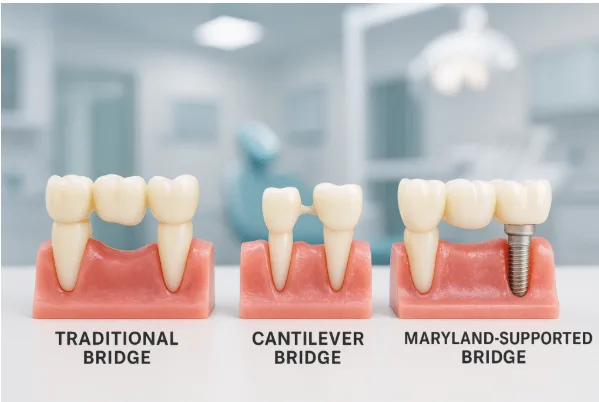
Not every bridge is built the same way. There are a few different styles, and your dentist will help you figure out which one suits your situation.
- Traditional bridge — the most common type. Crowns go on both sides of the gap.
- Cantilever bridge — only one side has a crown. Used when there’s just one natural tooth next to the space.
- Implant-supported bridge — instead of natural teeth as anchors, implants hold it up. Great for bigger gaps.
Don’t overthink which one is best. That’s your dentist’s job. Yours is just to show up and ask questions.
Why Replacing Missing Teeth Matters
Here’s where a lot of people get it wrong. They think a missing tooth is just a cosmetic issue. Something to fix when they feel like it. Maybe someday. And if you’re considering Dental Bridges in Cudahy, understanding why that gap is a real health concern — not just a cosmetic one — makes all the difference.
But leaving a gap alone? That can create problems you really don’t want.
Your Health Stays on Track
Teeth are surprisingly social. They lean on each other. When one disappears, the neighbors start to drift toward the space.
Over months and years, that shifting changes your bite. It puts stress on your jaw. It can lead to headaches, soreness, and teeth that wear down unevenly. A bridge stops all of that before it starts. It holds the lineup steady.
Your Smile Looks Whole Again
Okay, yes — the looks part matters too. And there’s nothing wrong with that.
A bridge fills the gap completely. The false tooth is color-matched and shaped to blend with your real teeth. From across a room, no one can tell the difference. You get a full, even smile that you actually want to show off.
Your Confidence Comes Back
This one sneaks up on people. You don’t realize how much a missing tooth affects you emotionally until it’s fixed.
Suddenly you’re laughing out loud again. You’re not covering your mouth in photos. You’re not turning away when someone looks at you. It’s a small change that makes a big difference to how you carry yourself every single day.
Eating and Speaking Get Easier
Chewing with a gap is annoying. Certain foods get stuck. Others just feel awkward. You end up favoring one side of your mouth without even thinking about it.
And speech — gaps can cause a soft lisp or make some words come out a little funny. A bridge clears all of that up. You chew what you want. You talk the way you’re supposed to. Easy.
How a Dental Bridge Works, Step by Step
People often assume this process is long, painful, or complicated. It’s really not. Here’s exactly what to expect.
The First Visit
It starts with a conversation. Your dentist checks the gap, looks at the surrounding teeth, and talks through your options with you.
No pressure at this stage. You’re just figuring out if a bridge is the right move. Bring your questions. Ask anything. That’s what the visit is for.
Prepping the Teeth
If you move forward, the next step is prepping the anchor teeth. The dentist shaves them down slightly so the crowns can fit over them properly.
This sounds more intense than it is. You’re numbed up. It’s quick. Then the dentist takes a mold or does a digital scan of your teeth. That impression goes to the lab where your bridge gets custom-made.
The Temporary Bridge
You won’t leave the office with a gap. The dentist places a temporary bridge to protect everything while the permanent one is being made.
It’s not the final product, but it does the job. You can eat, talk, and smile normally while you wait. Comfort-wise, most people barely notice it.
The Final Fit
This is the visit you’ve been waiting for. Your permanent bridge comes in, and the dentist places it carefully.
They check your bite. Make sure nothing feels off. Maybe do a tiny adjustment here or there. And then — you’re done. A full smile, right there.
Who Is a Good Fit for a Dental Bridge?
Most adults with one or a few missing teeth are solid candidates. But a few specific things make the process go even smoother.
You’re likely a great fit if you have:
- One or more missing teeth in a row
- Healthy natural teeth on both sides of the gap
- Gums that are in good shape
- A solid daily routine of brushing and flossing
If you’re not sure whether you qualify, a tooth bridge dentist in Cudahy can give you a real answer after a quick look. There’s no need to guess. Just book a consultation and find out.
How a Bridge Compares to Other Options
A bridge isn’t the only way to replace a missing tooth. It’s worth knowing how it holds up against the other choices before you decide.
Bridge vs. Dental Implant
An implant goes deeper. It replaces the actual root of the tooth, right down into the jawbone. A bridge sits on top of the gumline and anchors to nearby teeth.
Both are great options. But implants usually cost more and involve a longer process — sometimes several months. Bridges tend to be faster and more budget-friendly. That makes them the go-to for a lot of people.
Bridge vs. Dentures
Dentures come out. You take them out to clean them, and you put them back in. They can shift around a bit during the day.
A bridge is fixed. It stays put. You clean it the same way you clean your regular teeth. Many people just find that easier and more comfortable in everyday life.
Do’s and Don’ts When Choosing
Before you make a final call, a few things worth keeping in mind:
- Do talk honestly with your dentist about what matters most to you
- Do factor in your budget and how quickly you want the issue resolved
- Don’t sit on a gap for too long — problems tend to grow
- Don’t let price be the only thing that guides your decision
Worried about what it’ll cost? Just ask about Dental Bridge Cost in Cudahy before you commit to anything. A lot of people are surprised — and relieved — when they hear the actual numbers. Many offices that offer affordable dental bridges also have payment options that make it even more manageable.
Simple Care Tips for Your Dental Bridge
A bridge is built to last. But how long it actually lasts depends heavily on how you treat it. The good news? It doesn’t require anything complicated.
Here’s a daily routine that works:
- Brush twice a day using a soft-bristled toothbrush
- Floss around and underneath the bridge every single day
- Use a floss threader or water flosser to get into tight spaces
- Rinse with a mouthwash your dentist recommends
Beyond the daily stuff, a few smart habits really help over the long run:
- Go easy on super hard or sticky foods — things like hard candy, ice, and caramel
- Keep your regular checkup schedule, usually every six months
- If something starts to feel different or uncomfortable, call your dentist right away
It’s not a big ask. A few minutes a day, a little bit of attention, and your bridge can last a decade or more.
If you’re looking into Dental Bridges in Cudahy, the team at South Shore Dentistry & Implants is ready to help. From the first consultation right through to your final fitting, you’ll have experienced people guiding you along every step.
Final Thoughts
So let’s bring it all together. A dental bridge does a lot more than just fill a gap. It protects your surrounding teeth from shifting. It brings your smile back. It restores your confidence in a pretty meaningful way. And it makes eating and talking feel normal again.
For a lot of people, it’s genuinely life-changing — even though it’s a fairly simple procedure. That’s the thing about dental care. Small fixes can have a huge ripple effect on how you feel day to day.
The care routine isn’t complicated either. Brush. Floss. See your dentist regularly. Skip the foods that put too much pressure on the bridge. That’s basically it.
If you’ve been putting this off, maybe now’s the time to just go for it. Anyone looking into affordable dental bridges in Cudahy, WI has solid options right nearby. A quick visit is all it takes to get the conversation started. Your smile — and honestly, your whole quality of life — is worth that.
Frequently Asked Questions
How long does a dental bridge usually last?
With consistent daily care and regular dental visits, a bridge often lasts ten to fifteen years. Some go even longer. Brushing, flossing, and avoiding foods that are very hard or sticky all play a huge role in extending the lifespan of your bridge significantly.
Does getting a dental bridge really hurt?
Not really. Your dentist numbs the area before starting, so most people feel very little during the actual procedure. A bit of tenderness afterward is pretty normal. That usually fades within a day or two, and basic over-the-counter pain relief is typically all you need to stay comfortable.
How much does a dental bridge cost?
Costs depend on the type of bridge and your specific situation. Many dental offices in Cudahy, WI offer flexible payment options and work with insurance. The smartest move is to ask for a clear cost breakdown during your consultation before any treatment begins, so there are no surprises.