Best Anti-Aging Peptides Backed by Emerging Research
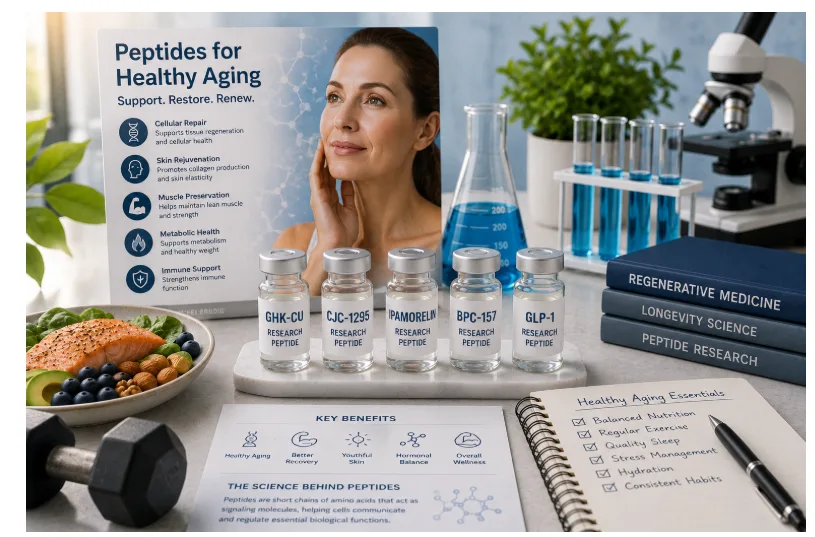
Aging is a natural biological process, but modern science is increasingly focused on helping people age more healthily rather than simply extending lifespan. Researchers now emphasize healthspan—the years spent living in good physical, mental, and metabolic health. Among the most promising areas of longevity research are peptides, which play essential roles in cellular communication throughout the body.
Peptides have attracted attention because they naturally regulate many biological functions involved in recovery, tissue repair, metabolism, and hormone signaling. While research continues to evolve, several peptides have emerged as leading candidates in studies related to healthy aging.
This guide explores some of the most promising anti-aging peptides currently being investigated, explains what researchers have discovered so far, and discusses why healthy lifestyle habits remain essential for long-term wellness.
Understanding Peptides and Healthy Aging
Peptides are short chains of amino acids that function as signaling molecules. They help cells communicate with one another and regulate many important physiological processes.
Researchers continue studying peptides involved in:
- Tissue repair
- Cellular regeneration
- Metabolism
- Hormone regulation
- Immune function
- Muscle maintenance
- Skin health
As the body ages, some biological processes naturally become less efficient, leading scientists to investigate whether peptide-based approaches may help support healthy function.
Why Researchers Are Interested in Anti-Aging Peptides
Healthy aging depends on maintaining several systems simultaneously.
Scientists now understand that factors such as inflammation, metabolism, recovery, muscle preservation, and cellular repair all contribute to overall longevity.
Rather than searching for a single “anti-aging” solution, researchers are studying peptides that may support these interconnected biological processes.
Promising Peptides Being Studied
GHK-Cu
GHK-Cu is one of the most researched peptides in regenerative science.
Current studies are investigating its potential role in:
- Supporting collagen production
- Promoting skin repair
- Maintaining skin elasticity
- Encouraging tissue regeneration
Because skin health often reflects overall aging, GHK-Cu remains a major focus of longevity research.
CJC-1295
CJC-1295 is being studied because it influences natural growth hormone pathways.
Researchers continue evaluating its relationship with:
- Lean muscle maintenance
- Recovery
- Sleep quality
- Healthy aging
Although more clinical research is needed, it continues attracting significant scientific interest.
Ipamorelin
Often researched alongside CJC-1295, Ipamorelin is another peptide associated with healthy aging studies.
Scientists are exploring whether it may support:
- Recovery
- Hormonal balance
- Muscle preservation
- Overall wellness
Its selective mechanism makes it an interesting subject for ongoing investigation.
BPC-157
While BPC-157 is widely recognized for recovery research, scientists are also studying its broader regenerative properties.
Areas of interest include:
- Muscle repair
- Tendon recovery
- Tissue healing
- Gastrointestinal support
Its potential regenerative effects have made it one of the most discussed peptides in longevity research.
GLP-1 Related Peptides
Initially studied for metabolic health, GLP-1-related peptides have become increasingly relevant in healthy aging discussions.
Researchers continue examining their relationship with:
- Weight management
- Blood sugar regulation
- Cardiovascular health
- Metabolic wellness
Maintaining metabolic health plays an important role in supporting long-term healthy aging.
Personalized Wellness Is Becoming More Important
Researchers increasingly recognize that aging affects everyone differently.
Factors influencing healthy aging include:
- Genetics
- Lifestyle
- Nutrition
- Physical activity
- Sleep quality
- Medical history
Because of these differences, personalized healthcare strategies are becoming more common than generalized treatment plans.
Individuals interested in learning more about evidence-based peptide education can explore personalized-peptides.com for information about current research, personalized wellness strategies, and the evolving science behind peptide-based health approaches.
Healthy Habits Remain the Foundation
Although peptide science continues advancing, healthy daily habits remain the most effective way to support long-term wellness.
Eat a Nutrient-Dense Diet
Whole foods provide essential nutrients that support metabolism, tissue repair, and immune health.
Exercise Regularly
Strength training and cardiovascular exercise help maintain muscle mass, mobility, and overall health.
Prioritize Quality Sleep
Sleep allows the body to recover, regulate hormones, and repair tissues.
Manage Stress
Long-term stress may accelerate biological aging through hormonal and inflammatory pathways.
Developing healthy coping strategies contributes to overall well-being.
Questions Researchers Are Still Exploring
Despite encouraging findings, many important questions remain.
Scientists continue investigating:
- Long-term safety
- Individual response differences
- Personalized treatment strategies
- Clinical effectiveness
- Combination therapies
Future research will continue improving our understanding of peptide-based wellness.
The Future of Anti-Aging Research
Advances in biotechnology and precision medicine are transforming the field of longevity.
Researchers expect future developments to include:
- Personalized healthcare plans
- Biomarker-guided therapies
- Improved regenerative treatments
- Better understanding of cellular aging
- More targeted wellness interventions
Peptides are likely to remain a central focus as scientists continue exploring healthier ways to support aging.
Final Thoughts
Emerging research suggests that peptides may play an increasingly important role in healthy aging by supporting recovery, metabolism, tissue repair, and overall wellness. Compounds such as GHK-Cu, CJC-1295, Ipamorelin, BPC-157, and GLP-1-related peptides continue attracting scientific attention as researchers work to better understand their potential applications.
While peptide science remains an evolving field, long-term health still depends on balanced nutrition, regular exercise, restorative sleep, stress management, and evidence-based medical care. Combining healthy habits with informed decision-making offers the strongest foundation for healthy aging.
Frequently Asked Questions
What are anti-aging peptides?
Anti-aging peptides are peptides being studied for their potential role in supporting healthy aging, tissue repair, metabolism, and overall wellness.
Which peptide is most researched for skin health?
GHK-Cu is one of the most extensively researched peptides for skin regeneration and collagen production.
Can peptides stop the aging process?
No. Current research focuses on supporting healthy biological function rather than stopping or reversing aging.
Are anti-aging peptides safe?
Safety depends on the specific peptide and available clinical evidence. Many compounds continue to be studied in ongoing research.
Why is personalized healthcare important in longevity?
Everyone ages differently, so personalized healthcare considers individual biology, lifestyle, and medical history when developing wellness strategies.
What is the foundation of healthy aging?
Balanced nutrition, regular exercise, quality sleep, stress management, and preventive healthcare remain the most effective long-term strategies for healthy aging.