Best Dubai Carpet Trends & Materials to Know in 2026
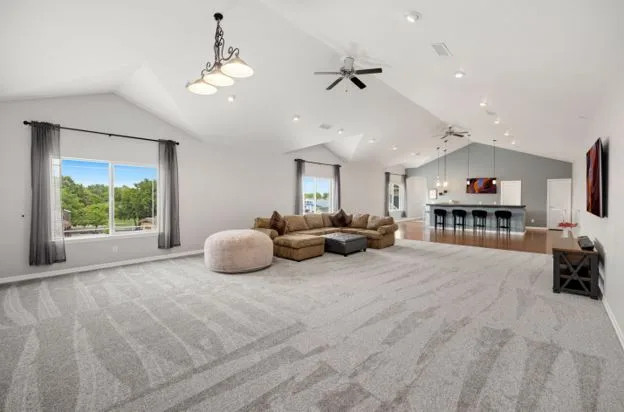
Polished marble and porcelain tile filled almost every new Dubai apartment and villa for the better part of a decade, and the floors looked sharp in listing photos but stayed cold underfoot and bounced sound around half-empty rooms. That’s the reason carpet keeps coming back into the conversation for 2026, especially in bedrooms, majlis areas, and home offices where people actually sit, work, and walk barefoot. The styles selling now look nothing like the heavy patterned carpet from ten years ago, and the material you pick changes how the carpet handles Dubai’s heat and sand far more than the color does.
Why Carpet Choice Matters in Dubai’s Climate
Fine sand gets into everything here, and it works its way deep into carpet fibers where a normal vacuum can’t reach it. A loose, shaggy pile traps grit at the base and grinds against the fibers every time someone walks across, which is why the same carpet that lasts years in a cooler, cleaner climate can look worn and dull in a Dubai living room within a year or two. Tighter weaves hold up better against this, and that single factor should weigh on your choice before you even look at colors.
Direct sun through floor-to-ceiling windows is the other thing that wears carpet down faster here. Apartments in towers along Sheikh Zayed Road or anywhere with western-facing glass get hours of hard afternoon light, and carpets without any fade resistance lose their tone in the exact strip where the sun lands, leaving a visibly lighter patch.
Then there’s the part that actually makes carpet worth it indoors. A carpeted bedroom holds the cool air from the AC closer to the floor and takes the edge off that shock of stepping onto cold tile first thing in the morning. In apartments it also cuts the echo and softens the footsteps and dragged-chair noise that travels between units, which matters more in Dubai’s high-density towers than in a standalone villa.
Top Carpet Trends in Dubai for 2026
Warm, grounded colors have taken over from the cool greys that dominated for years. Sand, oatmeal, soft terracotta, muted clay, the kind of tones that pull from the desert rather than fight it. They sit well next to the wood and rattan furniture that’s everywhere in Dubai interiors right now, and on a practical level a sand-toned carpet hides the fine dust that settles between cleans far better than charcoal or cream ever could.
Texture is doing more of the work than pattern this year. Instead of busy printed designs, people are picking carpets with a physical surface to them, looped, carved, or high-pile shag that you notice with your feet before your eyes. A high-pile carpet in a bedroom or a reading corner reads as soft and intentional, though that same deep pile is the one that traps the most sand, so it suits low-traffic rooms more than a busy hallway.
Custom sizing is the third shift, and it’s the one most tied to how Dubai homes are actually built. A lot of apartments have odd layouts, an open-plan living-dining stretch, an awkward L-shaped lounge, a majlis that doesn’t fit any standard rug dimension. Ordering a carpet cut to the exact footprint of a seating area, or running it wall to wall across an irregular room, looks deliberate in a way a too-small standard rug floating in the middle never does.
Carpet Materials
Nylon is the one to put anywhere that takes real foot traffic. It springs back after furniture and feet press it down, it resists matting, and it takes a beating in a hallway, a home office, or a kids’ room without flattening into a tired-looking path. It costs more than the synthetics below it, and for a high-use room that cost is the difference between recarpeting in three years and recarpeting in eight.
Wool sits at the top for feel and for safety. It’s genuinely soft underfoot, it’s naturally flame-resistant without chemical treatment, and it holds dust at the surface instead of letting it sink in, which helps in a home where someone reacts to allergens. The catch is price, wool runs well above the synthetics, and it stains more stubbornly if a spill sits, so it earns its place in a bedroom or formal sitting room more than a dining area.
Polyester and polypropylene are where the budget choices live, and they’re not the same thing. Polyester gives you rich color and decent softness for the money and shrugs off water-based stains, so it works for a guest room or a space you’ll redo in a few years anyway. Polypropylene is the cheapest and the most stain-proof of all of them, which is exactly why it’s the standard for outdoor and balcony carpet, but it crushes flat under weight faster than the rest, so it’s the wrong pick for a sofa-heavy living room.
How to Match Carpet to Your Space
Match the fiber to what the room goes through, not to what looks best in the showroom. A villa entrance hallway or a home office chair zone needs nylon’s toughness; a master bedroom where you’re barefoot and the traffic is light is where wool or a soft polyester actually pays off. Putting a delicate high-pile wool in a doorway everyone tracks through is how you end up disappointed in six months.
Color does real work in Dubai’s smaller apartment rooms. A light sand or oatmeal carpet pushes the walls outward and makes a compact bedroom feel less boxed in, while a deep charcoal or navy in that same room closes it down fast. Save the dark, bold carpets for larger floors that can carry the weight of them.
Caring for Your Carpet in Dubai
Vacuum more often than any general carpet guide tells you to, because those guides aren’t written for a city where sand blows in through a briefly open balcony door. Twice a week is a reasonable floor for a lived-in room here, and the point is to lift the grit out before it settles to the base and starts cutting the fibers. Get to spills the moment they happen, blotting rather than rubbing so you don’t push the liquid deeper.
Even with regular vacuuming, the sand that works down to the backing doesn’t come out with a household machine, so a professional deep clean once or twice a year is what actually resets the carpet. Skip it for too long and the trapped grit is what ages the carpet, not the foot traffic.
Carpet Budget Expectation
What pushes a carpet’s price up is mostly the fiber and the size, and then whether it’s custom cut and professionally fitted on top of that. A wall-to-wall wool in a large majlis with professional fitting lands in a completely different bracket than a standard polypropylene area rug you carry home, and the gap is mostly the material and the labor, not a markup you can haggle away.
Cheap carpet is rarely the saving it looks like at purchase. A bargain polypropylene under a heavy living-room setup mats down and looks spent within a couple of years, and replacing it twice costs more than buying a nylon once. The fiber that matches the room’s actual use is the one that holds its value, even when its sticker is higher.
Where to Find Quality Carpets in Dubai
A good carpet seller does more than hand you a roll. The ones worth dealing with come measure the room themselves, because an inaccurate measurement on a custom cut is an expensive mistake to eat, and they handle the fitting so the seams sit flat and the edges hold. If you’re weighing up Dubai Carpet options, lean toward a place that carries a real spread of materials and sizes and does its own installation, rather than one that only sells the roll and leaves the hard part to you.
Conclusion
The warm tones and textured, custom-cut styles are what’s current for 2026, but the fiber underneath is what decides whether the carpet still looks right after a couple of Dubai summers. Get both lined up against the room you’re buying for and the floor does what you wanted it to in the first place.