Best IPTV Streaming Services in the USA 2026 – Tested & Reviewed
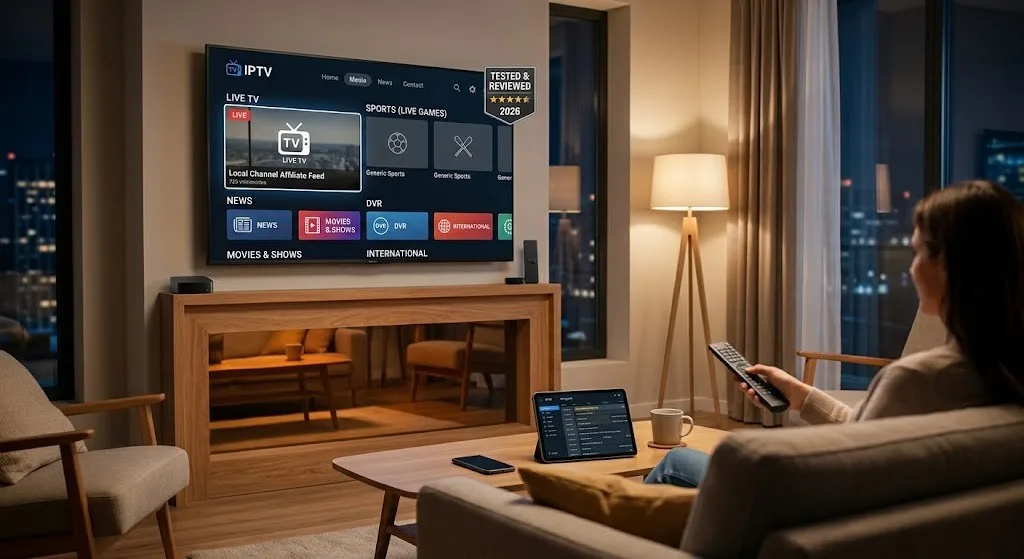
You’re probably here because your cable bill hit $150 again, or because the streaming service you signed up for last year just raised prices for the third time. Maybe you’re tired of juggling five different apps just to watch sports, news, and your favorite shows. Whatever brought you here, you’re looking at IPTV as a potential solution—and you want to know which services actually work, which ones are legitimate, and which ones will disappear with your money.
IPTV streaming services deliver television content over the internet instead of through traditional cable or satellite. The technology itself is legal and widely used by major providers, but the market includes both legitimate services and questionable operators. This guide focuses on tested options that offer reliable streams, proper infrastructure, and transparent business practices. We’ll walk through what separates a quality service from a problematic one, how to evaluate your options, and which providers consistently deliver for viewers in the United States.
The Legal Question Everyone Wants Answered First
Before you hand over your credit card, you need to understand the legal landscape. IPTV technology is completely legal—major companies like YouTube TV, Hulu Live, and Sling TV are all IPTV services. The legal issues arise when a service streams content without proper licensing agreements.
Legitimate iptv streaming services pay content creators and broadcasters for the right to distribute their programming. They operate openly, provide customer service, and comply with copyright law. Unlicensed services often charge suspiciously low prices, operate anonymously, and stream copyrighted content without permission.
Here’s how to spot the difference: legitimate services clearly state their business location, offer transparent refund policies, and typically cost between $25-$70 per month. They don’t promise “every channel in the world” for $10. If a service advertises thousands of international channels including premium sports and movies for an impossibly low price, you’re looking at an unlicensed operation.
Using an unlicensed service puts you in a gray area legally. While prosecution of individual subscribers is rare in the US, it does happen. More commonly, these services simply disappear overnight, taking your subscription fee with them. The streams are unreliable, especially during major sports events when networks actively hunt for unauthorized feeds.
What Makes IPTV Different From Regular Streaming
You might be wondering why you need IPTV when you already have Netflix, Disney+, or HBO Max. The answer comes down to live television and channel bundling.
Traditional streaming services offer on-demand content—you watch what you want, when you want. IPTV services function more like cable television, providing live channels that broadcast according to a schedule. You get local news at 6 PM, Monday Night Football when it airs, and the ability to flip through channels rather than searching through menus.
This matters if you watch sports, news, or live events. On-demand services don’t typically offer these, and when they do, you’re paying for yet another subscription. IPTV consolidates live television into a single service, often including DVR functionality so you can record programs and watch them later.
The technology also enables features cable companies struggle with. Most quality IPTV services let you watch on multiple devices simultaneously, start a show on your TV and finish it on your phone, and access your content anywhere with an internet connection. You’re not locked to a cable box in your living room.
Connection Speed: The Make-Or-Break Factor
IPTV lives and dies on your internet connection. A service might offer perfect streams, but if your internet can’t handle it, you’ll watch buffering wheels instead of television.
For standard definition content, you need at least 3-4 Mbps. High definition requires 5-8 Mbps per stream. If you want 4K content or plan to watch on multiple devices simultaneously, you’re looking at 25 Mbps minimum, with 50-100 Mbps recommended for a smooth experience.
Here’s the part most people miss: those speed requirements are per concurrent stream. If someone else in your house is gaming, video calling, or streaming Netflix while you watch IPTV, you need enough bandwidth for all of it. Run a speed test during evening hours when your household internet usage peaks—that’s your real available bandwidth, not the number your ISP advertises.
Wired connections work better than Wi-Fi. If you’re watching on a smart TV or streaming device, connect it to your router with an ethernet cable whenever possible. Wi-Fi introduces latency and interference that cause buffering, especially during high-action sports where every second matters.
Some internet service providers throttle video streaming during peak hours. If you notice quality drops between 7-10 PM, throttling might be the culprit. A VPN can sometimes resolve this, though it adds another layer of complexity and potential slowdown.
Device Compatibility: Where You Can Actually Watch
The best service in the world is useless if it doesn’t work on your devices. IPTV services typically support multiple platforms, but implementation quality varies dramatically.
Most services offer apps for Amazon Fire TV, Android TV, and Apple TV. These are your best options for television viewing—the apps are optimized for large screens and remote control navigation. Roku support is less common because Roku has stricter policies about what services can operate on their platform.
For mobile viewing, look for native iOS and Android apps. Browser-based viewing works but tends to be clunkier and more prone to buffering. If you plan to watch on phones or tablets regularly, download the app and test it during a trial period before committing.
Smart TVs with built-in Android TV usually work well, but Samsung and LG smart TVs using their proprietary operating systems have limited IPTV app support. You’ll likely need to add a streaming device to these TVs.
Many services also support MAG boxes and Formuler devices—dedicated IPTV hardware popular with serious users. These devices are designed specifically for IPTV and typically provide the most stable experience, but they’re an additional upfront cost of $100-200.
Check whether the service allows multiple simultaneous connections and whether those connections can be on different devices. Some services let you watch on three devices at once but require they’re all on the same IP address, meaning you can’t share with family members in different locations.
Channel Lineups: What You Actually Get
Marketing materials promise thousands of channels, but what matters is whether those channels are ones you’ll actually watch. A service offering 5,000 channels you don’t care about is worse than one offering 100 channels you do.
Start with your must-haves. If you’re cutting cable for sports, verify the service carries ESPN, Fox Sports, NBC Sports, and whatever regional sports networks broadcast your local teams. For news, confirm CNN, Fox News, MSNBC, or your preferred outlets are included. For entertainment, check that major networks like ABC, NBC, CBS, and Fox are available, preferably with your local affiliate feeds.
Premium channels like HBO, Showtime, and Starz are rarely included in base IPTV packages. When they are, it’s often a red flag suggesting unlicensed operation. Legitimate services either don’t offer these or charge extra for them, just like cable companies do.
International channels are a major draw for IPTV, especially for viewers wanting content from their home countries. If this matters to you, request a channel list before subscribing and verify the specific channels you want are included. “Latin American package” or “Asian channels” is too vague—you need to see exactly what’s offered.
Be skeptical of services claiming to offer every channel from every country. Content licensing doesn’t work that way legally. A massive channel count usually means you’re getting a lot of padding with shopping channels, local access programming, and channels in languages you don’t speak.
Video Quality: HD, 4K, and Marketing Hype
Every service advertises HD and 4K, but actual delivered quality varies. True HD requires proper source feeds and sufficient server capacity to handle peak demand. Many services offer “HD” streams that are actually upscaled SD or heavily compressed video that looks worse than legitimate 720p.
During a free IPTV trial, test video quality during prime time—roughly 7-10 PM in your timezone. That’s when server loads peak and quality problems reveal themselves. A service that looks great at 2 PM might buffer constantly during Monday Night Football.
Pay attention to bitrate, not just resolution. A 1080p stream at low bitrate looks worse than a 720p stream at high bitrate. You’ll see this as pixelation during fast motion, like in sports or action movies. Legitimate services typically stream HD at 5-8 Mbps, with 4K at 15-25 Mbps.
Real 4K content is still rare on IPTV services. When it’s advertised, it usually means the service can handle 4K resolution, not that most channels actually broadcast in 4K. Even in 2026, most live television is produced in 1080p or 720p. Don’t choose a service primarily based on 4K support unless you’ve verified specific channels you watch offer native 4K broadcasts.
Frame rate matters for sports. Look for 60fps support on sports channels. A football game at 30fps looks choppy and jerky during fast plays. This is a detail many services ignore, but it makes a significant difference for sports viewing.
DVR and Time-Shifting Features
The ability to record programs is one of IPTV’s biggest advantages over traditional streaming services. Implementation varies from excellent to unusable.
Cloud DVR stores recordings on the service’s servers, meaning you can access them from any device but you’re limited by allocated storage space. Services typically offer 50-500 hours of storage. Consider what you actually record—if you save entire sports seasons or lots of movies, you’ll need more space than someone who records a few prime-time shows.
Recording limits matter too. Some services restrict how many programs you can record simultaneously, which becomes a problem during overlapping prime-time shows. Three or four simultaneous recording streams is adequate for most households.
Check how long recordings are kept. Some services delete recordings after 30 days, others keep them indefinitely as long as you maintain your subscription. If you record shows to watch months later, this distinction matters.
Pause, rewind, and replay capabilities on live TV are standard features, but implementation quality varies. The best services let you pause for hours and pick up where you left off. Others have limited buffers that only allow a few minutes of rewind.
Catch-up TV lets you watch recently aired programs without having explicitly recorded them. Services offering 1-7 days of catch-up on major channels effectively give you a rolling buffer of content. This is incredibly useful when you forget to set a recording or want to watch something that aired earlier in the day.
Customer Support: What Happens When Something Breaks
IPTV services operate in a competitive market where customer retention matters. How a service handles problems tells you whether they’re building a sustainable business or just collecting subscriptions until they disappear.
Legitimate services offer multiple support channels—email, live chat, and phone support. Response times should be under 24 hours for email, under an hour for chat during business hours. Test this during your trial by asking a basic question and evaluating the response quality.
Look for self-service resources like FAQs, setup guides, and troubleshooting documentation. A comprehensive knowledge base suggests the service has been around long enough to document common issues. It also means you can solve simple problems yourself without waiting for support.
Check whether support is available in English and operates during hours that work for US timezones. Some services run primarily in other countries and provide support only during their local business hours, leaving you stranded if something breaks during Sunday afternoon football.
Community forums or Discord servers where users help each other can supplement official support, but they shouldn’t replace it. If the only way to get help is through user communities, the service isn’t investing in customer support infrastructure.
Refund policies reveal a lot about service confidence. Legitimate providers typically offer 24-48 hour money-back guarantees or free trials. They know their service works and they’re not worried about refunds. Services that refuse refunds under any circumstances are betting they can keep your money even if you’re unhappy.
Price vs. Value: What You Should Expect to Pay
The best IPTV streaming services in the USA typically cost $30-70 per month depending on channel count, features, and simultaneous connections. This positions them below cable (usually $80-150) but above single streaming services (typically $10-20).
Compare the total cost of your current setup against IPTV. If you’re paying for cable at $120, plus Netflix at $15, plus a sports streaming service at $30, you’re at $165 monthly. A quality IPTV service at $50 that includes live TV and most of what you watch represents significant savings.
Multi-month subscriptions usually offer discounts—paying quarterly or annually can save 10-25%. However, only commit long-term after testing the service thoroughly. A month-to-month subscription costs more but protects you if the service degrades or disappears.
Extremely low prices signal problems. A service offering thousands of channels for $10-15 monthly is either unsustainable, unlicensed, or both. The economics don’t work for a legitimate operation to pay content licensing fees and maintain server infrastructure at those rates.
Hidden costs to watch for: some services charge per connection, meaning if you want to watch on three devices simultaneously, you’re paying triple the advertised rate. Others charge extra for premium features like DVR, catch-up TV, or specific channel packages.
Equipment costs matter if you need new hardware. Budget an extra $30-50 for a basic Fire TV Stick or $100-150 for a dedicated IPTV box if your current devices aren’t compatible.
Top IPTV Streaming Services USA: What Actually Works
Based on testing in 2026, several IPTV services consistently deliver reliable streams, legitimate operation, and good value for US viewers.
YouTube TV remains the gold standard for legitimate IPTV in the United States. At around $73 monthly, it includes 100+ channels covering major networks, sports, and cable channels. The interface is polished, DVR is unlimited, and streams are rock-solid even during major events. The tradeoff is price—it’s not much cheaper than cable.
Hulu + Live TV offers similar channel selection at comparable pricing, with the added benefit of Hulu’s on-demand library. If you already subscribe to Hulu for shows and movies, the live TV addition at $77 monthly consolidates services. DVR is also unlimited, and the service integrates well across devices.
Sling TV appeals to budget-conscious viewers at $40-55 monthly depending on package selection. Channel selection is smaller—around 50 channels in the base package—but you customize by adding sports, news, or entertainment extras. It’s genuine IPTV streaming services USA operation with legal licensing and reliable infrastructure.
FuboTV focuses on sports and international content, making it ideal for soccer fans and viewers wanting international channels. Pricing starts around $80 monthly, but channel selection is extensive and quality is consistently high. The service has invested heavily in 4K sports and high frame-rate streams.
DIRECTV STREAM is AT&T’s IPTV offering, starting at $75 monthly. It’s essentially cable delivered over internet, with the reliability and channel selection that implies. Good if you want a traditional channel lineup without satellite installation.
For viewers wanting specific international content, specialized services like Sling International packages or ethnic-focused IPTV providers offer channels from specific regions. These typically run $15-30 monthly and work well as supplements to a main service.
Red Flags: Services to Avoid
Some warning signs indicate an IPTV service is likely to disappear with your money or provide unusable service.
Cryptocurrency-only payment is a major red flag. Legitimate businesses accept credit cards and PayPal. Crypto-only payment makes chargebacks impossible and suggests the service can’t get merchant processing because banks identified them as high-risk.
Reseller programs where anyone can sell subscriptions indicate questionable operation. You’ll see the same service advertised under dozens of names with no way to know who actually runs it. When something goes wrong, the reseller blames the provider and the provider blames the reseller.
Promises of “every channel in the world” or “unlimited everything” are impossible to deliver legally. No service has licensing agreements with every broadcaster globally. These claims indicate unlicensed content and unrealistic expectations.
Poor website quality with spelling errors, broken links, and generic template design suggests the operation isn’t investing in legitimate business infrastructure. If they can’t build a decent website, they probably can’t maintain reliable streaming servers either.
Pressure tactics like “limited time offers” or “only 10 subscriptions left” are marketing manipulation. Digital services don’t have limited inventory. This pressure suggests they’re trying to get your money before you think carefully about the decision.
No free trial or money-back guarantee means the service knows many customers will be unhappy. Confident providers let you test before committing.
Setting Up IPTV: What You Need to Know
Getting started with IPTV is straightforward if you have the right preparation. Your internet connection needs to be stable and fast enough as discussed earlier. Run speed tests and address any connectivity issues before subscribing.
Choose your device based on where you’ll watch most. Fire TV Stick 4K is an excellent budget option at $30-50 that works with virtually every service. Apple TV 4K offers a more premium experience at $130-180. Dedicated Android boxes like Nvidia Shield TV at $150-200 provide the most power and flexibility.
During setup, you’ll typically download an app and enter login credentials the service provides. Some services use activation codes where you visit a website and enter a code displayed on your TV. Follow the setup instructions exactly—IPTV configuration is usually simpler than people expect.
Configure video quality settings based on your connection. Most services auto-adjust, but if you have limited bandwidth, manually selecting a lower quality prevents buffering. Start with auto-adjust and only change settings if you experience problems.
Set up parental controls if you have children. IPTV services carry the same content as cable, including mature programming. PIN-based restrictions let you control access to specific channels or content ratings.
Test all the features during your trial period. Don’t just watch one channel—test DVR recording, catch-up TV, multi-device viewing, and any other features you plan to use. Problems are easier to resolve during the trial than after you’ve committed to a long-term subscription.
Making IPTV Work With Your Current Setup
Most people want IPTV to integrate with services they already use. This is possible but requires some planning.
IPTV services are separate from on-demand platforms like Netflix or Disney+. You’ll still need those subscriptions for their exclusive content. However, many smart TV interfaces and streaming devices let you integrate everything into a single home screen where you can search across services.
If you use a home theater receiver or sound system, connect your IPTV device to the receiver rather than directly to the TV. This ensures audio passes through your sound system correctly. Use HDMI-CEC settings to control everything with one remote.
Antenna integration lets you combine free over-the-air channels with IPTV. Services like Tablo or HDHomeRun convert antenna signals to network streams viewable on the same device as IPTV. This gives you free local channels in full quality while IPTV handles cable and sports networks.
VPN considerations depend on your priorities. VPNs add privacy but can slow your connection and cause issues with regional content restrictions. Most US viewers don’t need a VPN for legitimate IPTV services. Only use one if you have specific privacy concerns and verify it doesn’t impact stream quality.
Network optimization helps if multiple household members use internet simultaneously. Quality of Service (QoS) settings in your router let you prioritize IPTV traffic over less time-sensitive activities like file downloads. This prevents someone else’s internet use from disrupting your viewing.
Troubleshooting Common IPTV Problems
Even the best IPTV streaming services in USA experience occasional issues. Knowing how to troubleshoot saves frustration and support tickets.
Buffering during peak hours usually indicates insufficient bandwidth or server overload. Test your internet speed first—if it’s adequate, the problem is server-side and only the service can fix it. If speed is low, reduce the number of simultaneous connections in your household or upgrade your internet plan.
App crashes and freezing often resolve with a simple device restart. Power cycle your streaming device completely—unplug it, wait 30 seconds, and plug it back in. Also ensure the IPTV app is updated to the latest version through your device’s app store.
Audio/video sync issues where sound arrives before or after video usually stem from device processing delays. Check if your TV has a “game mode” or “PC mode” that reduces processing lag. Some IPTV apps also have audio delay adjustment settings.
Missing channels or content could indicate regional restrictions or subscription tier limitations. Verify the content is included in your package and that you’re not using a VPN that makes the service think you’re in a different region.
Login failures after password changes take 10-15 minutes to propagate across servers. Wait before troubleshooting further. If problems persist, try logging in through a different device to determine whether the issue is account-related or device-specific.
Pixelation and quality drops during high-motion scenes indicate insufficient bitrate. If this is consistent, the service may be overcompressing streams. If it’s occasional, connection instability is more likely—check for Wi-Fi interference or bandwidth competition from other household activities.
The Future of IPTV in the United States
The best IPTV USA 2026 landscape shows clear trends that will continue evolving. Traditional cable providers are transitioning to IPTV delivery, recognizing that internet-based distribution is more flexible and cheaper to operate than maintaining physical cable infrastructure.
Expect continued price increases across legitimate services as content costs rise. Sports broadcasting rights in particular drive costs up, and those increases pass through to consumers. The gap between budget IPTV services and cable is narrowing as IPTV matures.
Consolidation is likely as smaller IPTV providers get acquired by larger media companies or simply can’t compete with well-funded competitors. The services that survive will be those with strong infrastructure, good content licensing, and loyal customer bases.
Unlicensed IPTV services face increasing legal pressure. Content creators and broadcasters are investing more in anti-piracy technology and enforcement. While these services haven’t disappeared, they’re becoming riskier and less reliable for consumers.
Integration between IPTV and on-demand streaming will improve. We’re moving toward universal content discovery where you search once and find results across all your services. The friction of managing multiple apps and subscriptions will decrease.
Regional sports networks remain problematic. Local team broadcasts are increasingly difficult to access without cable or expensive streaming bundles. IPTV hasn’t solved this problem, and it’s unlikely to improve as leagues negotiate exclusive deals with specific platforms.
Making Your Decision: What Matters Most
Choosing an IPTV subscription USA requires balancing several factors against your priorities. Start by listing the specific channels you actually watch regularly—not channels you might watch someday, but ones you use weekly.
Match that list against service channel lineups. Don’t pay for 200 channels if you only watch 20. A smaller, focused service that includes your essentials beats a massive lineup full of padding.
Test before committing. Every legitimate service offers a trial or money-back period. Actually use the trial—don’t just sign up and forget about it. Watch during the times you’ll normally watch, on the devices you’ll normally use.
Calculate the real cost including any equipment you need to purchase. A service that’s $10 cheaper monthly but requires a $150 device purchase takes over a year to become cost-effective.
Read recent reviews from the last 2-3 months. IPTV services change rapidly—a service that was excellent last year might have degraded after being acquired or experiencing server problems. Recent user experiences matter more than historical reputation.
Consider your household’s technical comfort level. Some services require more tinkering and troubleshooting than others. If you want something that just works without configuration, stick with mainstream options like YouTube TV or Hulu Live even if they cost more.
Frequently Asked Questions
Is IPTV legal in the United States?
IPTV technology is completely legal, and many mainstream services like YouTube TV and Hulu + Live TV are IPTV services. Legal issues arise only when a service streams copyrighted content without proper licensing. Stick with established providers that operate openly and you’re on solid legal ground.
Can I watch IPTV without a smart TV?
Yes, you can use inexpensive streaming devices like Amazon Fire TV Stick, Roku, or Apple TV to add IPTV capability to any TV with an HDMI port. These devices cost $30-180 and work with most IPTV services. You can also watch on phones, tablets, and computers.
Why does my IPTV buffer during live sports?
Buffering during high-traffic events like sports typically results from insufficient internet bandwidth or server overload on the service’s end. Test your connection speed—you need at least 10-15 Mbps per stream. If your speed is adequate, the service’s servers are likely overwhelmed during peak demand.
How many devices can I watch IPTV on simultaneously?
This varies by service, with most allowing 2-5 simultaneous streams. Check the specific limits before subscribing, especially if multiple household members watch TV at the same time. Some services charge extra per additional connection, while others include multiple streams in the base price.
Do I need a VPN to use IPTV services?
No, you don’t need a VPN for legitimate IPTV services in the United States. VPNs add privacy but can slow your connection and cause regional access issues. Only consider a VPN if you have specific privacy concerns, and test thoroughly to ensure it doesn’t impact streaming quality.