Best Rollator Walker With Seat for Long Days Out: 5 Features to Look For
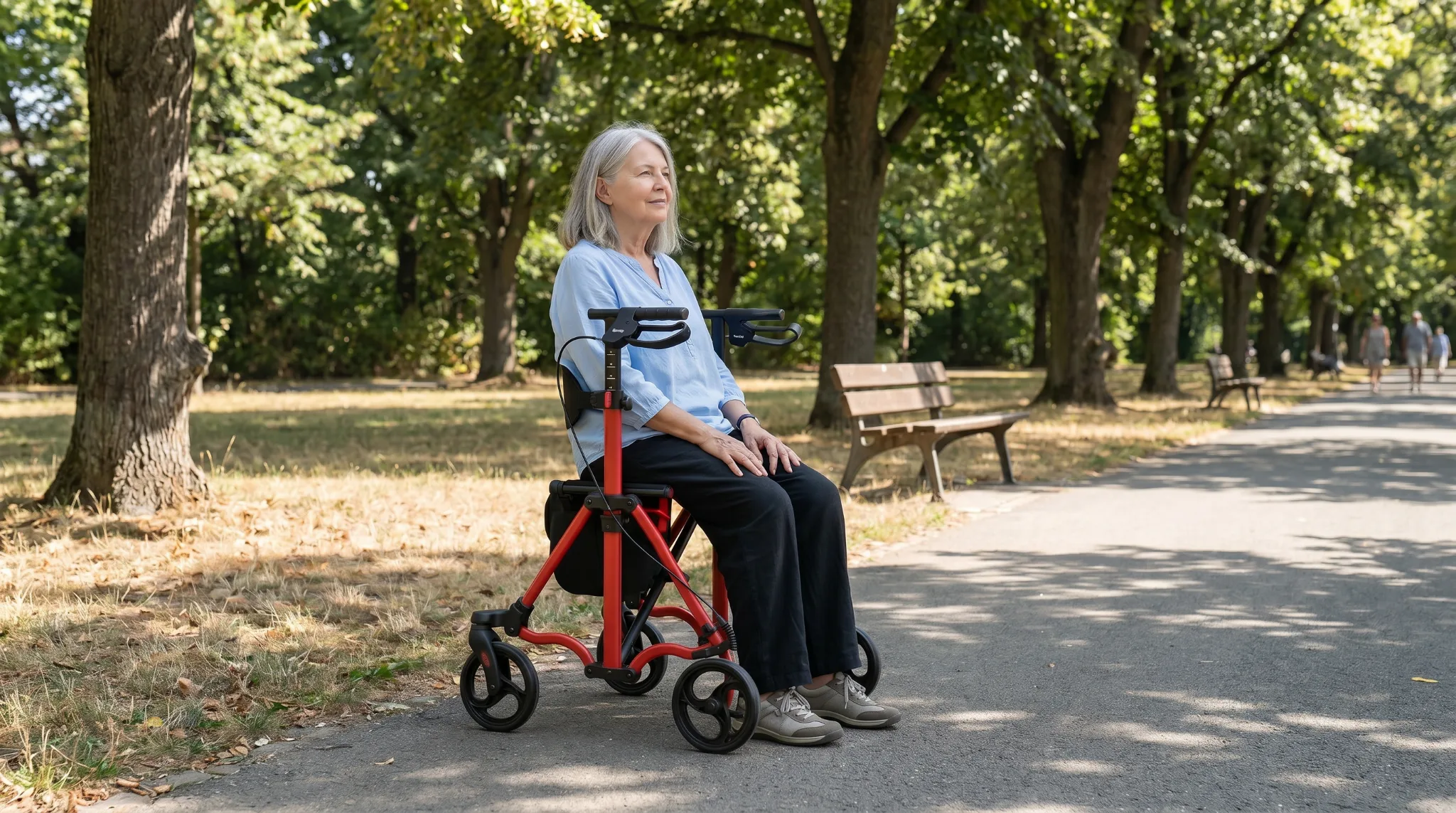
The best rollator walker with seat for long days out should be comfortable to sit on, easy to brake, smooth to push, and practical to fold, lift, and store. A seat helps when the user needs short rest breaks, but the right choice also depends on wheel size, frame weight, brake control, storage, and daily walking needs.
What Makes a Rollator Walker With Seat Better for Long Days Out?
Long days out are different from short walks around the house. The user may need to move through parking lots, store aisles, sidewalks, waiting areas, elevators, and car trunks in one trip. For users comparing the best rollator walker with seat for daily outings, the most important features are not only the seat, but also easy brakes, smooth wheels, manageable weight, a folding frame, and storage for light personal items.
Feature 1: A Comfortable Seat for Real Rest Breaks
A seat is one of the main reasons people choose a rollator instead of a basic walker. It gives the user a place to rest during shopping, doctor visits, neighborhood walks, or family outings.
Seat Width and Seat Height
Seat width affects how comfortable the user feels during short rest breaks, while seat height affects how easy it is to sit down and stand up. A seat that is too narrow may feel uncomfortable, and a seat that is too low can make standing harder, especially for users with knee, hip, or balance concerns. Before choosing a rollator walker with seat, compare the seat width, seat height, user height, and weight capacity instead of looking only at the product photo.
Backrest Support
A backrest can make short rest breaks feel more secure and comfortable. It gives the user light support while sitting, especially during longer outings where benches or chairs may not always be available. The backrest should feel stable and should match how the seat is meant to be used. It is not a replacement for a full chair, but it can make short pauses more comfortable during daily errands.
Why the Seat Is for Short Rest, Not Long Sitting
A rollator seat is meant for short rest breaks, not long periods of sitting. The user should stop first, lock the brakes, turn carefully, and sit only on a stable, level surface. The device should not be used like a wheelchair, and the user should not sit on slopes or uneven ground. For users with fall risks or uncertainty about safe use, a physical or occupational therapist can help decide which walking device may be useful and teach safe use.
Feature 2: Wheels That Handle Daily Outdoor Surfaces
Wheel performance matters more during long days out because the user is not only walking on smooth indoor floors. Outdoor trips often include small surface changes, door thresholds, sidewalks, parking lots, and store entrances.
Sidewalks, Parking Lots, and Store Entrances
A rollator walker with seat should move smoothly across the surfaces the user sees most often. Sidewalk seams, parking lot edges, store entrances, elevator gaps, and small thresholds can all affect how the rollator feels. Larger wheels may help with common surface changes, but the user still needs to move slowly over uneven areas and keep control of the frame.
Why Wheel Size Matters
Wheel size affects how easily the rollator rolls over small edges and mixed surfaces. Smaller wheels may feel more compact indoors, while larger wheels often feel smoother for outdoor walking, errands, and longer routes. For long days out, many users benefit from wheels that can handle both indoor floors and light outdoor surfaces, but wheel size should still be considered together with frame width, brake control, and user balance.
When Outdoor Surfaces Still Need Caution
A rollator walker with seat can help with daily outdoor movement, but it is not suitable for every surface. Gravel, grass, steep ramps, wet pavement, broken sidewalks, and uneven ground can still be risky. The user should avoid forcing the rollator over rough areas and should choose safer routes when possible. If outdoor walking feels unstable, the user may need help from a caregiver or advice from a medical professional.
Feature 3: Brakes That Are Easy to Control
Brakes are not just a small feature. For a rollator walker with seat, brakes affect stopping, turning, standing, and sitting.
Locking the Brakes Before Sitting
Before sitting on a rollator, the user should stop the device fully and lock the brakes. This helps keep the rollator from moving during the transition from standing to sitting. The seat should only be used on a stable, level surface. MedlinePlus notes that walkers may include brakes, a carrying basket, and a sitting bench, and it advises users to ask a provider or therapist for help if they have problems using a walker.
Brake Comfort for Older Hands
Brake handles should be easy for the user to squeeze, lock, and release. This is especially important for older adults, users with arthritis, or people with weaker grip strength. If the brake handles feel painful, stiff, or confusing, the rollator may not be safe for long days out. The user should test the brakes before relying on the rollator for shopping, appointments, or outdoor walking.
Safe Stopping Before Turning or Resting
Safe stopping matters before turning, sitting, waiting in line, or moving through crowded places. A rollator can roll more smoothly than a basic walker, but that also means the user needs control. The user should slow down before turns, avoid sudden movements, and keep both hands close to the handles when walking. Smooth movement is helpful only when the user can stop safely.
Feature 4: A Folding Frame That Fits Real Outings
A rollator for long days out should not only feel good while walking. It also needs to fit real transport, storage, and caregiver handling.
Car Trunks, Closets, and Travel Storage
A folding frame can make the rollator easier to take to stores, medical appointments, parks, airports, or family visits. However, “foldable” does not always mean easy to handle. The user or caregiver should check the folded size, how the frame locks, and whether it fits in the car trunk, closet, hallway, or travel storage area. If folding is difficult, the user may avoid taking the rollator outside.
Product Weight, Stability, and Daily Handling
Product weight affects lifting, transport, and daily use. A lightweight rollator may be easier to load into a car or move around the home, but it should still feel stable enough for the user’s body size and walking routine. A heavier model may feel more solid, but it can be harder for caregivers to lift. The best choice balances frame weight, weight capacity, seat comfort, and safe control.
Feature 5: Storage Support for Personal Items
Storage can make a rollator more useful during long days out, but it should be used carefully. It is meant to support convenience, not carry heavy loads.
What a Storage Bag Is Useful For
A storage bag is useful for light personal items such as a phone, wallet, keys, small water bottle, tissues, or a light shopping item. This can help the user keep both hands on the rollator handles instead of carrying a separate bag. For errands and appointments, storage support can make the outing feel easier and more organized.
What Not to Carry in the Bag
The storage bag should not be used for heavy groceries, large bags, hot drinks, fragile items, or anything that swings while walking. Heavy or unstable items can affect steering and balance. If the user needs to carry more than light essentials, a caregiver, shopping cart, or separate transport option may be safer than overloading the rollator.
How Overloading Can Affect Control
Overloading the storage bag can make the rollator harder to turn, stop, or keep steady. Extra weight can also change how the frame feels when the user sits or moves over uneven surfaces. For long days out, the goal is to reduce effort, not add balance problems. Users should keep the storage area light and check that the rollator still moves and brakes normally.
Is a Rollator Walker With Seat Right for You?
A rollator walker with seat is useful for many people, but it is not the right choice for every user. The best match depends on walking ability, balance, brake control, fatigue, and where the device will be used.
Who It Works Best For
A rollator walker with seat works best for users who can already walk but need support, rest breaks, and smoother movement during longer routes. It may fit people who get tired while shopping, waiting, walking outdoors, or going to medical appointments. It is also useful for users who want to stay more active outside the home but need a safe place to pause during the day.
Who May Need a Different Walking Aid
A different walking aid may be better if the user has serious balance problems, cannot control brakes, leans heavily on the frame, forgets safety steps, or is in early recovery after surgery. Some users searching for a rollator may actually need a walker with seat if they want a place to rest but prefer slower, more controlled movement than a full rollator. A rollator with a seat should not replace professional advice when the user’s fall risk is unclear.
How to Match the Features to Your Daily Routine
Start with the user’s normal day. For shopping and errands, focus on brakes, seat comfort, storage, and outdoor-friendly wheels. For car trips and appointments, check folded size and product weight. For longer walks, compare wheel size, handle height, and how easy the seat is to use. For smaller homes, also check overall width and turning space before buying.
Final Thoughts
The best rollator walker with seat for long days out should make daily movement easier without adding new safety problems. A comfortable seat helps with short rest breaks, but brakes, wheels, frame weight, folding size, and storage matter just as much.
Do not choose by one feature alone. A good rollator should fit the user’s body, walking ability, grip strength, home layout, outdoor routine, and transport needs. The right choice is the one the user can control safely and use comfortably throughout the day.