Best Time for Annapurna Base Camp Trek – Month-by-Month Guide
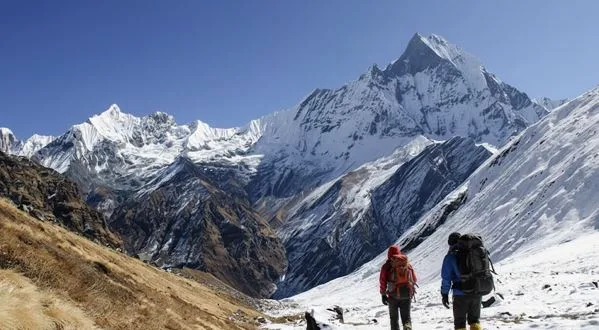
The Annapurna Base Camp Trek is one of the best journeys in Nepal that has an ideal blend of nature, culture and spectacular mountain scenes within a comparatively brief duration of time. This trek enables trekkers to enjoy the magnificence of the Annapurna Massif without having to spend weeks on the trail, as is the case in the longer Annapurna Circuit Trek. The best time for the Annapurna Base Camp Trek is during the spring and autumn seasons.
The time of visiting is one of the most significant aspects of a successful trek. The weather in Annapurna changes all year round, and knowing the weather by month you are going to will help you have a safer, more comfortable and more interesting journey.
Here, we are going to discuss the Best Time to do the Short Annapurna Base Camp Trek and the expectations of the trips in each month.
January – Cold, Clear, and Serene
In Nepal, January is mid-winter. The temperatures in the Annapurna region may go to extremely low levels, particularly at higher altitudes. Indicatively, the temperatures may drop to -15 °C (5 °F) or more during the night at Annapurna Base Camp (4,130m / 13,550ft) level.
The days are chilly, yet mostly clear, which provides trekkers with a clear view of the snow-capped mountains. Trails are not very noisy, and you can have a peaceful time trekking without the normal crowds. But depending on the snowfall, some of the tracks can be blocked, and the trail up mountainous heights might be covered with ice, and this will need adequate winter trekking equipment.
January is a rewarding month for trekkers who like to spend time alone; it requires planning for extreme cold weather. Despite these difficulties, it is the best month to get on tranquil paths and snow-covered landscapes.
February – Gradual Warming
February is the month of slow transition between deep winter and early spring. The weather starts to get better, and the days become somewhat longer. There is still snow in the higher areas, although lower ones like Ghorepani and Chomrong (2,170m / 7,120ft – 2,170m / 7,120ft) begin to warm up. Trekker can see the panorama of the Annapurna South, Hiunchuli and Machhapuchhre on a clear sky.
Although the trails are less crowded and quieter, it is also cold, particularly at night, when the temperature can reach down to -10 °C (14 °F) at the base camp. There should be proper layering and insulated clothing. This is the month that is good in terms of being able to see the scenic views, on the colder days, and less tourists.
March – Blooming Rhododendrons
The Annapurna Base Camp Trek is particularly good in March as the weather has just started to warm up, and the rhododendron forests on the trail are coming into blossom. Villages such as Tikhedhunga and Chomrong have some pink and red flowers that colour the trek and make it look magical. Lower altitudes may reach temperatures of about 15 °C (59 °F) during the day and be cold at night in high elevations.
The trails are better during March, and the snow at higher altitudes is not as regular, which makes trekking on it safer and more pleasant. The view of the mountains is more enhanced, and some of the best views of Annapurna I (8,091m / 26,545ft), Annapurna South (7,219m / 23,684ft), and Machapuchare (6,993m / 22,943ft) are offered. March is very advisable when one is interested in enjoying good weather, colourful plants, and good trail conditions.
April – Peak Spring Season
April is the best time for the Annapurna Base Camp Trek. There is warm and steady weather with temperatures in the lower levels of 18-20 °C (64-68 °F). Greater altitudes in Annapurna Base Camp are cold, with the temperatures at -5 °C (23 °F) at night. It is the high season of the Short Annapurna Base Camp Trek since the trails are dry, the visibility is good, and the rhododendron forests are in full blossom.
The weather during April is conducive to photographers and anyone who loves nature, as there is the presence of snow-capped mountains and colourful forests. Although this month is associated with an upsurge in trekking traffic, it is one of the safest months when one can complete the entire trail without facing heavy rain or extreme cold.
May – Warm and Lush Landscapes
The last month of spring trekking season is May. It is still warm, and the day temperature in the low-altitude areas may go as high as 22 °C (72 °F). Even the higher trails are cold, yet the snow on the peaks starts to melt away to show rocky ridges and alpine scenery. It is a great month to visit when one has a bit more toleration to a warmer climate and greenery on the trail.
Although May is a good month to go trekking, there is a slight rise in humidity as the pre-monsoon season gets closer. Mountain views are also clear during the first half of the month, but late in May, the clouds and rain may decrease the visibility. The green forest scenery and the spectacular mountain view can be enjoyed by the trekkers in May.
June – Beginning of Monsoon
In Nepal, June is the onset of the monsoon period. Due to torrential rain, wet trails and frequent clouds with no visibility of the mountains, the Short Annapurna Base Camp Trek is not an easy one in this season. The warmer and wet climate occurs in lower areas like Nayapul and Ghandruk (2,010m / 6,594ft – 2,010m / 6,594ft), and the cold and wet climate exists in higher areas. The usual phenomena during this time are landslides and erosion of trails, and trekking is dangerous.
Even though a few adventurous trekkers might attempt to travel along the route, June is not a good month. The choice of accommodation is also restricted because numerous teahouses are closed during the season, and the chances of getting a disease or an injury because of slippery trails are increased. June is only advisable for trekking by experienced trekkers who are ready to go out in wet weather and when the weather is uncertain.
July – Heavy Monsoon Rains
The monsoon season is at its peak in July, and the Annapurna Base Camp Trek is ideal in this season. It is extremely difficult to trek in a continuous rainy season, in heavy clouds with low visibility. Rivers overflow, roads are muddy, and certain regions might be unreachable at all. The humid weather and rainfall raise the chances of landslides and floods, especially in the slopes along Chomrong and Bamboo (2,310m / 7,579ft – 2,310m / 7,579ft).
Although the scenery is beautiful and green, the weather is not favorable to trek safely. Trekking through the route in July is a big challenge, and the month is only advisable to people who may be the residents or researchers who are well conversant with the area.
August – End of Monsoon
August is like July, except that at the end of this month, rainfall begins to reduce slowly. The trails are still wet, and the rivers are high, hence trekking can be hard and dangerous. Nevertheless, in those who are ready to risk the circumstances, the landscape is remarkably green, and the woods are thick and vivid. At lower altitudes of the day, temperatures are approximately 20-22 °C (68-72 °F), and on higher altitudes, it is cold and wet.
The Short Annapurna Base Camp Trek is typically not a good time during August; however, it can be done in case of experienced trekkers with the right gear and contingency plans. Tourists must be adaptable to their schedule because there may be delays related to the conditions of the trail.
September – Post-Monsoon Clarity
September is a good month towards the Short Annapurna Base Camp Trek. The monsoon winds dry up, and it becomes clear, giving the mountains breathtaking views. On the lower elevations, it is 18-21 °C (64-70 °F) during the day, and at the base camp of the Annapurna, it is still cold at -2 °C (28 °F).
September is the best time for the Short Annapurna Base Camp Trek with clear skies, moderate weather conditions, and sound trail conditions. The trek is also good for photography with the mountains glistening under a clean blue sky. September is regarded as one of the peak seasons, along with other months such as October and November, and accommodation on the trail is fully operating.
October – Peak Trekking Season
It has been generally known that the best time for the Short Annapurna Base Camp Trek or any other treks in Nepal is October. The weather is predictable, the temperatures are comfortable, and the visibility is outstanding. During the day, temperatures reach approximately 20 °C (68 °F) in the lower altitudes, with temperatures dropping down to -2 °C (28 °F) in the base camp of Annapurna at night. It is dry, and the trails are safe with trekkers all over the world.
October is the best month since the air is clear, and the temperatures are moderate with colourful scenery. The trekkers will have a panoramic view of Annapurna I, Machapuchare and Hiunchuli without having to fear rain or snow. The teahouse and accommodation services are also on board with no hassles during the month of trekking.
November – Late Autumn Beauty
November is also a great month when the Short Annapurna Base Camp Trek can be carried out. The clarity remains post-monsoon, and the temperature starts to decrease marginally. The temperatures of the day at lower altitudes are about 18 °C (64 °F), although during the night at higher altitudes, temperatures may drop up to -5 °C (23 °F). The roads are dusty, the weather is chilly, and the mountain views and colourful scenery are breathtaking.
November is also perfect when the trekkers want to be on a less crowded trail compared to October. It offers good weather, fewer people and good trail conditions, which makes it the ideal option when one wishes to have a peaceful but scenic trekking experience.
December – Winter Chill
The winter in the Annapurna area begins in December. The weather gets colder, particularly in higher altitudes. The lowest temperatures at Annapurna Base Camp are up to -12 °C (10 °F) at night, whereas in the lower regions like Jhinu Danda and Chomrong, the climate is quite mild. Snow can begin to fall at higher heights, and the tracks can be slippery.
December is clear and beautiful with mountain views; nonetheless, the area is cold. The tracks are not very busy, and it is a good month to have trekkers who have prepared themselves for the winter weather. Correct clothes, sleeping bags and trekking gear are necessary to address the cold nights without threats.
Best Overall Time for the Short Annapurna Base Camp Trek
The most appropriate season to do the Short Annapurna Base Camp Trek is in the spring (March to May) and autumn (September to November) seasons. These are the months with the most consistent weather, clear mountain sightseeing, and favourable trekking weather.
The spring is particularly chosen due to its bloom of rhododendron trees and colourful scenery, whereas autumn is preferred due to its crystal-clear skies, dry paths and clear view of the Annapurna range following the monsoon.
Among them, April and October are probably the best months as the weather is suitable, there is minimal chance of rain or snow, and teahouses are fully operational along the way. Hiking at such times is a safer and more fun experience, and the best combination of view, weather, and trail conditions.
Conclusion – Choosing the Best Time
The best time for the Short Annapurna Base Camp Trek is highly subjective to weather, number of people, and view. Generally, spring (March to May) and autumn (September to November) are the most favourable months, as the weather is stable and clear skies and breathtaking views are guaranteed.
During winter (December-February), there is peace and snowy trails, and it is very cold, so one has to be prepared. The monsoon season (June to August) is not highly recommended as it will be raining heavily, with landslides and slippery roads.
With the knowledge of the conditions per month, trekkers will be able to organise their journey more safely and enjoyably. The Short Annapurna Base Camp Trek can be attempted by both beginners and seasoned trekkers, and the correct time guarantees that every moment of the journey is dominated by mystical beauty, cultural diversity, and lifetime memories.