Beyond Billing: How Modern POS Systems Are Redefining Restaurant Success
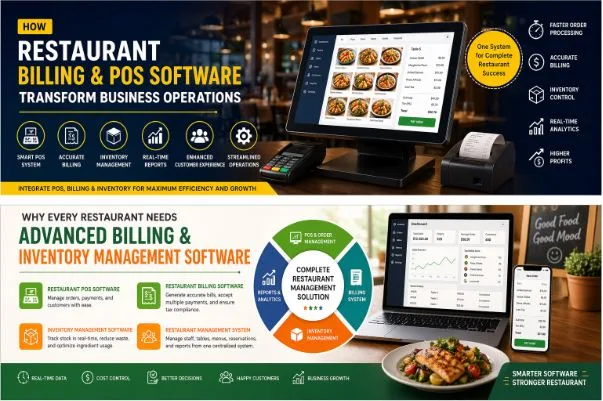
When people talk about restaurant management systems, they often reduce them to dashboards and reports. But the real value lies in the architecture behind the system—how it connects, automates, and optimizes every moving part of a restaurant.
Let’s explore what most blogs ignore: the invisible framework that makes a restaurant management system truly powerful.
The System as an Ecosystem, Not a Tool
A modern restaurant management system isn’t a standalone solution. It’s an ecosystem that includes:
- Inventory management software
- Restaurant billing software
- Employee management tools
The strength of the system depends on how seamlessly these components interact.
Real-Time Synchronization: The Game Changer
In traditional setups, delays between departments caused inefficiencies.
Modern systems eliminate this through real-time synchronization:
- Orders update inventory instantly
- Billing reflects live menu pricing
- Kitchen receives immediate updates
This reduces errors, waste, and miscommunication.
Workflow Automation: The Silent Productivity Booster
One of the most underrated features of a restaurant management system is workflow automation.
For example:
- Automatic stock alerts when inventory runs low
- Scheduled staff shifts based on demand forecasts
- Automated tax calculations in billing systems
This removes repetitive tasks, allowing staff to focus on customer experience.
Why Restaurant Billing Software Matters
Billing is a crucial aspect of restaurant operations. Restaurant billing software ensures accuracy and efficiency in generating invoices. It eliminates manual calculations and reduces errors.
Key advantages include:
- Quick and accurate billing
- Multiple payment options
- Tax compliance
- Digital receipts
- Integration with POS systems
Efficient billing software enhances the checkout experience and builds customer trust.
Inventory Intelligence, Not Just Tracking
Basic inventory management software tracks stock levels. Advanced systems go further by providing:
- Usage patterns per dish
- Supplier performance analysis
- Waste tracking and reduction insights
This transforms inventory from a cost center into a strategic advantage.
Data Unification Across Departments
Without a centralized system, restaurants often struggle with fragmented data.
A unified restaurant management system ensures:
- Consistent reporting across all operations
- Accurate financial insights
- Better forecasting and planning
This eliminates guesswork and improves decision-making.
Scalability for Multi-Location Growth
If you’re planning to expand, your system must scale.
A strong restaurant management system allows:
- Centralized control across multiple branches
- Standardized processes
- Location-specific performance tracking
This ensures consistency while allowing flexibility.
The Role of Cloud Technology
Cloud-based systems have transformed restaurant operations by offering:
- Remote access from anywhere
- Automatic updates
- Secure data storage
Owners no longer need to be physically present to manage their business.
Integration With External Platforms
Modern systems integrate with:
- Food delivery apps
- Payment gateways
- Accounting software
This creates a seamless digital ecosystem that enhances efficiency and customer reach.
Final Thoughts
A restaurant management system isn’t just about managing—it’s about orchestrating. When designed correctly, it becomes the backbone of your entire operation, ensuring efficiency, scalability, and profitability.