Beyond Forex: 5 Assets to Trade for Retail Wealth in 2026
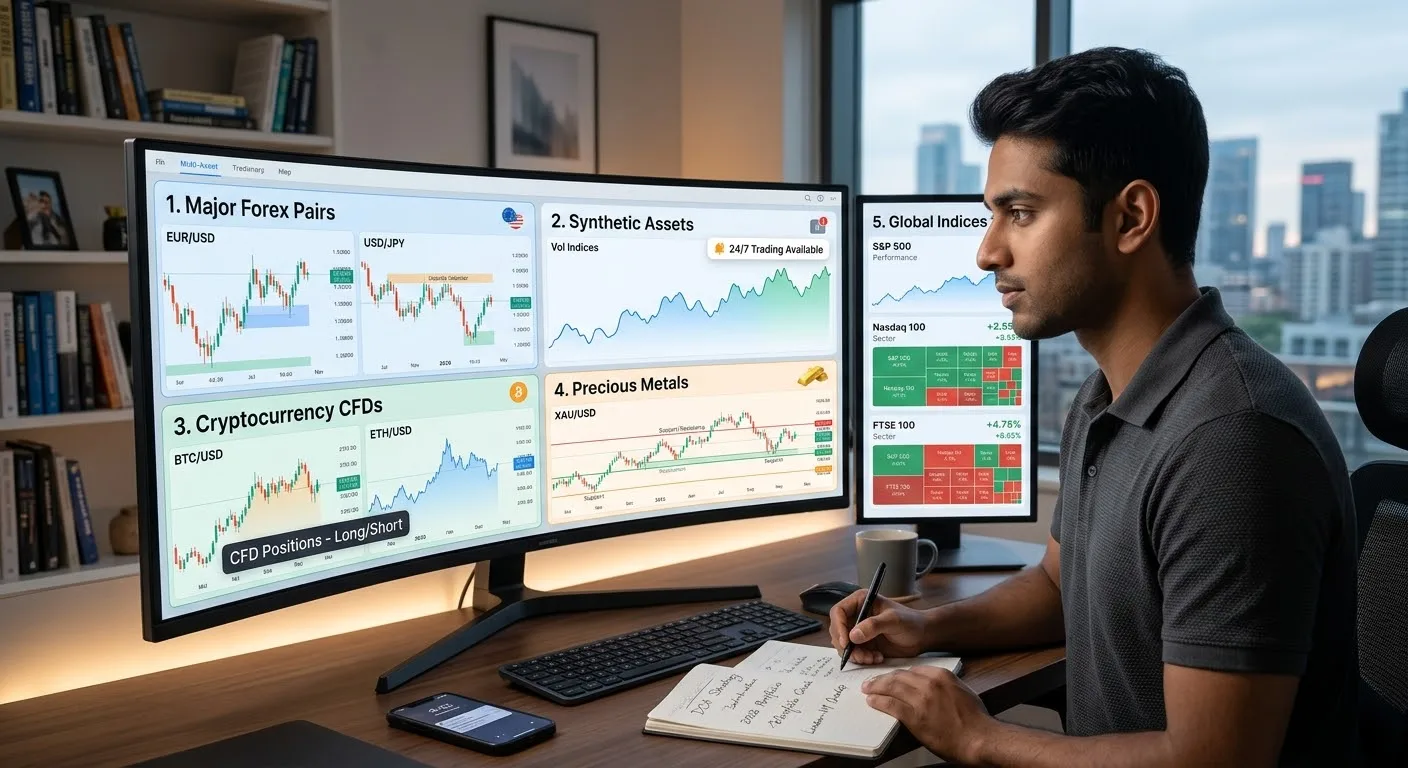
In 2026, the era of the “single-asset trader” is coming to an end. To survive and thrive in today’s volatile global economy, savvy retail investors are diversifying across five key asset classes that provide both protection and explosive growth potential.
Market volatility has become the new normal. Inflation, shifting interest rates, and the rapid adoption of AI have changed how the world’s financial markets behave. If you are still relying solely on one asset, you aren’t just trading – you’re gambling on a single outcome. Here is the 2026 guide to the five asset classes that every serious trader should be monitoring.
1. Major Currency Pairs (Forex)
Despite the rise of decentralized finance, the $7.5 trillion daily forex market remains the bedrock of global liquidity. In 2026, the focus has shifted toward capitalizing on interest rate differentials.
- Why trade it: It is the most liquid market in existence.
- Strategy: Successful traders are now utilizing high-performance platforms like Headway Forex broker to track the correlation between USD strength and regional emerging market currencies.
- Pro Tip: Use the “London-New York Overlap” for your major entries; it remains the most reliable window for high-volume execution.
2. Synthetic Assets & Indices
Synthetic indices are the rising stars of 2026. These are simulated markets that behave like real ones but are available 24/7, even on weekends.
- Why trade it: They provide exposure to market trends when the traditional stock exchanges (like the NYSE or London Stock Exchange) are closed.
- Strategic Advantage: They are ideal for traders who work a 9-to-5 job and can only focus on the charts during the weekend.
3. Cryptocurrency CFDs
Crypto has graduated from a speculative hobby to a standard part of institutional and retail portfolios. In 2026, the focus is on the “infrastructure coins” – assets tied to AI, privacy, and decentralized computing.
- Why trade it: Crypto offers the highest beta (volatility) in the market, allowing for significant profit realization if you catch the trend early.
- How to trade: Platforms that integrate crypto CFDs allow you to go “short” (profit from a price drop) or “long,” providing flexibility that traditional spot exchanges lack.
4. Precious Metals (Gold & Silver)
Gold (XAUUSD) has regained its crown as the ultimate “fear gauge.” In 2026, as geopolitical tensions continue to affect the global supply chain, gold is no longer just a jewelry metal – it’s a tactical hedge.
- Why trade it: It moves inversely to the dollar in most cases. When the market fears a recession, gold tends to rise.
- Strategy: Professional traders use gold to balance their risk; when your riskier crypto or equity positions take a hit, a long gold position often offsets the loss.
5. Global Indices (S&P 500, Nasdaq, FTSE)
Indices represent the “health” of the global economy. Trading indices like the Nasdaq 100 is essentially trading the growth of the world’s top tech firms.
- Why trade it: Indices are less prone to “flash crashes” than individual stocks because they are a basket of companies.
- Trend: 2026 has seen a surge in interest in index-based CFD trading, which allows retail investors to speculate on the overall economic direction of the U.S. or European markets with much lower capital requirements.
The Modern Trading Infrastructure: Why It Matters
You cannot trade these assets efficiently if you are limited to a slow, outdated terminal. The 2026 trader requires a multi-asset broker that can handle everything from a weekend synthetic trade to a mid-week forex scalp.
Brokers such as Headway have gained traction by providing the infrastructure to switch between these classes instantly. When your broker allows you to move capital from a declining forex pair into a rising index or crypto asset within the same dashboard, you gain a massive competitive advantage: Speed.
Actionable Insights for Future-Proofing Your Portfolio
- Stop Picking Winners, Pick Sectors: Instead of guessing which coin will moon, identify which sector (AI, DeFi, Infrastructure) is solving a real-world problem and trade the underlying index or asset class.
- DCA is Not Just for Stocks: Use Dollar-Cost Averaging for your long-term crypto positions to smooth out volatility, while using active trading for forex and indices to capture short-term moves.
- Choose a Broker that Scales: Ensure your trading account supports micro-lots. If you are testing a new asset class (like Gold or a new Tech Index), you should be able to start small to manage your risk before committing larger capital.
Final Thought: The “perfect” portfolio for 2026 is one that breathes. It has a foundation in liquid forex, a hedge in precious metals, and growth exposure in indices and crypto. By utilizing the right multi-asset platforms, the individual retail investor can now build a strategy that rivals the complexity and effectiveness of professional hedge funds.