
Beyond the Diagnosis: Who Is Suitable for Bone Marrow Transplantation?
Receiving a diagnosis of leukemia, lymphoma, or another blood disorder can raise difficult questions for patients and their families. One of the most important is whether a bone marrow transplant is necessary.
Bone marrow transplantation, also called hematopoietic stem cell transplantation (HSCT), can offer a treatment option for certain blood cancers. However, not every patient with these diagnoses needs a transplant. Some may respond well to medication or chemotherapy. Others may benefit from transplantation at a particular stage of their treatment.
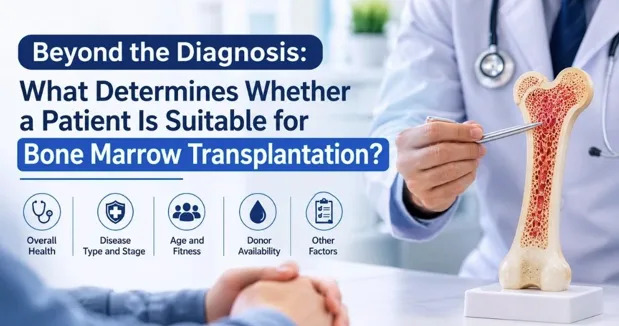
The decision involves more than confirming a diagnosis. Specialists consider the disease, previous treatments, overall health and potential donor availability. They also assess whether the expected benefits outweigh the risks. This makes an individual clinical assessment essential before treatment planning begins.
The Diagnosis Alone Does Not Determine Transplant Eligibility
Different blood disorders have different treatment pathways. Even patients with the same diagnosis may require different approaches. The type of disease and its current status help specialists determine whether transplantation is appropriate.
For example, doctors consider:
- Type of condition: Acute leukemia, lymphoma, multiple myeloma, aplastic anemia and myelodysplastic syndromes have different transplant indications.
- Disease status: The disease may be newly diagnosed, in remission, relapsed or resistant to treatment.
- Previous treatment: Specialists review chemotherapy, targeted therapies, immunotherapy and other treatments already received.
- Treatment response: They assess whether previous treatment controlled the disease or whether it continues to progress.
For some patients with acute leukemia, transplantation may be considered after remission, depending on disease risk and other findings. In certain lymphomas, an autologous transplant may be considered when the disease returns or responds to specific treatment.
Donor Compatibility is Only One Part of the Assessment
The source of stem cells is another important consideration. Two main types of transplantation exist.
- Autologous transplantation: This uses the patient’s own stem cells. Doctors collect and store these cells before giving high-dose chemotherapy. The stored cells are then returned to help restore blood cell production.
- Allogeneic transplantation: This uses stem cells from another person. The donor may be a relative or an unrelated individual with suitable tissue compatibility.
For allogeneic transplantation, specialists assess human leukocyte antigen (HLA) compatibility. HLA markers help the immune system distinguish the body’s own cells from foreign cells. A closer match generally improves compatibility and can reduce certain transplant risks.
How the Patient’s Overall Health Affects the Decision
A transplant can place considerable physical demands on the body. Therefore, specialists assess the patient’s overall health, not just the blood disorder.
Important considerations include:
- Heart and lung function: Tests help determine whether these organs can tolerate the treatment.
- Kidney and liver function: These organs process medicines and support essential body functions.
- Existing infections: Active infections may increase complications and require treatment before transplantation.
- Other medical conditions: Diabetes, heart disease and other long-term conditions can affect treatment risks.
- Physical condition: Mobility, nutritional status and general fitness help assess the patient’s ability to tolerate treatment.
Age may also influence the decision, but it is not the only deciding factor. Some older patients may be suitable for transplantation, while younger patients may have medical conditions that increase their risks.
Specialists also explain possible complications. Conditioning treatment, which prepares the body for transplantation, can cause significant side effects. These may include infections, organ damage and reduced blood cell production.
Allogeneic transplantation carries an additional risk called graft-versus-host disease (GVHD). This occurs when donor immune cells attack the recipient’s tissues. It can affect the skin, liver, digestive system and other organs.
The transplant team weighs these risks against the potential benefits before recommending treatment.
What Happens Before a Transplant Can Be Planned?
Before making a final decision, specialists conduct a detailed assessment. The exact investigations depend on the disease, previous treatments and proposed transplant type.
The assessment may include:
- Reviewing the original diagnosis, pathology reports and bone marrow biopsy findings.
- Checking previous treatment records and response assessments.
- Performing blood tests to evaluate blood counts and organ function.
- Testing for relevant viral infections and other active infections.
- Conducting heart and lung function assessments.
- Reviewing imaging reports where clinically indicated.
- Performing HLA typing for the patient and potential donors when required.
- Assessing nutritional status, dental health and psychological well-being.
Why an Early Specialist Review can Clarify the Available Options
An early review by a hematologist or transplant specialist can help patients understand their treatment options. It can also prevent misunderstandings about whether transplantation is necessary.
For some patients, transplantation may be an important part of the next treatment stage. Others may need additional therapy before becoming suitable candidates. Some may benefit more from non-transplant treatments.
A specialist review can help clarify:
- Whether transplantation is indicated for the specific diagnosis.
- Whether the disease is sufficiently controlled for the procedure.
- Which transplant type may be considered.
- Whether donor testing or additional investigations are needed.
- What alternative treatments are available.
What International Patients Should Establish Before Travelling
Patients considering treatment abroad should arrange an initial medical review before making travel commitments. This allows specialists to examine available records and determine whether further assessment is worthwhile.
Patients should prepare the following documents:
- Original pathology and diagnostic reports.
- Bone marrow biopsy and relevant genetic or molecular test results.
- Previous chemotherapy and other treatment records.
- Disease response assessments and recent laboratory results.
- Relevant imaging reports and scans.
- Current medication details and medical history.
- Details of any previous infections or significant complications.
- The proposed transplant type, if already discussed with their treating specialist.
Patients should also ask about the expected evaluation process, possible treatment duration, hospital admission and follow-up requirements.
An initial review may identify potential treatment options. However, it cannot replace a physical examination, additional investigations or donor evaluation. Final eligibility can only be established after the required clinical assessments.
Hisar Intercontinental Hospital’s Transplantation Services
Hisar Intercontinental Hospital in Istanbul provides bone marrow and hematopoietic stem cell transplantation services through its Bone Marrow Transplantation Center.
According to the hospital’s official information, its transplant unit has 20 inpatient beds. The team includes a professor experienced in hematology and stem cell transplantation, specialist medical staff, an apheresis and cryopreservation expert, nurses and other healthcare professionals.
The hospital offers both autologous and allogeneic transplantation services. Prof. Dr. Şebnem İzmir Güner is listed as one of Hisar’s best hematology specialists. The hospital’s hematology department also lists supporting facilities, including:
- HLA typing laboratory
- Apheresis laboratory
- Stem cell processing laboratory
- Cryopreservation facilities
- Inpatient services
- Intensive care facilities for post-transplant monitoring
The hospital also describes psychological support, nutritional supervision and pharmaceutical support as part of its transplant care arrangements.
For international patients, Hisar offers a medical second-opinion service. Patients can submit their medical reports and imaging for specialist review. The hospital’s international patient team can assist with the consultation and treatment arrangements.
You can confirm the availability of a particular transplant approach and its suitability for an individual patient directly with the relevant specialist team before travel.
Conclusion
Bone marrow transplant eligibility depends on several connected factors. The diagnosis, disease status, previous treatment, donor compatibility and overall health all influence the decision.
A detailed specialist assessment helps determine whether transplantation offers a meaningful benefit. It also helps identify alternative treatments and the most appropriate time for intervention.
For patients considering treatment at Hisar Intercontinental Hospital, submitting medical records for an initial specialist review can be a useful starting point. The treating team can assess the available information and advise on possible next steps before travel arrangements are made.