Beyond the Dumpster: What Most Businesses Overlook in Scrap Recycling
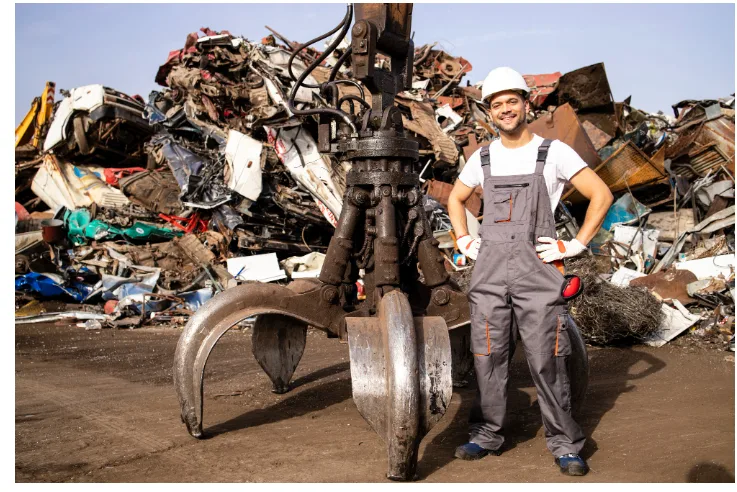
That pile of old ductwork, discarded rebar, or obsolete machinery in your yard isn’t just clutter. It’s a commodity with a fluctuating market value. For many businesses, it’s an overlooked revenue stream that gets managed poorly, if at all. The logistics of handling this material often seem more trouble than they’re worth, leading to lost income and inefficient operations.
The scale of this challenge is enormous. In 2018, the United States generated more than 292 million tons of municipal solid waste, according to The National Academies Press. While recycling efforts captured a significant portion, the system is under constant pressure. For a business, this means the difference between a cost and a profit center often comes down to process. A structured metal recycling program is the mechanism that turns a potential liability into a reliable asset.
This isn’t just about calling for a roll-off container when it’s full. Market volatility and rising transportation costs demand a smarter approach than a few years ago. The most profitable operators now treat scrap as part of their production output, with clear strategies for sorting, storage, and timing.
Quick answer: To maximize your return on scrap metal, you must actively manage it. This involves pre-sorting materials by type before pickup, understanding basic market price drivers, and scheduling services to align with your project flow, not just when a container is overflowing.
What’s inside
- How Do Scrap Metal Prices Actually Work?
- What Is the Real Value of Sorting on Site?
- How Do I Choose the Right Container for My Job?
- What Questions Should I Ask a Recycling Partner?
- Common Mistakes That Cost Businesses Money
- Frequently Asked Questions About Scrap Recycling
How Do Scrap Metal Prices Actually Work?
Scrap metal prices are set by global commodity markets, but your final payout depends heavily on local demand, material cleanliness, and transportation costs.
The recycling industry handles a staggering volume of material. In 2018 alone, nearly 69 million tons of municipal solid waste were recycled in the United States, according to the U.S. Environmental Protection Agency. Metals are a high-value component of this stream. Processors don’t invent prices. Instead, they base their rates on benchmarks like the London Metal Exchange for non-ferrous metals (aluminum, copper) and prevailing domestic steel mill prices for ferrous metals (iron, steel). Your payment is that top-line market price, minus the processor’s cost to handle, sort, and ship the material.
This is why preparation is so critical. A processor’s biggest costs are labor and time. A container filled with clean, sorted structural steel requires far less handling than a mixed load of demolition debris. The “cleaner” your scrap, the less work they have to do. That efficiency gain is passed back to you as a higher price per pound. Contaminants like dirt, plastic, wood, or other metals mixed in will always lower the value.
❝ Ask any scrap yard operator and they’ll tell you: weight is not the same as value. A 20-yard container of sorted, clean #1 copper tubing can be worth significantly more than a 40-yard container of mixed light iron and construction debris. Focus on the quality of the material, not just the quantity.
The scale of the system dictates these incentives. With over 292.4 million tons of total waste generated annually, per EPA figures, efficiency is paramount. Processors must move massive volumes to be profitable. They are willing to pay a premium for well-sorted material because it moves through their facility faster, requires less labor, and can be sold to mills and foundries for a better price. Your on-site sorting efforts directly impact their bottom line, and therefore, your payment.
What Questions Should I Ask a Recycling Partner?
Evaluating a partner involves verifying their process transparency, logistical capabilities, and how they document payment.
The foundation of any fair transaction is an accurate weight measurement. Your first question should always be about the scales. Ask if their scales are state-certified and when the last certification was performed. All commercial scales used for trade must comply with standards for accuracy, such as those outlined in NIST Handbook 44 by the National Institute of Standards and Technology. You should receive a scale ticket that clearly lists the gross weight (full truck and container), tare weight (empty truck and container), and the resulting net weight of your material. This document is your proof of delivery and the basis for your payment.
Next, assess their logistics. Do they offer the right container sizes for your specific job site and material volume? A demolition contractor generating heavy structural steel has different needs than an HVAC company swapping out aluminum coils. Inquire about their standard turnaround time for a container swap. A full dumpster sitting on your site for days can halt progress and create safety issues. It is also useful to understand if the company is a direct processor or primarily a hauler. A processor buys, sorts, and prepares metal for mills, while a hauler may simply be a middleman, which can sometimes affect pricing and communication.
❝ Your settlement report should leave no room for interpretation. It needs to clearly show the gross, tare, and net weights, the material grade, the price paid, and the date of service. If any of that is missing, you should ask why. Ambiguity in reporting is a significant red flag.
Finally, scrutinize the payment and reporting process. Ask for a sample settlement report to see how they present the final accounting. This report should clearly connect the scale ticket to the material grade and the price per pound or ton. Also, ask how they define and document deductions for contamination. A “dirty” load might get a percentage deduction for excess dirt, concrete, or water. A load of “unclean” aluminum extrusions might be downgraded because of attached steel screws or plastic fittings. Understanding these specifics beforehand helps you train your on-site team to sort material properly and maximize its value.
| Category | Key Question to Ask | Why It Matters |
| Weighing & Transparency | “Can I see your most recent scale certification?” | Ensures you are paid based on accurate, legally compliant weight measurements. |
| Logistics & Service | “What is your standard turnaround time for a container swap-out?” | Prevents project delays and job site clutter caused by overflowing containers. |
| Material Grading | “How do you handle loads with mixed metals or contamination?” | Clarifies potential deductions and helps you train your team on proper sorting. |
| Payment & Reporting | “What information is included on your settlement report?” | Confirms you will receive clear documentation linking weight, material, and final payment. |
How Do I Choose the Right Container for My Job?
The right container depends on your material’s density and the logistics of your job site, not just the total volume of scrap.
Many businesses make the mistake of simply ordering the largest roll-off available, assuming bigger is always better. This can be inefficient and costly. The key is to match the container to the material type. For dense, heavy materials like structural steel beams, plate, or solid rebar, a smaller 20-yard container is often the best choice. While it holds less volume, it can reach the legal weight limit for road transport quickly. Putting heavy steel in a 40-yard container might mean you can only fill it halfway before it’s too heavy to be hauled, wasting space and potentially incurring extra fees.
Conversely, for light, bulky materials like aluminum siding, sheet metal, or old ductwork, a larger 30 or 40-yard container makes sense. These materials take up a lot of space but have relatively low weight, so you need the extra volume to accumulate a load that is economical to transport. Using a small container for bulky scrap would require frequent, costly pickups.
❝ Before a container is delivered, walk the site and look at the access path. A truck delivering a 40-yard roll-off needs a straight, clear path of at least 50 to 60 feet to back in and set the box. You also need to consider overhead clearance from wires and the ground condition. Placing a fully loaded, multi-ton container on soft soil, new asphalt, or a decorative paver driveway can cause significant damage.
Beyond size, consider the style of container. Standard roll-off dumpsters are ideal for most construction and demolition sites. For machine shops or manufacturing facilities generating a steady stream of smaller, high-value scrap like copper or brass turnings, smaller, lockable bins or self-dumping hoppers might be more appropriate. These secure valuable material and can be moved around a facility with a forklift, allowing you to stage scrap efficiently near the point of generation. This reduces the labor needed to move material across your property and minimizes the risk of theft.
Frequently Asked Questions
What is the highest paying scrap metal? Copper consistently holds the top spot for value, but the specific grade is what truly drives the price. For example, clean #1 copper pipe or wire will fetch a much higher price than #2 copper that has solder, paint, or fittings attached. Following copper, you will typically find high value in brass, insulated copper wire, and clean aluminum alloys.
How many pounds of scrap metal does it take to make $100? This depends entirely on the metal’s market price. To illustrate the range, if clean copper was priced at a hypothetical $3.50 per pound, you would need just under 29 pounds to reach $100. In contrast, if light iron or steel was priced at $0.10 per pound, you would need 1,000 pounds to reach the same amount. This is why sorting high-value non-ferrous metals from low-value ferrous metals is so critical to your bottom line.
What documentation is required to sell scrap metal? To combat metal theft, most states have strict regulations. You will almost always be required to present a valid, government-issued photo ID, such as a driver’s license, and be at least 18 years old. Furthermore, many jurisdictions, including the state of Georgia, legally require recycling yards to issue payment via check rather than cash to create a clear paper trail for all transactions.
Why can’t I mix different types of metal in one container? Mixing metals drastically lowers the value of your entire load. When a processor receives a container of mixed materials, they have two choices: either invest significant labor to sort it or sell it as a low-grade product. In most cases, the load is downgraded and you are paid based on the price of the least valuable metal in the mix. For example, a few steel pipes mixed in with a load of aluminum will cause the entire container to be priced as cheap steel.
Do commercial services pick up scrap for free? A professional recycling partner should pay you for your valuable scrap metal, not pick it up for free. “Free” collection is more common with general junk haulers who may not be equipped to properly weigh, grade, and process the material to maximize its value. For any business generating a consistent stream of metal, the service should be a source of revenue, not just a disposal method.
The Bottom Line on Commercial Scrap
Treating scrap metal as a waste product to be hauled away is a missed financial opportunity. The most effective approach reframes it as a recoverable asset. This requires a shift in mindset from simple disposal to active revenue management. The difference between a cost and a profit is determined by your on-site process and the transparency of the partner you choose to work with.
The single most important factor you control is material quality. The value of your scrap is locked in long before a container is picked up. Implementing a disciplined sorting process on your job site to separate clean metals and prevent contamination is not just an operational detail; it is the primary driver of your financial return. A few minutes spent separating copper from steel can yield a return far greater than an hour spent on almost any other site task.
Ultimately, a professional recycling service should function as a transparent part of your own value chain. Their job is to provide the right logistics, certified-accurate weighing, and clear reporting that rewards your sorting efforts. When you evaluate a potential partner, look for evidence of this transparency. Clear scale tickets and detailed settlement reports are not just paperwork; they are proof that you are capturing the full value of the materials you generate.
About the author
This article is contributed by the team at Olympus Recycling, a scrap metal recycling company based in Georgia. Olympus Recycling specializes in commercial and industrial services, providing roll-off containers and processing for ferrous and non-ferrous metals. They work with businesses such as demolition contractors, HVAC companies, and manufacturing facilities to manage and monetize their scrap metal streams. The company’s process is built around certified weighing, material grading, and transparent reporting to help clients capture the full value of their recyclable assets.