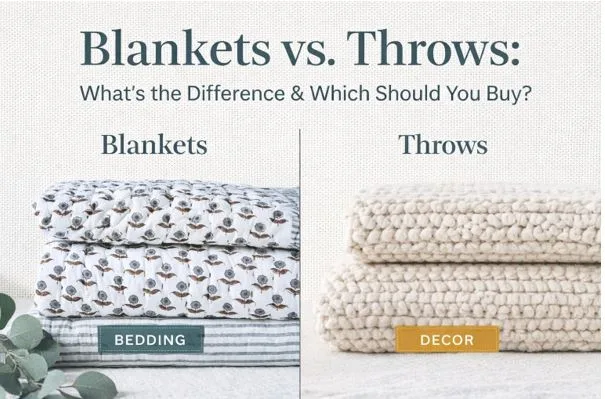
Blankets vs. Throws: What’s the Difference & Which Should You Buy?
People, when styling their home or updating comfort essentials, might confuse blankets and throws. The two items appear similar at first glance, but each serves a distinct purpose in terms of size, functionality, and design appeal. When planning to buy blankets and throws, it’s essential to understand the differences between the two to make a well-informed decision that suits your décor and lifestyle preferences.
Let’s break down their differences while helping you choose the right option for your household needs.
What Is a Blanket?
A blanket mainly functions to provide warmth while covering the entire body. People typically use blankets on beds due to their larger size that provides better insulation when sleeping during cold weather. They come in different materials, like wool, cotton, fleece, microfiber, and even weighted fabrics.
Although their purpose is more toward functionality than aesthetics, modern blankets are available in stylish patterns and textures. Standard blanket sizes correspond to bed dimensions, like single, queen, or king. The larger size of these items enables them to deliver continuous warmth during nighttime. This makes them suitable for wintertime use as base layers. A blanket serves as the best choice when your main goal involves staying warm or improving your essential bedding items.
What Is a Throw?
Throws, also known as throw blankets, can be described as smaller, more decorative types of blankets. They usually measure about 50 x 60 inches and are used for draping over couches or chairs or at the end of the bed. They are generally used to provide warmth; however, their primary purpose is to make a room’s interior more visually appealing by adding texture and/or colour.
Throws are very light in weight and are very versatile. You can simply throw one on the couch and use it when you want to cuddle up and keep warm, but use it as an accent piece in your living area to pull together the room. Throws are very popular in both living rooms and reading nooks because they add texture and colour to these areas.
For example, the handcrafted Bhujodi Throws that are available are very popular because of the artisan weaving techniques and the detailed design patterns. The craftsmanship that goes into the production of the throws comes from traditional methods and combines comfort and cultural craftsmanship, thus making them both an attractive decor item and functional accessory.
Key Differences Between Blankets and Throws
Here’s a quick comparison to help you understand better:
- Size: Blankets are larger, intended to cover an entire bed or body; throws are smaller and better suited for use by one person, as well as for decoration.
- Purpose: The primary purpose of blankets is to keep you warm and serve a practical use; throws serve a dual purpose of being warm and enhancing aesthetics of a room.
- Placement: Generally, blankets will remain in the bedroom. However, most throws can be found in a living room or lounge area, and can sometimes provide additional decoration to a bedroom.
- Design: Throws typically feature bold colours, playful patterns, tassels, textured or woven patterns, and are often handcrafted. Blankets usually feature simple patterns, but can also have a classy and/or elegant finish.
Which One Should You Buy?
Your choice depends on your lifestyle and requirements.
Choose a Blanket When You:
- Want to be completely covered while sleeping.
- Live in a colder climate.
- Require it practically for the warmth of the blanket more than styling.
- Layering for winter bedding.
Choose a Throw When You:
- Want to improve your home décor.
- Want a light cover for short naps.
- Enjoy changing your home style with the seasons.
- Need a versatile accent that can move between rooms.
Many homeowners actually pick both. A blanket is a bedding necessity; however, a throw adds texture and warmth to shared spaces.
Styling Tips for Throws and Blankets
To fully utilise your throw and/or blanket, look at how it fits into your current decor.
- Drape your throw over the arm of your sofa in a relaxed manner for a warm and inviting feel.
- Use an easy fold to lay it out at the foot of your bed for added texture.
- Pair throws with decorative pillow covers for a cohesive, warm look.
- Use different textures like knit wool (soft) and woven (durable) for added visual depth.
- Pick neutral colors or bold patterned fabrics based on your taste and preference.
Your simple couch could become a warm, designer-like sitting area with the use of a throw (especially if it is handcrafted).
Material Matters
Make sure to choose a good quality fabric, like:
- Cotton: breathable and works in any season (cool in the summer and warm in the winter).
- Fleece: lightweight and very soft; great for all-day comfort.
- Wool: works great in cold places and insulates very well.
- Handwoven textiles: made from durable materials and unique artwork.
If you want to be environmentally friendly, consider looking for ethically produced (not factory), handwoven (made of biodegradable yarn), and directly support artisans rather than factories.
Seasonal Considerations
People use lightweight throws during the summer months to create mild warmth for air-conditioned summer nights. They prefer heavier blankets during the winter months to protect themselves from cold temperatures.
Transitional seasons, such as fall and spring, are perfect for layering: placing a blanket on the bottom and a throw on the top to add another layer of texture. Rotating your blankets and throws on a seasonal basis will allow you to please change the look of your home decor somewhat without making any substantial changes.
Budget & Longevity
Because they are used on a daily basis, blankets are generally a long-term purchase. Throws can also be a long-term purchase if they are made using the old processing methods or techniques. When buying a blanket or throw, be sure to look at the durability, quality of stitching, and strength of fabric before making your decision.
Consider that your goal is not only to buy a comfortable item but to also find something that will fit with how you want your living area to be decorated for years to come.
Final Thoughts
The decision between blankets and throws should remain straightforward for consumers. Think about whether you need practical warmth, decorative appeal, or both. People use blankets because they deliver complete body coverage and comfortable sleep, while throws enhance home decoration through their various uses and their ability to create multiple design styles.
Your home needs to show warmth through its comfortable elements and its design elements according to the final decision of your day. The company Thread to Form selects its textiles with care because they want to show traditional craftsmanship while providing modern solutions for everyday use. The appropriate selection for your bedroom or sofa arrangement will create a combination of comfort and distinctive style.
FAQs
1. Can a throw replace a blanket?
Not completely! While a throw may give you some temporary comfort from cold weather, it does not provide coverage and heat retention as good as a blanket will do while sleeping.
2. Are throws only for decoration?
Not at all, throws are both functional and decorative. They provide light warmth, as well as enhance the overall look & feel of the room.
3. What size is ideal for a blanket?
The size is determined based on your mattress, whether you have a twin/queen/king size mattress. To ensure that you purchase a blanket that provides you with sufficient coverage, you need to take into consideration the size of your mattress prior to acquisition.
4. How do I style a throw without making it look messy?
You could neatly fold it across the arm of your couch, throw it across the top of the backrest on your sofa, or layer it on top of cushions to have a more balanced styling.
5. Are handcrafted throws durable?
Yes, they are constructed using traditional methods of weaving and crafted from quality yarns, and therefore should hold up well over time with the right maintenance.