Body Cameras, Text Messages and Digital Records Are Changing Florida Criminal Cases
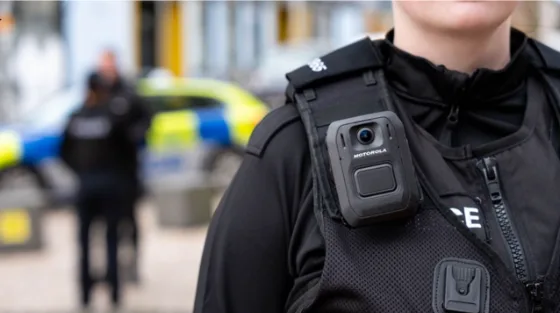
Technology has changed nearly every aspect of daily life, and Florida’s criminal justice system is no exception.
Police body cameras, surveillance systems, smartphones, text messages and other forms of electronic information can now become important evidence in criminal investigations. For defendants, this means the evidence in a case may extend far beyond what appears in a police report.
Understanding that digital trail has become an increasingly important part of evaluating criminal allegations.
Body-Camera Footage Can Provide Additional Context
Police reports generally describe an incident from the investigating officer’s perspective. Body-camera footage can provide another source of information.
In a DUI investigation, for example, video may show a driver’s speech, movements, interactions with officers and performance during roadside exercises.
In an assault or domestic violence investigation, footage may capture statements, injuries, witness interactions or conditions at the scene.
Video does not automatically prove or disprove an allegation, but it can allow a Tampa criminal defense attorney to compare what was recorded with what witnesses and officers later reported.
Smartphones Can Contain Important Evidence
Phones have also become significant sources of evidence.
Text messages, photographs, videos, call histories and other electronic information may provide context surrounding an accusation. Depending on the case, digital records can help establish communications or timelines that become relevant to the investigation.
This can be particularly important in cases involving allegations between people who know one another.
A Tampa domestic violence lawyer, for example, may need to review text messages or other communications surrounding an alleged incident rather than relying exclusively on statements made immediately after police arrived.
Context matters. A single screenshot may present a very different picture from an entire conversation.
Video Evidence Is Increasingly Common in DUI Cases
The growth of video evidence is also changing DUI defense.
Traffic stops may be captured by dashboard cameras, body cameras, nearby surveillance systems or even cameras belonging to other drivers.
That evidence can sometimes provide an objective record of portions of the investigation.
A Tampa DUI attorney reviewing a case may compare the video with allegations concerning driving behavior, speech, balance, field sobriety exercises and other observations described in the police report.
Breath or blood testing may add another layer of technical evidence depending on the circumstances.
Digital Evidence Can Work Both Ways
Electronic evidence is often discussed as a tool for law enforcement, but it can also benefit someone accused of a crime.
Surveillance footage could contradict an eyewitness account. Messages might provide missing context. Electronic records could challenge a timeline. Video may show that an encounter unfolded differently than initially described.
At the same time, digital information is not automatically conclusive merely because it was generated by a device.
Questions can arise concerning authenticity, completeness, timing and interpretation.
Preserving Evidence Can Be Important
One challenge with digital evidence is that it may not remain available indefinitely.
Businesses can overwrite surveillance footage. Messages can be deleted. Devices can be replaced. Online accounts can disappear.
When someone learns that they are the subject of a criminal investigation, preserving potentially relevant evidence can therefore become important.
Attempts to delete or destroy evidence can also create additional legal problems. Preservation allows the information to be evaluated in its original context.
Technology Is Becoming Part of Everyday Criminal Defense
Florida criminal cases still involve traditional evidence such as witnesses, physical evidence and police testimony.
Increasingly, however, those sources are accompanied by a digital record.
A police officer may describe what happened while a body camera provides another perspective. A witness may describe a conversation while text messages preserve portions of it. A timeline may be disputed while surveillance footage or electronic records provide additional information.
The growing availability of digital evidence does not eliminate factual disputes.
In many cases, it simply provides more information to evaluate.
As cameras, smartphones and connected devices become even more common, understanding what digital evidence shows — and what it does not show — will likely become an increasingly important part of Florida criminal cases.