Brass vs. Lead Battery Terminals — Which Is Better?
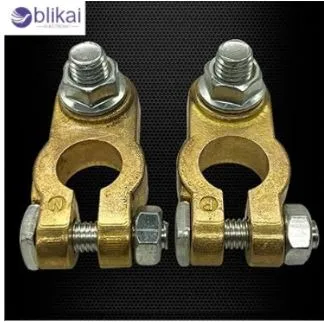
In the case of vehicle or marine power systems, battery terminals are also usually ignored until something goes wrong, such as starting problems, loss of or low voltage, or even the presence of outer corrosion. However, the decision of the terminal material may be associated with long-term operation performance, reliability, and maintenance specifications. Some of the most widely used materials include brass and lead, although all of them have strong points and weak points.
Knowing the difference between the two is not just some form of technical trivia: It is, in practice, a decision that can impact conductivity, durability, and even safety. U.S. battery component market data shows that over 70 percent of OEM automotive batteries continue to contain lead terminals, with brass being used heavily in the marine and custom performance industries.
Conductivity and Electrical Performance
The terminals of energy storage batteries are lead and have become a standard because they offer good electrical conductivity. The electrical conductivity of lead is approximately 4.8 x 10 6 S/m, and the low resistance and effective transfer of current are made possible. The fact that it is soft also aids in creating a good seal to the battery post, thus minimizing micro-gaps that cause loss in voltage. Brass, in comparison, generally measures 1.5 10 7S/m (when alloyed with copper), even higher than lead, but this is slightly compensated by the possible oxidation on the surface (when not coated). Brass terminals are usually plated in nickel or tin in order to enhance further conductivity and corrosion resistance. In practical automotive and marine applications, there is little difference in performance when clean and properly torqued, and brass does not change in performance as rapidly as the in-service period increases.
Durability and Corrosion Resistance
One of the most significant differences between brass and lead is durability. Lead is soft and easy to work with, but this presents more problems in regards to deforming, something that would happen more after a repetitive process of loosening and tightening. Brass is more rigid (Brinell hardness of 55180 compared to that of lead 515) and is hence able to regain shape with continued use. Tests by the American Boat & Yacht Council (ABYC) in corrosion testing brass terminals reveal a maximum of 50 percent less surface degradation in 1,000 hours or less in a salt spray chamber than terminals made of lead. This contributes to brass being a favorite in boats and RVs, where moisture and salt are always present and where some vibration occurs. The lead terminals, though, can establish a good seal; they tend to form a white deposit of lead oxide, which is not only unsightly but also contributes to electrical resistance unless some control measures are put in place.
Environmental, Safety and Weight Issues
Lead is much denser than brass–about 11.3 g/cm compared to the 8.5 g/cm of brass. Although the weight mass difference is negligible with only one terminal, when it comes to lightweight racing applications or aerospace systems, each gram matters. Safety-wise, there are also toxicity risks associated with lead; even when touched without gloves, lead can create traces of exposure, and improper disposal leads to pollution of the environment. Brass is non-toxic and even easier to handle, hence suitable for technicians and DIYers who often deal with electrical functions. EPA has more stringent guidelines on handling and recycling of lead-containing parts, and brass can be recycled without special procedures that deal with hazardous waste.
Cost and Availability
Cost often plays a big role in material choice. Lead battery terminals are usually 20% to 40% cheaper than comparable brass terminals, hence their continued preponderance in OEM automotive applications. A potential user wanting lower maintenance and longer life, however, can get a better long-term value proposition as far as lower maintenance and longer life is concerned using brass terminals. Both are readily available in auto parts stores and marine supply shops, although some specialized and unique brass designs such as heavy-duty gold-plated marine clamps may be available only through specialty terminal system suppliers like Blue Sea Systems, or Ancor Marine. In the case of fleet managers, the costs of brass are sometimes ironed out by the low downtime and the interval of maintenance.
Which Should You Choose?
If you prioritize maximum conductivity at the lowest cost and don’t mind periodic maintenance, lead battery terminals remain a solid choice. They have field-tested millions of vehicles and still do, provided it is clean and safe. Nevertheless, when durability, corrosion protection and a smaller environmental footprint are important to you, particularly in tough use conditions such as salt water boating, brass tends to prove wiser in the long run. Development trends indicate that lead still leads in mass-market automotive industries, but the use of brass is increasing at an incredible rate in the segments involving high performance and marine segments because of durability and reliability. Regardless of what material is used, the performance benefits of correct installation and correct torque, as well as frequent cleaning, will count more than the material itself.