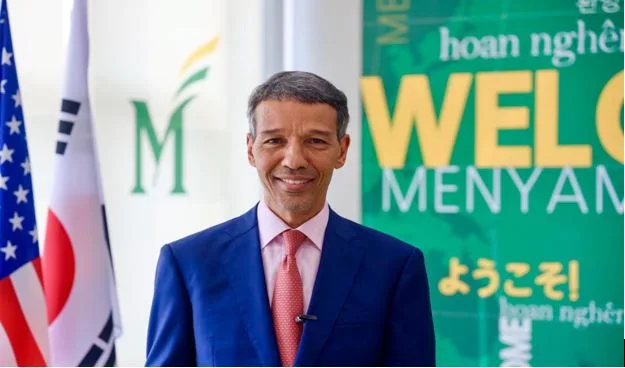
Bridging Continents Through Biotech: Samir Machour’s Mission for a Healthier World
Samir Machour stands as one of the few global leaders who understand that the future of healthcare depends on more than innovation alone. It depends on connection, on building bridges between nations, and on creating systems that empower local communities to take control of their own health outcomes. His career reflects a rare blend of scientific precision and human purpose, a vision that brings together continents through biotechnology and shared progress.
Throughout his professional journey, Samir Machour has demonstrated that a global impact can only be achieved when strategy, leadership, and compassion are aligned. His name has become synonymous with the expansion of biopharmaceutical excellence, particularly through his pivotal work at Samsung Biologics. In a rapidly evolving industry defined by speed, scale, and complexity, his ability to unite technical excellence with cultural understanding has made him a trusted figure across international markets. For him, biotechnology is not just an industry but a language that connects scientists, innovators, and policymakers across borders.
What sets Samir Machour apart is his belief that healthcare should be built from the ground up rather than imposed from above. He has often emphasized that true medical progress depends on strengthening local ecosystems. By nurturing regional capabilities and talent, he helps countries establish self-sustaining healthcare infrastructures. His leadership approach reflects both foresight and humility, combining scientific rigor with respect for local knowledge. In his view, biotechnology should not only produce life-saving medicines but also empower developing regions to participate in their own health evolution.
At the heart of his work lies a deep understanding of how biologics are reshaping modern medicine. These advanced therapies, derived from living systems, represent the most promising frontier in the fight against chronic and rare diseases. Under his guidance, major initiatives have focused on ensuring that these treatments reach patients not only in wealthy nations but also in underserved regions where access remains a challenge. His goal is not limited to producing biologics efficiently; it extends to making them accessible, affordable, and regionally adaptable.
Samir Machour’s influence also stems from his ability to connect business strategy with global ethics. He has long advocated for partnerships that bring together governments, academic institutions, and private companies to build resilient biomanufacturing networks. By doing so, he envisions a world where no country must depend entirely on external sources for its essential medicines. This model of cooperation strengthens global health security and supports national independence in times of crisis. It is a form of health sovereignty that he believes every nation deserves.
His strategic mindset combines both macro and micro perspectives. On one hand, he has guided complex global operations that define large-scale pharmaceutical success. On the other hand, he has paid close attention to the human aspects of leadership, encouraging younger professionals to think globally while acting locally. This dual awareness has allowed him to mentor the next generation of biotech leaders who see science as a service to humanity rather than a business alone. His reputation as a visionary leader comes not from personal ambition but from his consistent focus on collective progress.
In many ways, Samir Machour’s work reflects a new model of global leadership, one rooted in both innovation and empathy. His efforts show that bridging continents is not simply a metaphor but a practical mission. Every partnership he forms, every policy he influences, and every system he helps develop serves a single goal: to create a healthier and more equitable world. His projects often involve complex negotiations between governments and industry leaders, yet he approaches each with the same calm focus that has defined his career. To him, diplomacy and science are not separate but complementary tools for problem-solving.
Under his leadership, biotechnology has become a bridge that unites rather than divides. He sees each advancement not as a final achievement but as a step toward a broader network of collaboration. The technologies he supports are designed to scale globally while respecting local needs. This balance between ambition and sensitivity has earned him recognition as a strategic thinker with both technical depth and moral clarity.
Samir Machour’s story is a testament to how one individual’s vision can reshape global health systems. His work continues to influence the structure of biopharmaceutical manufacturing, technology transfer, and public-private collaboration across continents. What makes his approach remarkable is the long-term mindset that guides it. While many in the industry focus on short-term gains, he invests in the future, building systems that will benefit generations to come. His philosophy emphasizes sustainability, inclusivity, and scientific excellence as inseparable values.
As the world faces new health challenges and shifting geopolitical landscapes, leaders like Samir Machour represent a source of stability and inspiration. His mission goes beyond innovation; it is about uniting people, knowledge, and cultures to create a shared path forward. Whether advancing biologics or guiding multinational collaborations, he remains focused on one central purpose: using biotechnology as a force for human connection. Through his work, the boundaries that once divided nations in healthcare are slowly being replaced by networks of trust and collaboration.
Samir Machour continues to stand at the crossroads of science and humanity, proving that real progress in healthcare is not just about discovery but about empathy and cooperation. His legacy is being written in laboratories, manufacturing plants, and policy discussions across the world, wherever people come together to build something greater than themselves. In bridging continents through biotech, he has shown that the most powerful innovation is not in technology alone but in the shared hope for a healthier, more connected world.