Businesses Face an Onboarding Wake-Up Call as Demand Grows for Better Employee Onboarding Software
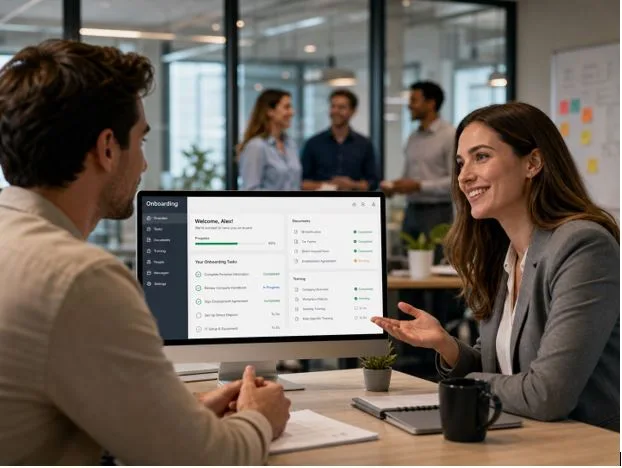
Businesses are under growing pressure to improve the way they welcome, train, and integrate new employees. In a labor market shaped by hybrid work, skills shortages, rising employee expectations, and tighter productivity goals, onboarding has become more than an HR formality. It is now a business-critical process that can influence retention, engagement, compliance, and long-term performance.
For many companies, however, onboarding still feels fragmented. New hires are sent scattered documents, managers improvise introductions, IT access is delayed, training is inconsistent, and HR teams chase paperwork manually. The result is an uneven first impression at the exact moment when employees are deciding whether they have made the right career move.
That gap is why better employee onboarding software is becoming a priority for organizations of all sizes.
Onboarding Has Moved From Admin Task to Business Strategy
For years, onboarding was treated as a checklist: collect tax forms, issue a laptop, explain company policies, and introduce the team. That approach no longer fits how modern businesses operate.
Today, new hires often join distributed teams, work across digital platforms, and need to understand company culture without being physically present in the office every day. At the same time, employers are trying to reduce early turnover, speed up productivity, and create a more consistent employee experience.
This shift has turned onboarding into a strategic function. It is not just about getting someone legally and technically set up. It is about helping them become confident, connected, and useful as quickly as possible.
SHRM emphasizes that onboarding success should be measured through practical business metrics such as time-to-productivity, turnover and retention rates, retention thresholds, and new-hire survey feedback. That framing shows how onboarding is increasingly tied to measurable outcomes rather than simple administrative completion.
The First Few Weeks Matter More Than Many Employers Realize
A new employee’s first days and weeks often set the tone for the entire working relationship. If onboarding feels organized, welcoming, and purposeful, the employee is more likely to feel confident. If it feels chaotic, slow, or impersonal, doubts can appear quickly.
This is especially important in competitive sectors where skilled workers have options. A poor onboarding experience may not always cause someone to leave immediately, but it can weaken trust early. Employees may question whether the company is organized, whether managers are invested, and whether internal communication is reliable.
A strong onboarding process answers those questions positively. It gives new hires clarity around their role, their tools, their manager, their team, and their early goals. It also helps reduce anxiety by replacing uncertainty with structure.
HR Teams Are Struggling With Manual Processes
One of the clearest signs that onboarding needs modernization is the workload placed on HR teams. Manual onboarding can involve repeated emails, spreadsheet tracking, document collection, policy acknowledgements, training reminders, equipment requests, system access tickets, and follow-up messages.
That may be manageable with occasional hires. It becomes much harder when a company is growing, hiring across departments, or onboarding remote employees.
BambooHR’s State of HR Report 2024 highlighted some of these pressures, noting that 30% of HR teams felt overwhelmed by new-hire paperwork, while 17% said bad first impressions for candidates and new hires were affecting employer brand. The report also pointed to remote work as a challenge for communicating policies and procedures clearly.
For businesses, this is not simply an HR inconvenience. Administrative overload can create delays, errors, and inconsistent employee experiences. Better onboarding software helps centralize the process so HR teams can focus less on chasing documents and more on supporting people.
Why Employee Onboarding Software Is Becoming Essential
Employee onboarding software gives businesses a structured platform for managing the entire new-hire journey. Instead of relying on disconnected emails, spreadsheets, and manual reminders, companies can use software to automate tasks, standardize workflows, and provide new employees with a clear path from offer acceptance to full productivity.
Good onboarding software can help with:
- Digital document collection
- E-signatures and policy acknowledgements
- Task checklists for HR, managers, IT, and new hires
- Automated reminders
- Training schedules
- Role-specific onboarding plans
- Employee self-service portals
- Progress tracking and reporting
The value lies in consistency. Every new hire should receive the right information, complete the right steps, and experience the company in a structured way. That matters whether the business is hiring one person a month or onboarding dozens of employees across multiple locations.
The Market Is Growing Because the Problem Is Real
The rise of employee onboarding software reflects a wider trend in HR technology. Businesses are looking for tools that reduce friction, improve compliance, and make people operations more scalable.
Market estimates vary, but recent research indicates strong growth in the employee onboarding software sector. One 2026 industry report estimated the global market at $1.68 billion, with projected growth to $3.07 billion by 2035. Another report estimated the market at $2.11 billion in 2025 and forecast growth to $2.53 billion in 2026. Although the figures differ by methodology, the direction is clear: companies are spending more on digital onboarding tools.
That growth is being driven by several forces at once: hybrid work, higher compliance demands, pressure to improve retention, and the need for better employee data.
Better Onboarding Supports Retention
Retention is one of the strongest arguments for improving onboarding. Hiring is expensive, and replacing employees takes time, money, and management attention. When employees leave early, the business loses not only recruitment costs but also momentum.
Academic research continues to link onboarding with retention-related outcomes. A 2025 study published in the Review of Managerial Science described onboarding as important for building a lasting bond between employees and organizations, while also examining how onboarding influences turnover intention through organizational identification and employee well-being.
The practical takeaway is straightforward: onboarding is not just an introductory phase. It is part of the retention strategy. Employees who understand their role, feel supported, and build early connections are more likely to stay engaged.
Hybrid and Remote Work Have Raised the Bar
In a traditional office, new hires could learn by observing. They could ask quick questions, overhear context, and build relationships naturally. Remote and hybrid work changed that.
Now, many employees begin roles without meeting colleagues in person for days, weeks, or even months. That makes intentional onboarding more important. Businesses need to recreate structure, connection, and clarity through digital channels.
Employee onboarding software can help by giving remote employees a central place to access training, company policies, team introductions, role expectations, and early milestones. It can also prompt managers to schedule check-ins, assign mentors, and make sure new hires are not left waiting for basic answers.
Without that structure, remote onboarding can feel lonely and confusing.
Managers Need Support Too
One overlooked onboarding issue is manager inconsistency. In many companies, HR designs the onboarding process, but managers determine the actual experience. Some managers are excellent at welcoming new hires, explaining expectations, and creating a sense of belonging. Others are busy, undertrained, or unsure what to do.
This matters because manager engagement and capability remain major workplace issues. Gallup’s 2025 workplace reporting found that global employee engagement declined to 21% in 2024, with managers experiencing a notable drop in engagement.
Onboarding software cannot replace good management, but it can support managers with structure. It can remind them when to hold check-ins, suggest discussion topics, track training progress, and ensure role expectations are documented. This makes the experience less dependent on individual memory or management style.
Compliance Is Another Major Driver
For many businesses, onboarding is also a compliance process. New employees may need to complete legal forms, acknowledge policies, take safety training, submit certifications, or complete industry-specific documentation.
Manual compliance tracking creates risk. Missing forms, incomplete training records, or inconsistent documentation can become serious problems during audits, disputes, or regulatory reviews.
A modern onboarding platform helps create a clear record of what was completed, when it was completed, and by whom. For businesses in healthcare, finance, logistics, construction, education, and other regulated sectors, that recordkeeping can be extremely valuable.
Onboarding Should Feel Human, Not Robotic
One concern about onboarding software is that it can make the experience feel automated and impersonal. That risk is real if businesses use software only as a paperwork machine.
The best onboarding systems should do the opposite. They should remove repetitive admin so managers and HR teams have more time for human interaction. Automation should handle reminders, forms, task tracking, and access workflows. People should handle conversation, encouragement, coaching, and cultural connection.
Research from TalentLMS and BambooHR found that 65% of employees said onboarding felt like the beginning of a continuous learning journey, underscoring the importance of treating onboarding as more than a one-time orientation event.
The goal is not to digitize the welcome out of onboarding. The goal is to make the welcome easier to deliver consistently.
What Businesses Should Look For in Better Onboarding Software
Not every platform will fit every company. A small business hiring a few employees a year may not need the same system as a fast-growing company onboarding staff across multiple offices.
Still, businesses should look for software that offers:
- Easy setup and usability
- Custom onboarding workflows
- Role-based task assignment
- Automated reminders
- Document management
- Integration with HR, payroll, IT, and communication tools
- Reporting and analytics
- Support for remote and hybrid employees
- Strong security and access controls
The most important question is not simply “What features does it have?” It is “Will this improve the experience for new hires, managers, HR, and the wider business?”
AI Is Starting to Influence Onboarding
Artificial intelligence is also beginning to reshape HR technology. Some platforms are introducing AI assistants to answer employee questions, guide new hires through policies, draft onboarding content, and personalize learning paths.
AI can be useful, especially when employees need quick answers about benefits, tools, policies, or training. But businesses should approach it carefully. Onboarding involves sensitive employment information, cultural nuance, and human judgment. AI should support the process, not replace personal guidance.
The strongest onboarding systems will likely combine automation, AI assistance, manager involvement, and human connection.
The Business Case Is Getting Harder to Ignore
The need for better employee onboarding software is growing because the cost of poor onboarding is becoming more visible. Businesses can no longer afford a disorganized start for new hires, especially when recruitment is expensive and employee engagement remains under pressure.
Better onboarding helps companies:
- Reduce early confusion
- Improve time-to-productivity
- Create consistent employee experiences
- Support managers
- Strengthen compliance
- Improve retention
- Protect employer brand
For business leaders, this makes onboarding software less of a “nice-to-have” HR tool and more of an operational investment.
FAQ: Employee Onboarding Software
What is employee onboarding software?
Employee onboarding software is a digital platform that helps businesses manage the process of bringing new employees into the company. It usually handles documents, checklists, training, reminders, compliance steps, and progress tracking.
Why do businesses need better onboarding software?
Businesses need better onboarding software because manual onboarding is often slow, inconsistent, and difficult to scale. A stronger system helps improve the new-hire experience, reduce administrative work, and support faster productivity.
Does onboarding software improve retention?
Onboarding software can support retention by making the employee’s first experience clearer, more organized, and more engaging. It works best when combined with strong manager involvement and meaningful human connection.
Is onboarding software only for large companies?
No. Small and mid-sized businesses can benefit from onboarding software too, especially if they are hiring regularly, managing remote workers, or dealing with compliance requirements.
Final Thoughts
The first impression a company gives its employees matters. In a competitive labor market, businesses cannot afford to treat onboarding as an afterthought or a pile of paperwork.
Employee onboarding software is becoming essential because it helps companies deliver structure, consistency, and professionalism from day one. But the real value is not just in automation. It is in creating a better start for people.
The businesses that get onboarding right will not only look more organized. They will build stronger teams, reduce avoidable turnover, and create an employee experience that begins with confidence rather than confusion.