Can eSIMs close the roaming gap for travelers in Africa and Asia?
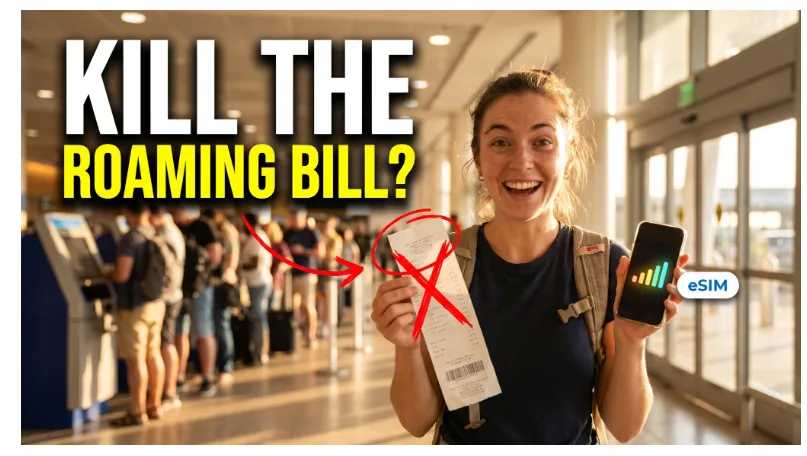
For travelers in Africa and Asia, staying connected has long meant choosing between three imperfect options: roaming on a home plan, buying a local SIM at an airport, or going without data until Wi-Fi turns up. The eSIM, a SIM built into the phone itself, promises a fourth. Whether it closes the gap depends on the phone in the traveler’s pocket as much as on the plan.
This analysis looks at what a travel eSIM changes, what it leaves untouched, and why the answer differs for people with newer phones and for those without.
Why the roaming gap exists
Roaming rates are set by home operators and are often steep, and bills can arrive after the trip is over. A local SIM avoids that cost, but in many countries in both regions buying one means registering with identification, and a queue at an airport kiosk costs time on arrival. Travelers who cross several borders repeat the exercise at every stop.
The gap is therefore not only about price. It is about friction at the moment a traveler most needs a map, a ride or a message, and about how much personal information changes hands to get a working connection.
What a travel eSIM changes
A travel eSIM is a digital SIM installed on the phone, so there is no physical card to swap. Quackr, which sells travel eSIMs for 197 countries and 23 regional plans, describes the process as three steps: choose a plan by data and days, scan a QR code at home on Wi-Fi, and switch the eSIM on when the plane lands. The plan starts when the phone first connects to a network at the destination.
Two features matter for people moving across borders. First, the traveler keeps the home SIM in the phone for calls and texts while the eSIM carries the data. Second, the cost is paid once, up front, for the amount of data chosen, so nothing arrives on the phone bill later. A full walkthrough of how to install a travel eSIM shows that no kiosk visit or SIM tray is involved.
Regional plans add a further benefit. One eSIM covers a whole area, so a traveler does not change plans at each border.
Africa and Asia in particular
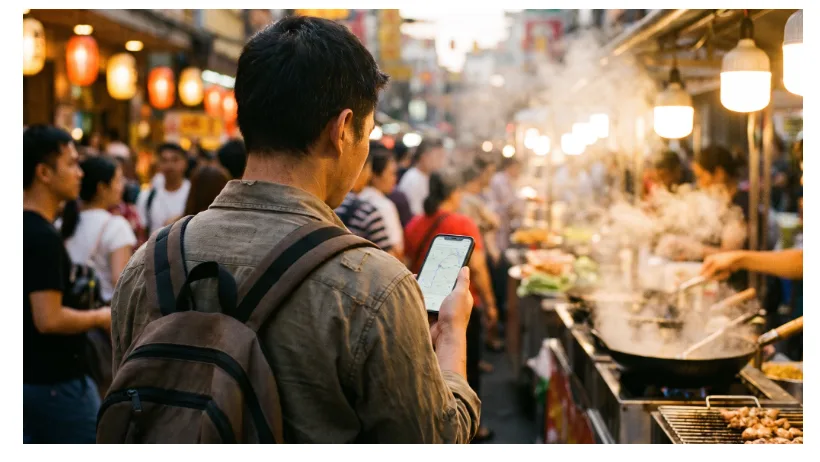
Regional plans matter most for multi-stop trips. Quackr’s Africa eSIM page lists 22 plans by data and days, and its Asia eSIM page lists 33. Each is a single payment, and some are fixed amounts of data while others are unlimited by the day. The unlimited tiers work as a daily allowance at full speed, after which speeds drop until the 24-hour window resets.
The full list of countries and networks covered by an Africa or Asia plan is shown at checkout, not in advance. Travelers should check that each stop on a route is covered before paying, because a regional plan is only as useful as its coverage list.
Top-ups follow the same logic. When a plan runs low, another plan can be added to the same eSIM, so there is nothing new to install mid-trip.
Who benefits most, and who may not
The clearest winners are short-stay and multi-country travelers: tourists, business travelers and remote workers who move through several markets in a few weeks. For them, the saving is in time as much as money. A working connection on arrival means maps, ride-hailing and messaging are available at the airport, not after a search for a kiosk.
The picture is less clear for people who stay for months. Long-term residents are often better served by a local plan with a local number, since many banks, delivery apps and government services in both regions expect one. A travel eSIM is built for the trip, not for settling in. Visitors who need a local number for deliveries or banking should not expect a data plan to provide it.
What the eSIM does not fix
The first limit is the handset. The phone must support eSIM and be unlocked. Most recent phones do, including the iPhone XS and later, the Google Pixel 3 and later, and recent Samsung Galaxy models. Travelers with older phones, or phones locked to a carrier, are left where they were. A technology that helps those who already own recent devices narrows the gap only for them.
The second limit is the number. Most travel plans are data only and come without a phone number of their own. The home SIM has to stay in place for calls and texts, which means the home line still has to be reachable, and any charges for calls and texts on it still have to be managed. One plan type that includes calls and texts is available in the United Kingdom, but that is not a solution for travelers in Africa or Asia.
The third limit is coverage and speed. Unlimited plans slow down after the daily allowance, and a regional plan does not guarantee the same service in every country it lists.
The privacy side of staying connected
Because the home SIM stays active, the home number remains the one banks and apps text their codes to. That makes it the more important number to protect. SIM-swap fraud works by taking control of a victim’s number so that the attacker receives those codes. At the end of October, the Durham Post in Ontario reported a case in which police said a suspect used a victim’s number to get past two-factor login and make credit-card purchases. The first sign for the victim was a phone that suddenly dropped into emergency-only mode.
A travel eSIM does not prevent that kind of attack, and it is not meant to. It does reduce one risk: travelers do not have to hand identification documents to a kiosk to get data, and they do not have to buy and carry a second physical SIM. They should still ask their carrier whether it offers an account PIN or number lock, and they should treat an unexpected loss of service as a warning rather than an inconvenience.
What to check before relying on an eSIM
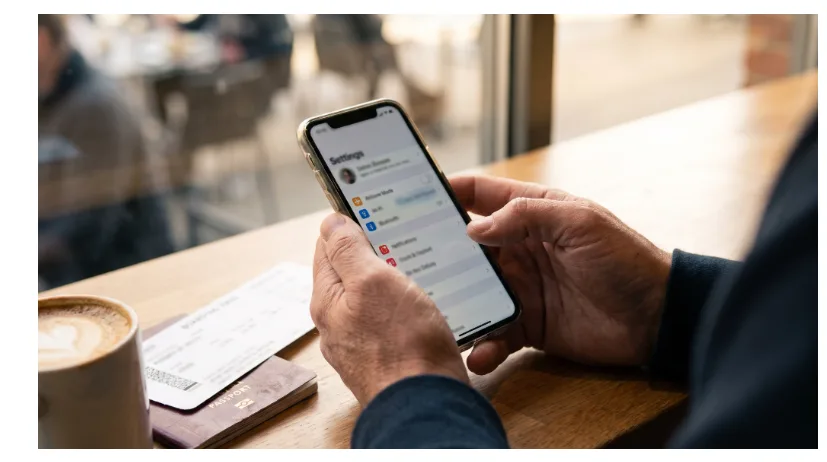
- Confirm the phone supports eSIM and is unlocked. Dialing *#06# shows an EID number on phones that have an eSIM.
- Install the eSIM at home on Wi-Fi, before the trip.
- On arrival, turn on data roaming for the eSIM line, because the eSIM will not connect without it.
- Choose the eSIM as the line the phone uses for mobile data, and keep the home SIM for calls and texts.
- Check that every country on the route appears on the plan’s coverage list.
- Protect the home number with the carrier’s PIN or lock where one is offered.
So can eSIMs close the gap?
For travelers with an eSIM-capable, unlocked phone, a travel eSIM removes most of the cost and friction of getting data in Africa and Asia. It does not extend that benefit to people with older or locked handsets, it does not supply a phone number, and it does not protect the home number that matters most for security.
The fair answer is that eSIMs narrow the roaming gap rather than close it. How far they narrow it depends on who owns the right phone, and on how carefully a trip’s coverage is checked before the money is spent.
Learn more at quackr.io.