Commercial, Residential, and EV Electrical Services in Salinas CA: A Property Owner’s Complete Guide
Salinas sits at an interesting intersection. It is simultaneously the county seat of Monterey County, the economic hub of one of the most productive agricultural valleys in the world, and a growing residential community where families are investing in their homes with increasing ambition. That combination creates electrical demand across commercial properties, residential neighborhoods, and the rural agricultural infrastructure that connects them, demand that spans everything from tenant improvement wiring in downtown commercial buildings to EV charger installations in newer Salinas subdivisions. Whether you manage commercial property, own a home, or are simply trying to find a qualified professional you can trust with your building’s electrical systems, understanding what each category of electrical service involves helps you make better decisions. If you have been searching for a Commercial Electrician Salinas property managers rely on, planning an EV charger installation, or looking for dependable residential electrical service, this guide covers the full picture.
Why Salinas Needs Electricians Who Understand the Full Spectrum
Most electrical markets are dominated by one property type. Salinas is genuinely diverse, and that diversity creates a local electrical market where the most valuable contractors are those with experience across multiple property categories rather than specialists in only one:
Commercial properties downtown and along major corridors need electricians who understand three-phase power systems, commercial lighting, tenant improvement work, code compliance for occupied buildings, and the coordination required when electrical work affects business operations.
Residential neighborhoods across Salinas range from historic homes near downtown with aging electrical infrastructure to newer subdivisions in areas like Pasadera and Monte Bella where modern systems still need upgrades to accommodate EV charging, solar integration, and expanded loads.
Agricultural and industrial facilities across the Salinas Valley require specialized knowledge of high-voltage systems, motor controls, irrigation electrical systems, cold storage equipment, and the rural infrastructure that keeps the valley’s food production economy functioning.
Mixed-use and transitional properties in a growing city like Salinas increasingly blend residential, commercial, and light industrial uses in ways that require electrical contractors comfortable working across all three categories.
This breadth is why local experience matters so much in the Salinas market. A contractor who primarily wires new residential tracts in another county brings very different knowledge to a downtown Salinas commercial tenant improvement than one who has worked across Monterey County’s diverse property landscape for years.
Commercial Electrical Services: What Business Owners Need to Know
Commercial electrical work operates at a different scale and complexity level than residential, and business owners making hiring decisions benefit from understanding what distinguishes quality commercial electrical service from the rest.
A qualified Commercial Electrician Salinas business owners and property managers depend on handles the full range of commercial electrical needs:
Tenant improvements and commercial buildouts. When a new business moves into commercial space or an existing tenant reconfigures their footprint, electrical modifications are almost always part of the project. New panel capacity, additional circuits, specialized equipment connections, data and communication infrastructure, lighting redesigns, and code compliance upgrades all fall within commercial electrical scope. An experienced commercial electrician manages this work from design through permit approval and final inspection, coordinating with general contractors and other trades to keep the project on schedule.
Three-phase power systems. Most commercial and industrial facilities in Salinas operate on three-phase electrical service that residential electricians rarely encounter. Manufacturing equipment, commercial HVAC systems, large motor loads, and food processing equipment all commonly require three-phase power. Proper installation, troubleshooting, load balancing, and expansion of three-phase systems requires training and experience that goes beyond standard residential licensing.
Commercial lighting systems. Lighting represents a significant operational cost for most Salinas commercial properties, and LED retrofit projects deliver meaningful energy savings that affect the bottom line every month. Beyond simple fixture replacement, commercial lighting upgrades involve lighting controls, occupancy sensors, daylight harvesting systems, emergency and exit lighting compliance, and the NV Energy and PG&E rebate documentation that makes these projects financially attractive. An experienced commercial electrician manages both the technical work and the utility incentive paperwork.
Emergency and exit lighting compliance. California commercial code requires maintained emergency lighting and properly functioning exit signs with battery backup throughout commercial occupancies. Installation, periodic testing, documentation, and code compliance are ongoing responsibilities for commercial property owners and their electrical contractors.
Electrical panels and switchgear. Commercial panels and switchgear are more complex and more expensive than residential equivalents. Main distribution panels, sub-meters for individual tenants, motor control centers, and automatic transfer switches for backup power systems all require commercial-level expertise to install, maintain, and troubleshoot correctly.
Preventive maintenance programs. Commercial property owners and facility managers benefit significantly from scheduled electrical preventive maintenance. Infrared thermography scanning identifies hot spots at connections before they become failures. Panel inspections, connection tightening, and equipment testing prevent the kind of unexpected failures that disrupt business operations and create liability. A commercial electrician offering structured maintenance agreements provides more consistent value than one called only when something breaks.
Code compliance and permit management. California commercial electrical code, enforced through Monterey County and City of Salinas building departments, requires permits for most significant electrical work in commercial occupancies. An experienced commercial electrician understands which work requires permits, manages the application and inspection process, and ensures completed work meets the specific requirements of the authority having jurisdiction.
EV Charger Installation: Powering the Electric Future in Salinas
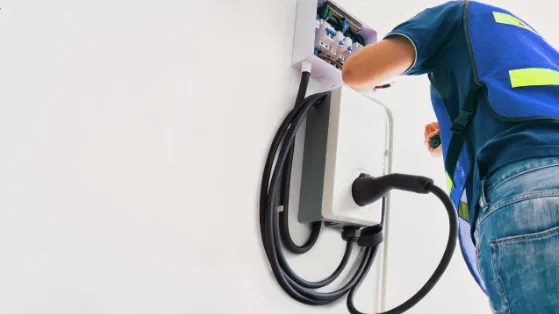
Electric vehicle adoption across California is accelerating faster than almost any other state in the country, driven by a combination of state incentives, fuel cost savings, and the expanding availability of vehicles across every price point and category. For Salinas homeowners and commercial property owners, professional EV Charger Installation Salinas represents an investment that pays back in daily convenience, reduced fuel costs, and property value that will only grow as EV adoption continues.
Understanding charging levels. Most EV owners quickly discover that the Level 1 charger included with their vehicle, operating on a standard 120-volt household outlet, adds only three to five miles of range per hour of charging. For a daily driver covering thirty or more miles, this means starting each day with less than a full charge. A Level 2 charger operating on a dedicated 240-volt circuit adds twenty to thirty miles of range per hour, fully recharging most vehicles overnight from any state of charge. Level 2 installation is the standard solution for residential and light commercial EV charging.
What residential EV charger installation involves:
The process begins with a panel capacity assessment. Before any charger equipment goes in, a licensed electrician evaluates whether your existing main panel can support a new 240-volt, 50-amp circuit. Many Salinas homes, particularly those in older neighborhoods, have panels operating near capacity or panels that predate the service levels modern loads require. If the panel cannot support the new circuit, a panel upgrade or subpanel installation addresses the capacity issue before charger installation proceeds.
With adequate panel capacity confirmed, installation involves running a dedicated circuit from the panel to the charging location, typically in the garage or on an exterior wall near the parking area. Proper conductor sizing for the amperage and distance involved, conduit installation appropriate for the installation environment, and weatherproof components for any exterior mounting are all part of a correctly executed installation.
The EVSE unit itself is mounted at the appropriate height and location, connected to the dedicated circuit, and tested for correct operation including any smart charging features. In California, EV charger installation requires an electrical permit through the local authority, and a licensed electrician handles both the permit application and the inspection scheduling as part of the project.
Smart charger features worth understanding. Modern Level 2 chargers increasingly offer WiFi connectivity that enables charging schedule programming, off-peak charging to reduce electricity costs under time-of-use rate structures, energy usage monitoring, and integration with home energy management systems including solar and battery storage. For Salinas homeowners with rooftop solar, a smart charger can prioritize charging during peak solar production hours, maximizing the financial benefit of both systems simultaneously.
Commercial EV charging installations. Businesses, multifamily property owners, and commercial properties across Salinas face growing pressure and opportunity around EV charging infrastructure. Retail centers, restaurants, offices, and apartment complexes that provide EV charging attract customers and tenants who increasingly expect it. Commercial charging installations involve load management systems that prevent charging demand from creating peak demand charges on utility bills, multiple charging stations served by properly designed electrical infrastructure, billing and access control systems, and in some cases utility coordination for dedicated EV charging service accounts.
California’s Title 24 requirements now mandate EV charging readiness provisions in new construction and certain renovation projects, making commercial EV electrical infrastructure a code compliance issue as well as a business amenity decision.
Available incentives. Federal tax credits currently available for EV charger installation, combined with California-specific incentives and potential PG&E rebates for qualifying installations, can offset a meaningful portion of both residential and commercial project costs. An experienced electrical contractor familiar with the current incentive landscape helps you understand what is available and what documentation you need to capture the benefit.
Residential Electrical Services: What Salinas Homeowners Actually Need
The residential electrical market in Salinas reflects the city’s housing diversity, and a qualified Residential Electrician Salinas homeowners rely on serves that full range from historic downtown homes with original wiring systems to newer construction needing modern load additions.
Common residential electrical services across Salinas:
Panel upgrades and replacements. Homes on original 60-amp or 100-amp service cannot simultaneously support modern HVAC systems, kitchen appliances, EV chargers, and home office equipment without constant tripping and real safety risk. Upgrading to 200-amp service is one of the most foundational electrical improvements a Salinas homeowner can make, requiring coordination with PG&E for the service upgrade and a permit through the city or county.
Whole-home rewiring. Older Salinas homes with original wiring that has reached the end of its service life, homes with aluminum branch circuit wiring from the 1960s and 1970s, or homes with extensive knob-and-tube systems that cannot safely be extended or modified sometimes need comprehensive rewiring. While disruptive, whole-home rewiring on an older property eliminates decades of accumulated risk in a single project.
Circuit additions. Adding dedicated circuits for home offices, kitchen appliances, workshop equipment, bathroom additions, or outdoor living spaces requires running new wire from the panel, installing appropriate outlets or disconnects, and adding properly sized breakers. In finished homes this involves fishing wire through walls and ceilings, requiring experience and care to accomplish without unnecessary damage.
GFCI and AFCI protection. California electrical code requires ground fault circuit interrupter protection in kitchens, bathrooms, garages, outdoor areas, and other locations where water and electricity may interact. Arc fault circuit interrupter protection is required in bedrooms and increasingly in other living spaces. Older Salinas homes commonly lack both, and upgrading this protection is among the most cost-effective safety improvements available.
Outdoor and landscape electrical. Salinas homeowners increasingly invest in outdoor living spaces with cooking equipment, lighting systems, ceiling fans, and entertainment equipment. All outdoor electrical work requires weatherproof components, appropriate conduit systems, and GFCI protection installed by a licensed professional.
Whole-home surge protection. PG&E service quality fluctuations and the increasing density of sensitive electronics in modern homes make whole-home surge protection a genuinely valuable investment. Installed at the main panel, a whole-home surge protector shields every connected device simultaneously rather than relying on individual point-of-use strips throughout the home.
Smart home integration. Smart switches, automated lighting controls, whole-home audio, security system wiring, and structured data cabling increasingly require an electrician comfortable with both line-voltage and low-voltage systems who can coordinate the full scope of a modern home technology installation.
Choosing the Right Electrical Contractor in Salinas
Whether your need is commercial, residential, or EV charging specific, the selection process for a Salinas electrical contractor should follow the same disciplined approach:
Verify the C-10 license at cslb.ca.gov. This two-minute verification confirms license status, insurance standing, and whether any complaints or disciplinary actions have been filed. Never hire a contractor who cannot provide a license number for immediate verification.
Confirm scope-specific experience. Commercial electrical work, residential service, and EV charger installation each require different knowledge and experience. Ask directly whether the company regularly performs the specific type of work you need, and ask for examples of similar completed projects.
Require written estimates with full scope detail. Understand exactly what is included before authorizing any work. Vague proposals that list a total price without describing what produces it create the conditions for disputes and surprises.
Confirm permit handling. Significant electrical work in Salinas requires permits through the City of Salinas Building and Safety Division or Monterey County depending on property location. Any contractor suggesting that permits can be skipped to save time or money is creating risk that you will carry long after they have been paid.
Evaluate communication and responsiveness. A contractor who responds promptly and communicates clearly during the estimate process predicts how they will communicate during the project. Slow responses and vague answers before you have committed rarely improve after you have.
Frequently Asked Questions
What is the difference between a residential and commercial electrician in California?
Both must hold a C-10 Electrical Contractor license from the CSLB, but commercial electrical work involves different systems, codes, and project management requirements than residential. Three-phase power, commercial switchgear, tenant improvement coordination, and California commercial code compliance all require experience beyond standard residential work. Ask specifically about commercial project experience before hiring for any commercial scope.
How long does EV charger installation take in Salinas?
A straightforward residential Level 2 installation where the panel has available capacity and the garage is adjacent to the panel typically completes in three to five hours including permit coordination. Projects requiring panel upgrades, long conduit runs, or underground portions take longer. Commercial multi-station installations are scoped and scheduled individually based on site conditions.
Can I install an EV charger myself in California?
California law permits homeowners to perform certain electrical work on their own primary residence, but EV charger installation requires a permit and inspection regardless of who performs the work. Given the panel assessment, proper conductor sizing, and permit management involved, most homeowners find professional installation both more practical and more reliable than DIY approaches.
How do I know if my commercial property needs an electrical upgrade?
Signs include frequent breaker trips under normal operating conditions, inability to add new equipment without overloading existing circuits, a panel with no available capacity for expansion, aging equipment that struggles to meet current code requirements for new tenants, or plans for significant new loads like EV charging stations or expanded HVAC. A commercial electrical assessment gives you a clear picture of current capacity and what expansion requires.
What California incentives are available for EV charger installation?
Federal tax credits, California Clean Vehicle Rebate Project incentives, and PG&E rebate programs for qualifying EV charger installations can collectively offset meaningful portions of project cost. Incentive availability and amounts change periodically, so confirming current programs with your electrician or directly with the administering agencies at the time of your project gives you accurate current information.
Final Thoughts
Salinas is a city whose electrical needs reflect its diversity, from the commercial corridors and historic downtown buildings to the residential neighborhoods expanding across Monterey County and the agricultural infrastructure that defines the valley beyond the city limits. Whether your priority is commercial electrical service that keeps your business running and code-compliant, an EV charger installation that brings your home into the electric vehicle era, or reliable residential electrical work from a licensed professional who understands Salinas housing stock and California code requirements, the contractor you choose determines the quality and safety of every circuit they touch. Companies like Monterey Electric Systems Inc. serve Salinas and the surrounding Monterey County region with the full spectrum of licensed electrical expertise across commercial, residential, and EV charging applications. Verify credentials, get written estimates, and invest in electrical work built to last.