Complete Guide to Using a Classroom Floor Planner Like a Professional
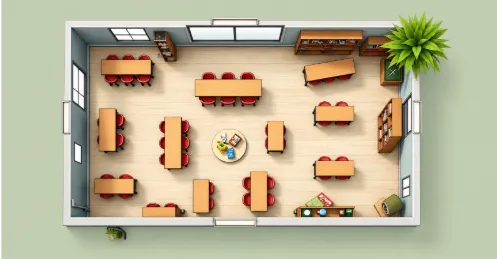
When a classroom is well designed, students can enjoy the learning process, and teachers can have better control over the teaching and learning process. The layout of desks, learning stations, storage spaces, and technology has a significant impact on classroom success. When planning the layout before moving the furniture, it will save time and enhance functionality. With a 2D Floor Planner, teachers and school administrators can visualize various classroom configurations, optimize space and space planning, and design a well-organized learning environment that enhances teaching and learning.
So, what is a Classroom Floor Planner?
A classroom floor planner is software that assists the user to make accurate design for the layout of the classroom. It enables teachers to position desks, chairs, cabinets, whiteboards, and other classroom furniture on a scaled layout of the classroom before physically moving furniture. The 2D Floor Planner gives an easily understandable top-down perspective of the classroom. It is easier to understand how students and teachers will interact with each other during activities and how each area can be utilized efficiently.
What is a classroom plan and why is it important?
The classroom layout will impact learning and classroom management. A tidily organized room lessens distractions, helps students see better, and makes it easier for the teacher to involve students in the lesson. Planning also enables good working in partnerships, independent learning, and group tasks. With enough room to move around, students are more likely to be focused and engaged in the school day.
Measure Accurately in the Classroom
The first step in good classroom planning is using accurate measurements. Make measurements of the room, doors, windows, electrical outlets, and permanent fixtures before you draw the layout. By entering these measurements into a 2D Floor Planner, a realistic digital version of the classroom is created. The dimensions are crucial for ensuring the furniture fits correctly and that there are no obstructions in the walking areas.
Select the proper Desk Arrangement
The arrangement of desks will vary according to the teaching style and the ages of the students. Traditional rows are appropriate for lectures, and clusters promote discussion and teamwork. U-shaped increases eye contact and enhances classroom interaction. Test a variety of seating configurations to make an informed selection. The digital planning tools enable you to change the layout without a lot of hassle and time.
A well-thought-out plan for teacher and student movement.
Teachers should have freedom of movement throughout the classroom to support students and to check on activities. It is also important that students have sufficient space to enter, exit and move between lessons in a safe manner. Do not obstruct doorways or narrow passageways with furniture. More comfortable movement = more classroom safety and efficiency.
Develop Special Learning Areas
Reading, group work, use of technology, and independent work learning areas are common features of modern classrooms. Clearly identified areas support pupils’ understanding of an activity’s location. When organized properly, a reading area with good seating, a cozy learning space, and a quiet study area can all be found in the same classroom.
Organize Storage Efficiently
Books, teaching materials, art supplies, and technology equipment are organized in classrooms. Cabinets and shelves must be accessible and convenient for the teacher and students to reach without disrupting classroom activities. Early planning of storage avoids clutter and allows for a cleaner learning environment. It’s easier to keep organized classrooms all year long.
Common Classroom Planning Mistakes
A frequent error is attempting to fit too many desks in a small area. The other is to forget to move the furniture away from windows or to place large furniture over the windows. Failure to consider traffic flow may also represent a safety problem. Careful examination of the layout can reveal these issues before they become a hindrance to classroom functioning.
Benefits of Using a Classroom Floor Planner
Digital planning tools help to save time and minimize the number of heavy pieces of furniture to be moved around the classroom. Teachers can try out various setups prior to changes. Most importantly, a 2D Floor Planner enables teachers to create classrooms that foster learning, collaboration and make daily teaching more efficient.
FAQs
What is a classroom floor planner?
A classroom floor planner is a digital document that helps to design classroom layouts prior to placing furniture. Assists teachers in setting up desks, storage and learning spaces in an efficient manner. The software also helps to make the best use of the classroom and the space. Digital planning aids in saving time and effort.
Why Must Teachers use a Classroom Floor Planner?
A classroom floor planner is useful for arranging the classroom for a teacher’s learning environment. It enhances student mobility, facilitates a variety of teaching styles and helps to clean up the classroom. Advanced planning is also eliminating undue furniture moving throughout the school year.
Can beginners use a classroom floor planner?
Yes, the majority of the classroom floor planners are intended for novices. They feature easy-to-use drag-and-drop features and pre-made furniture plans. Teachers can design professional classroom layouts in no time, without design experiences and technical knowledge.
What impact does the classroom arrangement have on children’s learning?
The well-designed classroom fosters focus, cooperation and streamlines classroom management. A well-designed seating layout and a clear walkway provide a comfortable class space that allows pupils to learn more easily.
Is the possibility to change a classroom arrangement within the school year?
Yes, classroom layouts are flexible and can change when the need for changes arises in the teaching process. A digital floor planner lets teachers test out the new floor plan before relocating furniture. This versatility can be utilized for various lessons, activities in groups, or events in the classroom.
Conclusion
Good planning in the classroom provides a climate that is conducive to student achievement and teacher efficiency. A 2D Floor Planner allows teachers to confidently create organized, flexible, and engaging classrooms. Careful planning increases safety, utilises space, optimises classroom management, and ensures that every student has a comfortable learning environment, actively learning and collaborating.